
About This Book
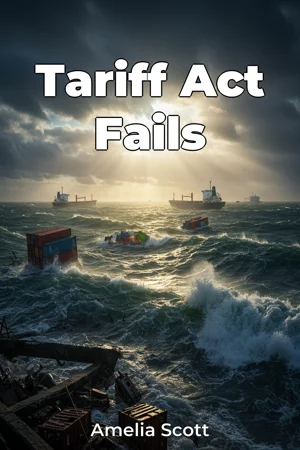
Could one piece of legislation truly amplify and prolong the Great Depression? "Tariff Act Fails" examines precisely that question, arguing that the Smoot-Hawley Tariff Act of 1930 played a significant role in exacerbating the global economic crisis. This book delves into the intricate web of international trade, economic policy, and political decision-making that characterized the period, demonstrating how protectionist measures, intended to shield the American economy, ultimately backfired with devastating consequences. The book centers on three main themes: the political climate that fostered the passage of the Smoot-Hawley Tariff Act, the immediate economic impact on the US and its trading partners, and the long-term consequences for global trade relations. Understanding these themes is crucial for grasping the fragility of international economic systems and the potential dangers of isolationist policies. To fully appreciate the impact of the Smoot-Hawley Tariff, the reader needs to understand the economic conditions preceding the Great Depression, including the post-World War I debt structure and the growing imbalances in global trade. The book elucidates these prerequisite concepts, providing a clear picture of the economic landscape against which the tariff was enacted. “Tariff Act Fails” posits that the Smoot-Hawley Tariff Act, driven by misguided protectionist sentiment, triggered a cascade of retaliatory tariffs from other nations, severely disrupting international trade flows and deepening the global economic downturn. This argument is vital because it challenges the conventional wisdom that solely attributes the Great Depression to domestic factors, highlighting the interconnectedness of the global economy even in the early 20th century. The book unfolds in a structured manner. It begins by setting the historical and political stage, detailing the lobbying efforts and political compromises that led to the Act's passage. The subsequent sections analyze the tariff's immediate impacts, examining trade data and economic indicators to demonstrate its negative effects on specific sectors. The book then explores the retaliatory measures taken by other countries, illustrating how these actions further strangled international commerce. The book culminates by assessing the long-term damage to global trade relations and the lessons learned (or unlearned) from this historical episode, suggesting that understanding the failures of the Smoot-Hawley Tariff is more relevant now than ever. The book's conclusions are supported by extensive research drawing upon archival data, trade statistics from the 1930s, and contemporary economic analyses. Unique data sources, such as detailed records of tariff schedules and diplomatic correspondence related to trade negotiations, provide a nuanced picture of the Act's impact. "Tariff Act Fails" bridges the disciplines of economics and history, showing how political decisions rooted in specific historical circumstances can have profound and lasting economic consequences. It also touches upon political science, examining the dynamics of lobbying and legislative processes that shaped the tariff’s passage. Furthermore, the book connects to international relations by analyzing how the tariff affected diplomatic relations and contributed to a climate of economic nationalism. This book stands apart due to its detailed analysis of the Smoot-Hawley Tariff Act as a critical turning point in modern economic history. It provides a nuanced perspective, avoiding simplistic narratives and presenting a complex interplay of economic forces and political motivations. The writing style is academic yet accessible, aiming to present complex economic concepts in a clear and understandable manner for a broad audience. While maintaining scholarly rigor, the book avoids jargon and uses real-world examples to illustrate key points. The target audience includes students of economics, history, and political science, as well as policymakers and anyone interested in understanding the historical roots of contemporary trade debates. The book offers valuable insights into the perils of protectionism and the importance of international cooperation in maintaining a stable global economy. As a work of economic history, "Tariff Act Fails" adheres to the genre's conventions of rigorous research, clear presentation of evidence, and balanced analysis of competing perspectives. Recognizing that perfect replication of historical events is impossible, the scope of this book focuses on the direct and indirect effects of the 1930 Tariff Act; analysis of other factors contributing to the depression are mentioned but not examined in extreme detail. The lessons from the Smoot-Hawley Tariff have real-world applications for contemporary policymakers grappling with trade disputes and economic nationalism. By understanding the past, we can make more informed decisions about the future of global trade. The book recognizes the ongoing debates about the precise extent to which the Smoot-Hawley Tariff contributed to the Great Depression. While some economists downplay its significance, this book argues that the tariff's impact was substantial and should not be dismissed.
Could one piece of legislation truly amplify and prolong the Great Depression? "Tariff Act Fails" examines precisely that question, arguing that the Smoot-Hawley Tariff Act of 1930 played a significant role in exacerbating the global economic crisis. This book delves into the intricate web of international trade, economic policy, and political decision-making that characterized the period, demonstrating how protectionist measures, intended to shield the American economy, ultimately backfired with devastating consequences. The book centers on three main themes: the political climate that fostered the passage of the Smoot-Hawley Tariff Act, the immediate economic impact on the US and its trading partners, and the long-term consequences for global trade relations. Understanding these themes is crucial for grasping the fragility of international economic systems and the potential dangers of isolationist policies. To fully appreciate the impact of the Smoot-Hawley Tariff, the reader needs to understand the economic conditions preceding the Great Depression, including the post-World War I debt structure and the growing imbalances in global trade. The book elucidates these prerequisite concepts, providing a clear picture of the economic landscape against which the tariff was enacted. “Tariff Act Fails” posits that the Smoot-Hawley Tariff Act, driven by misguided protectionist sentiment, triggered a cascade of retaliatory tariffs from other nations, severely disrupting international trade flows and deepening the global economic downturn. This argument is vital because it challenges the conventional wisdom that solely attributes the Great Depression to domestic factors, highlighting the interconnectedness of the global economy even in the early 20th century. The book unfolds in a structured manner. It begins by setting the historical and political stage, detailing the lobbying efforts and political compromises that led to the Act's passage. The subsequent sections analyze the tariff's immediate impacts, examining trade data and economic indicators to demonstrate its negative effects on specific sectors. The book then explores the retaliatory measures taken by other countries, illustrating how these actions further strangled international commerce. The book culminates by assessing the long-term damage to global trade relations and the lessons learned (or unlearned) from this historical episode, suggesting that understanding the failures of the Smoot-Hawley Tariff is more relevant now than ever. The book's conclusions are supported by extensive research drawing upon archival data, trade statistics from the 1930s, and contemporary economic analyses. Unique data sources, such as detailed records of tariff schedules and diplomatic correspondence related to trade negotiations, provide a nuanced picture of the Act's impact. "Tariff Act Fails" bridges the disciplines of economics and history, showing how political decisions rooted in specific historical circumstances can have profound and lasting economic consequences. It also touches upon political science, examining the dynamics of lobbying and legislative processes that shaped the tariff’s passage. Furthermore, the book connects to international relations by analyzing how the tariff affected diplomatic relations and contributed to a climate of economic nationalism. This book stands apart due to its detailed analysis of the Smoot-Hawley Tariff Act as a critical turning point in modern economic history. It provides a nuanced perspective, avoiding simplistic narratives and presenting a complex interplay of economic forces and political motivations. The writing style is academic yet accessible, aiming to present complex economic concepts in a clear and understandable manner for a broad audience. While maintaining scholarly rigor, the book avoids jargon and uses real-world examples to illustrate key points. The target audience includes students of economics, history, and political science, as well as policymakers and anyone interested in understanding the historical roots of contemporary trade debates. The book offers valuable insights into the perils of protectionism and the importance of international cooperation in maintaining a stable global economy. As a work of economic history, "Tariff Act Fails" adheres to the genre's conventions of rigorous research, clear presentation of evidence, and balanced analysis of competing perspectives. Recognizing that perfect replication of historical events is impossible, the scope of this book focuses on the direct and indirect effects of the 1930 Tariff Act; analysis of other factors contributing to the depression are mentioned but not examined in extreme detail. The lessons from the Smoot-Hawley Tariff have real-world applications for contemporary policymakers grappling with trade disputes and economic nationalism. By understanding the past, we can make more informed decisions about the future of global trade. The book recognizes the ongoing debates about the precise extent to which the Smoot-Hawley Tariff contributed to the Great Depression. While some economists downplay its significance, this book argues that the tariff's impact was substantial and should not be dismissed.
"Tariff Act Fails" examines the Smoot-Hawley Tariff Act of 1930 and its role in exacerbating the Great Depression. This book argues that the Act, intended to protect the American economy through protectionism, instead triggered a cascade of retaliatory tariffs from other nations. One intriguing insight is the detailed analysis of how lobbying efforts and political compromises shaped the Act's passage, revealing the complex interplay of economic and political forces. The book also highlights the immediate negative impacts on specific sectors, demonstrating how international trade was severely disrupted and global economic crisis was deepened. The book progresses by first setting the historical and political stage before delving into the immediate economic impact on the US and its trading partners. It then explores the long-term consequences for global trade relations. By using archival data and trade statistics, the author provides a nuanced picture of the Act's impact and offers valuable insights into the perils of economic nationalism. This approach bridges economics and history, making it valuable for students, policymakers, and anyone interested in the historical roots of contemporary trade debates.
Book Details
ISBN
9788235203403
Publisher
Publifye AS
Your Licenses
You don't own any licenses for this book
Purchase a license below to unlock this book and download the EPUB.
Purchase License
Select a tier to unlock this book
Need bulk licensing?
Contact us for enterprise agreements.