
About This Book
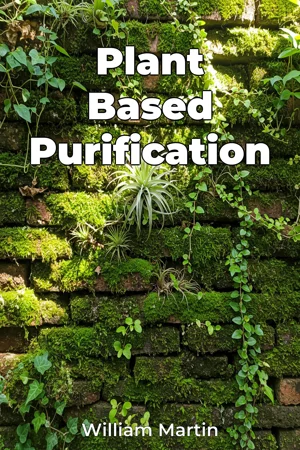
Can plants offer a viable solution to our growing concerns about indoor and outdoor air quality? "Plant Based Purification" delves into the science behind phytoremediation, exploring how specific plant species can naturally filter and purify the air and soil around us. This book is relevant because pollution and environmental degradation are pressing global issues, demanding innovative and sustainable solutions. This book examines the historical context of phytoremediation, tracing its roots from early observations of plant-soil interactions to modern scientific exploration. We consider landmark studies, including those conducted by NASA on indoor air purification, to provide a comprehensive understanding of the field's development. While a basic understanding of biology and environmental science will be beneficial, the book is written to be accessible to a broad audience. The central argument is that strategically selected plants, combined with an understanding of their biological mechanisms, can be effectively harnessed for both indoor and outdoor environmental purification in a cost effective manner. This argument is important because it champions a natural, sustainable approach to pollution control, offering an alternative or complement to conventional methods. The book is structured to guide the reader through the core concepts of phytoremediation. It begins by introducing the fundamental principles of how plants absorb and metabolize pollutants (e.g., VOCs, heavy metals). We then dedicate sections to the NASA Clean Air Study, analyzing its methodology and findings, and discussing its implications for indoor environments. Subsequent chapters focus on specific plant species known for their air and soil purification capabilities, providing detailed profiles of their effectiveness against various pollutants, growth requirements, and potential applications. The book culminates with a discussion of practical implementation strategies for using plants in homes, offices, and urban environments, emphasizing the importance of species selection and ongoing maintenance. We present evidence from peer-reviewed scientific studies, field trials, and experimental data to support our arguments. This includes detailed analyses of plant physiology, pollutant uptake rates, and the impact of phytoremediation on air and soil quality. We also incorporate case studies of successful phytoremediation projects from around the world. "Plant Based Purification" connects to several other fields, including ecology, environmental engineering, and public health. Ecology informs our understanding of plant-environment interactions; environmental engineering provides the framework for designing and implementing phytoremediation systems; and public health highlights the importance of clean air and water for human well-being. These interdisciplinary connections strengthen the book's argument for a holistic approach to environmental management. This book offers a distinctive perspective by integrating scientific research with practical application. Rather than simply presenting data, we provide actionable guidance on how to select, cultivate, and maintain plants for optimal purification, addressing common challenges and misconceptions surrounding phytoremediation. Written in a clear and accessible style, "Plant Based Purification" is geared towards homeowners, gardeners, environmental enthusiasts, and professionals in fields such as landscaping, urban planning, and environmental consulting. It will appeal to those seeking practical, science-backed solutions for improving environmental quality in their homes, workplaces, and communities. This book fits into the 'Environment, Biology, Science Life Sciences' genres by offering a comprehensive exploration of a specific environmental solution grounded in biological processes and scientific research. The scope of the book is limited to the use of vascular plants for air and soil purification. It does not delve into other forms of bioremediation, such as the use of fungi or bacteria. Real-world application of the knowledge contained herein includes creating healthier indoor environments, mitigating soil contamination in urban areas, and designing sustainable green spaces. While phytoremediation has shown promise, there are ongoing discussions regarding its efficiency in various environmental conditions and scales, which are addressed within the book.
Can plants offer a viable solution to our growing concerns about indoor and outdoor air quality? "Plant Based Purification" delves into the science behind phytoremediation, exploring how specific plant species can naturally filter and purify the air and soil around us. This book is relevant because pollution and environmental degradation are pressing global issues, demanding innovative and sustainable solutions. This book examines the historical context of phytoremediation, tracing its roots from early observations of plant-soil interactions to modern scientific exploration. We consider landmark studies, including those conducted by NASA on indoor air purification, to provide a comprehensive understanding of the field's development. While a basic understanding of biology and environmental science will be beneficial, the book is written to be accessible to a broad audience. The central argument is that strategically selected plants, combined with an understanding of their biological mechanisms, can be effectively harnessed for both indoor and outdoor environmental purification in a cost effective manner. This argument is important because it champions a natural, sustainable approach to pollution control, offering an alternative or complement to conventional methods. The book is structured to guide the reader through the core concepts of phytoremediation. It begins by introducing the fundamental principles of how plants absorb and metabolize pollutants (e.g., VOCs, heavy metals). We then dedicate sections to the NASA Clean Air Study, analyzing its methodology and findings, and discussing its implications for indoor environments. Subsequent chapters focus on specific plant species known for their air and soil purification capabilities, providing detailed profiles of their effectiveness against various pollutants, growth requirements, and potential applications. The book culminates with a discussion of practical implementation strategies for using plants in homes, offices, and urban environments, emphasizing the importance of species selection and ongoing maintenance. We present evidence from peer-reviewed scientific studies, field trials, and experimental data to support our arguments. This includes detailed analyses of plant physiology, pollutant uptake rates, and the impact of phytoremediation on air and soil quality. We also incorporate case studies of successful phytoremediation projects from around the world. "Plant Based Purification" connects to several other fields, including ecology, environmental engineering, and public health. Ecology informs our understanding of plant-environment interactions; environmental engineering provides the framework for designing and implementing phytoremediation systems; and public health highlights the importance of clean air and water for human well-being. These interdisciplinary connections strengthen the book's argument for a holistic approach to environmental management. This book offers a distinctive perspective by integrating scientific research with practical application. Rather than simply presenting data, we provide actionable guidance on how to select, cultivate, and maintain plants for optimal purification, addressing common challenges and misconceptions surrounding phytoremediation. Written in a clear and accessible style, "Plant Based Purification" is geared towards homeowners, gardeners, environmental enthusiasts, and professionals in fields such as landscaping, urban planning, and environmental consulting. It will appeal to those seeking practical, science-backed solutions for improving environmental quality in their homes, workplaces, and communities. This book fits into the 'Environment, Biology, Science Life Sciences' genres by offering a comprehensive exploration of a specific environmental solution grounded in biological processes and scientific research. The scope of the book is limited to the use of vascular plants for air and soil purification. It does not delve into other forms of bioremediation, such as the use of fungi or bacteria. Real-world application of the knowledge contained herein includes creating healthier indoor environments, mitigating soil contamination in urban areas, and designing sustainable green spaces. While phytoremediation has shown promise, there are ongoing discussions regarding its efficiency in various environmental conditions and scales, which are addressed within the book.
"Plant Based Purification" explores the innovative use of plants for environmental remediation, focusing on phytoremediation as a sustainable solution to pollution. Highlighting the ability of specific plant species to naturally filter air and purify soil, the book emphasizes practical applications, drawing from the NASA Clean Air Study to illustrate how plants can improve indoor air quality by absorbing pollutants like VOCs. This approach offers a cost-effective alternative to conventional pollution control methods, making environmental science and plant biology accessible to a broad audience. The book begins by establishing the scientific basis of phytoremediation, detailing how plants absorb and metabolize pollutants. Progressing through chapters, it examines the NASA Clean Air Study and profiles various plant species known for their purification capabilities, providing insights into their effectiveness against different pollutants and their growth requirements. It culminates in practical strategies for implementing plant-based purification in diverse settings, such as homes, offices, and urban areas, emphasizing the importance of plant selection and maintenance for achieving optimal results in both air and soil purification.
Book Details
ISBN
9788235203373
Publisher
Publifye AS
Your Licenses
You don't own any licenses for this book
Purchase a license below to unlock this book and download the EPUB.
Purchase License
Select a tier to unlock this book
Need bulk licensing?
Contact us for enterprise agreements.