
About This Book
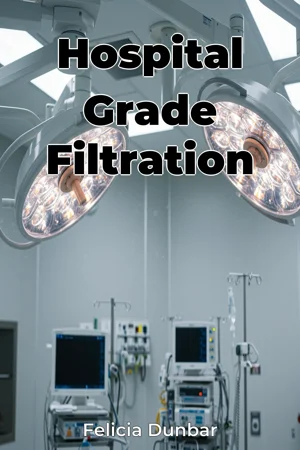
How safe is the air you breathe inside a hospital? "Hospital Grade Filtration" delves into the critical yet often overlooked realm of air quality within clinical environments, examining the medical facility standards, pioneering infection control research, and the deployment of specialized purification technologies. This book argues that advanced filtration systems are not merely an amenity but a cornerstone of modern healthcare, directly impacting patient outcomes, staff well-being, and the overall efficacy of medical treatments. We begin by establishing crucial context, tracing the evolution of hospital ventilation from its rudimentary beginnings to the sophisticated systems in use today. The initial chapters explore the historical understanding of airborne pathogens, the development of antiseptic practices, and the gradual recognition of the hospital environment as a potential source of infection. This foundational knowledge is essential for appreciating the complexities of modern infection control. The central argument of the book rests on the premise that hospital-grade filtration, when implemented effectively, significantly reduces the risk of healthcare-associated infections (HAIs). We analyze the scientific evidence supporting this claim, drawing from epidemiological studies, microbiology research, and engineering analyses of filtration system performance. The book's structure unfolds in three major sections. First, the fundamental principles of air filtration are introduced, detailing various technologies such as HEPA filters, UVGI systems, and advanced oxidation processes. This section clarifies technical aspects in an accessible manner, ensuring a broad readership can grasp the underlying science. The second part scrutinizes current medical facility standards and guidelines related to air quality. We examine the recommendations of organizations like the CDC, WHO, and ASHRAE, comparing their specific requirements and highlighting areas of consistency and divergence. Case studies will offer real-world examples of how different hospitals approach air quality management, revealing both successes and shortcomings. The final section focuses on specialized applications of air purification in specific clinical settings, such as operating rooms, isolation wards, and pharmacies. We explore the unique challenges posed by each environment and the tailored filtration strategies employed to mitigate risks. The development of novel strategies is also presented and discussed. Throughout "Hospital Grade Filtration," emphasis is also placed on the intersection of infection control, public health, and environmental engineering. We highlight how collaborative efforts across these disciplines are crucial for developing and implementing effective filtration strategies. The book also acknowledges the economic considerations surrounding the deployment of advanced filtration systems, exploring the cost-benefit analyses that hospitals must undertake. One unique aspect of this book is its focus on the practical application of research findings. We present concrete recommendations for hospitals looking to improve their air quality, including guidance on system selection, maintenance protocols, and staff training. Discussion about controversial topics such as the effectiveness and necessity of certain high-cost filtration technologies is also included, adding depth to the discussion. Written in a clear and accessible style, "Hospital Grade Filtration" is intended for a wide audience, including healthcare administrators, infection control practitioners, facility managers, engineers, and public health professionals. It will be valuable for anyone seeking a comprehensive understanding of the role of air filtration in creating safer and healthier healthcare environments. The book acknowledges that resources dedicated to patient safety are limited and provides detailed guidance on how to find best value when making decisions about how to improve air quality. The scope of the book is intentionally focused on air filtration within hospital settings, although connections to other healthcare facilities, such as nursing homes and outpatient clinics, are also explored. The book does not delve into the broader aspects of hospital design or HVAC systems, which are beyond the scope of this work.
How safe is the air you breathe inside a hospital? "Hospital Grade Filtration" delves into the critical yet often overlooked realm of air quality within clinical environments, examining the medical facility standards, pioneering infection control research, and the deployment of specialized purification technologies. This book argues that advanced filtration systems are not merely an amenity but a cornerstone of modern healthcare, directly impacting patient outcomes, staff well-being, and the overall efficacy of medical treatments. We begin by establishing crucial context, tracing the evolution of hospital ventilation from its rudimentary beginnings to the sophisticated systems in use today. The initial chapters explore the historical understanding of airborne pathogens, the development of antiseptic practices, and the gradual recognition of the hospital environment as a potential source of infection. This foundational knowledge is essential for appreciating the complexities of modern infection control. The central argument of the book rests on the premise that hospital-grade filtration, when implemented effectively, significantly reduces the risk of healthcare-associated infections (HAIs). We analyze the scientific evidence supporting this claim, drawing from epidemiological studies, microbiology research, and engineering analyses of filtration system performance. The book's structure unfolds in three major sections. First, the fundamental principles of air filtration are introduced, detailing various technologies such as HEPA filters, UVGI systems, and advanced oxidation processes. This section clarifies technical aspects in an accessible manner, ensuring a broad readership can grasp the underlying science. The second part scrutinizes current medical facility standards and guidelines related to air quality. We examine the recommendations of organizations like the CDC, WHO, and ASHRAE, comparing their specific requirements and highlighting areas of consistency and divergence. Case studies will offer real-world examples of how different hospitals approach air quality management, revealing both successes and shortcomings. The final section focuses on specialized applications of air purification in specific clinical settings, such as operating rooms, isolation wards, and pharmacies. We explore the unique challenges posed by each environment and the tailored filtration strategies employed to mitigate risks. The development of novel strategies is also presented and discussed. Throughout "Hospital Grade Filtration," emphasis is also placed on the intersection of infection control, public health, and environmental engineering. We highlight how collaborative efforts across these disciplines are crucial for developing and implementing effective filtration strategies. The book also acknowledges the economic considerations surrounding the deployment of advanced filtration systems, exploring the cost-benefit analyses that hospitals must undertake. One unique aspect of this book is its focus on the practical application of research findings. We present concrete recommendations for hospitals looking to improve their air quality, including guidance on system selection, maintenance protocols, and staff training. Discussion about controversial topics such as the effectiveness and necessity of certain high-cost filtration technologies is also included, adding depth to the discussion. Written in a clear and accessible style, "Hospital Grade Filtration" is intended for a wide audience, including healthcare administrators, infection control practitioners, facility managers, engineers, and public health professionals. It will be valuable for anyone seeking a comprehensive understanding of the role of air filtration in creating safer and healthier healthcare environments. The book acknowledges that resources dedicated to patient safety are limited and provides detailed guidance on how to find best value when making decisions about how to improve air quality. The scope of the book is intentionally focused on air filtration within hospital settings, although connections to other healthcare facilities, such as nursing homes and outpatient clinics, are also explored. The book does not delve into the broader aspects of hospital design or HVAC systems, which are beyond the scope of this work.
"Hospital Grade Filtration" examines the vital role of air quality in healthcare environments, arguing that advanced filtration systems are essential for patient safety and staff well-being. The book emphasizes how effective hospital grade filtration reduces healthcare-associated infections (HAIs). Did you know that hospitals initially struggled to recognize their environments as potential sources of infection? It traces the evolution of hospital ventilation and antiseptic practices, exploring the critical intersection of infection control, public health, and environmental engineering. The book progresses through key areas: first detailing air filtration technologies like HEPA filters and UVGI systems. It then scrutinizes medical facility standards from organizations like the CDC and WHO with case studies and discusses the unique challenges in areas like operating rooms and isolation wards. By focusing on practical applications and presenting concrete recommendations, this book provides invaluable insights for healthcare administrators, infection control practitioners, and public health professionals, guiding them in selecting, maintaining, and optimizing air purification systems.
Book Details
ISBN
9788235203274
Publisher
Publifye AS
Your Licenses
You don't own any licenses for this book
Purchase a license below to unlock this book and download the EPUB.
Purchase License
Select a tier to unlock this book
Need bulk licensing?
Contact us for enterprise agreements.