
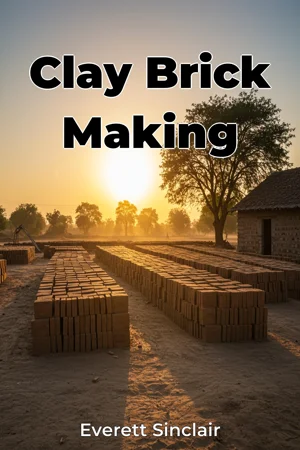
About This Book
Have you ever considered the profound connection between the humble brick and the very fabric of society, from the dwellings we inhabit to the communities we build? "Clay Brick Making" delves into this connection, exploring the traditional methods of hand-crafted brick production and their intricate relationship with family building practices across diverse cultures. This book examines how the art of making bricks by hand is not merely a construction technique, but a deeply embedded cultural practice that shapes family structures, livelihoods, and the architectural landscape itself. The two primary focal points of this study are the traditional techniques of clay brick production and the family-centric nature of this craft. It's crucial to understand the historical context of brickmaking as a foundational element of human civilization, pre-dating modern industrial processes. Analyzing the family's role is equally significant, as this provides insight into the socio-economic structures intimately tied to this traditional occupation, particularly its impact on skill transmission, labor dynamics, and community bonds. The book argues that traditional brickmaking, often viewed as a rudimentary process, represents a sophisticated form of vernacular technology that directly supports and sustains family units. This argument challenges conventional narratives that often overlook the human element in construction, especially in developing countries. By illuminating the socio-economic dimensions of brickmaking, this book posits that understanding these traditions is essential for fostering sustainable development and preserving cultural heritage. The book's structure follows a logical progression, beginning with an introduction to the history of clay brick production and its cultural significance. This section lays the groundwork for understanding the variations in techniques, from the sourcing of clay to the firing of the bricks. The development of ideas then proceeds through three major parts. The first part examines the family as a unit of production, detailing the roles and responsibilities of each family member in the brickmaking process. The second part investigates the specific techniques employed in different regions, highlighting variations in clay preparation, molding, and firing. The third part focuses on the socio-economic impact of brickmaking on family livelihoods, considering factors like income generation, access to resources, and social mobility. The argument culminates in a discussion of the challenges facing traditional brickmakers in the face of industrialization and globalization, exploring strategies for preserving this craft while promoting sustainable development. The book concludes with practical implications, discussing how policymakers and development organizations can support traditional brickmaking communities. The analysis is supported by extensive research, including ethnographic studies, interviews with brickmaking families, and architectural surveys of brick structures. Emphasis is placed on primary data collected directly from brickmaking communities. This book connects to several other fields of study. Firstly, it aligns with economic anthropology by analyzing a specific production system. Secondly, it contributes to architectural history by examining the role of local materials and techniques. Thirdly, it informs sustainable development studies by exploring the livelihood strategies of marginalized communities. What sets this book apart is its interdisciplinary approach, combining insights from anthropology, architecture, and economics to provide a holistic understanding of clay brick making. Unlike purely technical manuals, this book emphasizes the human element of the craft. The writing style is academic, yet accessible, aiming to present complex information in a clear and engaging manner. While grounded in scholarly research, the book also incorporates real-life stories and anecdotes. The target audience includes students and scholars in architecture, anthropology, economic development, and material science, as well as policymakers and practitioners involved in heritage preservation and community development. Adhering to the standards of social science writing, the book presents a rigorous analysis grounded in empirical evidence and theoretical frameworks. The scope of the book focuses on traditional, non-industrial methods of brickmaking. While it acknowledges the existence of industrial brick production, it does not delve into the technical aspects of modern factories. The information presented in "Clay Brick Making" can be applied practically by policymakers seeking to support traditional livelihoods, architects interested in vernacular construction techniques, and community development organizations working to empower marginalized communities. The book will address the ongoing debate surrounding the environmental impact of traditional brickmaking, particularly its contribution to deforestation and air pollution, and propose solutions for mitigating these challenges.
Have you ever considered the profound connection between the humble brick and the very fabric of society, from the dwellings we inhabit to the communities we build? "Clay Brick Making" delves into this connection, exploring the traditional methods of hand-crafted brick production and their intricate relationship with family building practices across diverse cultures. This book examines how the art of making bricks by hand is not merely a construction technique, but a deeply embedded cultural practice that shapes family structures, livelihoods, and the architectural landscape itself. The two primary focal points of this study are the traditional techniques of clay brick production and the family-centric nature of this craft. It's crucial to understand the historical context of brickmaking as a foundational element of human civilization, pre-dating modern industrial processes. Analyzing the family's role is equally significant, as this provides insight into the socio-economic structures intimately tied to this traditional occupation, particularly its impact on skill transmission, labor dynamics, and community bonds. The book argues that traditional brickmaking, often viewed as a rudimentary process, represents a sophisticated form of vernacular technology that directly supports and sustains family units. This argument challenges conventional narratives that often overlook the human element in construction, especially in developing countries. By illuminating the socio-economic dimensions of brickmaking, this book posits that understanding these traditions is essential for fostering sustainable development and preserving cultural heritage. The book's structure follows a logical progression, beginning with an introduction to the history of clay brick production and its cultural significance. This section lays the groundwork for understanding the variations in techniques, from the sourcing of clay to the firing of the bricks. The development of ideas then proceeds through three major parts. The first part examines the family as a unit of production, detailing the roles and responsibilities of each family member in the brickmaking process. The second part investigates the specific techniques employed in different regions, highlighting variations in clay preparation, molding, and firing. The third part focuses on the socio-economic impact of brickmaking on family livelihoods, considering factors like income generation, access to resources, and social mobility. The argument culminates in a discussion of the challenges facing traditional brickmakers in the face of industrialization and globalization, exploring strategies for preserving this craft while promoting sustainable development. The book concludes with practical implications, discussing how policymakers and development organizations can support traditional brickmaking communities. The analysis is supported by extensive research, including ethnographic studies, interviews with brickmaking families, and architectural surveys of brick structures. Emphasis is placed on primary data collected directly from brickmaking communities. This book connects to several other fields of study. Firstly, it aligns with economic anthropology by analyzing a specific production system. Secondly, it contributes to architectural history by examining the role of local materials and techniques. Thirdly, it informs sustainable development studies by exploring the livelihood strategies of marginalized communities. What sets this book apart is its interdisciplinary approach, combining insights from anthropology, architecture, and economics to provide a holistic understanding of clay brick making. Unlike purely technical manuals, this book emphasizes the human element of the craft. The writing style is academic, yet accessible, aiming to present complex information in a clear and engaging manner. While grounded in scholarly research, the book also incorporates real-life stories and anecdotes. The target audience includes students and scholars in architecture, anthropology, economic development, and material science, as well as policymakers and practitioners involved in heritage preservation and community development. Adhering to the standards of social science writing, the book presents a rigorous analysis grounded in empirical evidence and theoretical frameworks. The scope of the book focuses on traditional, non-industrial methods of brickmaking. While it acknowledges the existence of industrial brick production, it does not delve into the technical aspects of modern factories. The information presented in "Clay Brick Making" can be applied practically by policymakers seeking to support traditional livelihoods, architects interested in vernacular construction techniques, and community development organizations working to empower marginalized communities. The book will address the ongoing debate surrounding the environmental impact of traditional brickmaking, particularly its contribution to deforestation and air pollution, and propose solutions for mitigating these challenges.
"Clay Brick Making" explores the profound link between hand-crafted bricks and society, examining traditional brickmaking as a cultural practice shaping family structures and architectural landscapes. This book delves into how this foundational element of human civilization impacts skill transmission, labor dynamics, and community bonds. Traditional brickmaking, often overlooked, represents a sophisticated vernacular technology supporting family units and offering insights into sustainable development. The book progresses logically, beginning with the history and cultural significance of clay brick production. It then analyzes the family as a unit of production, investigates specific regional techniques, and focuses on the socio-economic impact on family livelihoods. Supported by ethnographic studies and interviews, the book offers a unique interdisciplinary approach, combining anthropology, architecture, and economics to provide a holistic understanding beyond mere technical manuals.
Book Details
ISBN
9788235203267
Publisher
Publifye AS
Your Licenses
You don't own any licenses for this book
Purchase a license below to unlock this book and download the EPUB.
Purchase License
Select a tier to unlock this book
Need bulk licensing?
Contact us for enterprise agreements.