
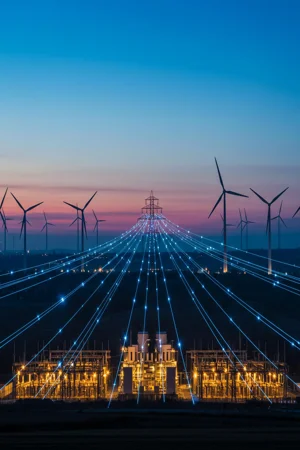
About This Book
How can we build a future powered by clean energy without compromising the reliability and efficiency of our electricity grids? "Smart Grid Evolution" delves into the critical integration of renewable energy sources into intelligent electricity networks, offering a wide exploration of the challenges and opportunities in this rapidly evolving field. This book is important because the transition to renewable energy is essential for mitigating climate change and ensuring a sustainable energy future, but it requires a fundamental rethinking of how electricity grids are designed and operated. This book examines several key topics. First, it analyzes the technologies and strategies for integrating variable renewable resources like solar and wind power into the grid. Second, it investigates smart grid technologies such as advanced metering infrastructure (AMI), wide-area monitoring systems (WAMS), and distributed energy resource management systems (DERMS), that enable enhanced grid control and resilience. Third, it studies the economic and regulatory aspects of smart grid deployment, including market design, incentive mechanisms, and policy frameworks. Understanding the evolution of electricity networks requires some historical context. The book begins by tracing the development of traditional power grids and the challenges they face in accommodating increasing amounts of renewable energy. It then explores the key principles of smart grid design and operation, building upon fundamental concepts in electrical engineering, power systems analysis, and control theory. Readers will benefit from a basic understanding of these areas, although the book provides introductory material to ensure accessibility. The central argument of "Smart Grid Evolution" is that the successful integration of renewables into electricity networks requires a holistic approach that considers technological, economic, and regulatory factors. It emphasizes that smart grid technologies are not simply about upgrading infrastructure but about transforming the way electricity is produced, delivered, and consumed. This argument is vital because it provides a clear and actionable framework for policymakers, utilities, and researchers to guide the development of future energy systems. The book is structured to provide a comprehensive overview of the topic. Part I introduces the fundamental concepts of smart grids and renewable energy integration. Part II delves into the technological aspects, including detailed discussions of smart grid infrastructure, communication networks, and control algorithms. Part III explores the economic and regulatory dimensions, examining market designs that incentivize renewable energy adoption and the policies needed to support smart grid deployment. Finally, Part IV discusses several case studies, providing real-world examples of successful smart grid projects and their impact on renewable energy integration. The evidence presented in this book draws from a mixture of academic research, industry reports, and case studies. It analyzes data from real-world smart grid deployments, demonstrating the effectiveness of different technologies and strategies. The book also incorporates modeling and simulation results to illustrate the potential benefits of smart grids in enhancing grid stability and reducing carbon emissions. "Smart Grid Evolution" connects to several other fields, including environmental science, economics, and computer science. Its examination of renewable energy integration is directly relevant to environmental sustainability, while its analysis of market designs and policy frameworks draws upon principles of economics. Furthermore, the book's discussion of smart grid communication networks and data analytics reflects the growing importance of computer science in the energy sector. This book offers a unique perspective by combining a technical analysis of smart grid technologies. This comprehensive approach sets it apart from other books in the field, which often focus on a narrow subset of topics. The book adopts an academic tone, presenting information in a clear, concise, and well-referenced manner. It balances technical depth with accessibility, making it suitable for a wide range of readers. The target audience for "Smart Grid Evolution" includes electrical engineers, energy professionals, policymakers, and researchers interested in smart grids and renewable energy integration. It would also be valuable for advanced undergraduate and graduate students in electrical engineering, environmental science, and energy policy. This book would be valuable to them because it provides a deep dive into the technical, economic, and regulatory aspects of smart grids, equipping readers with the knowledge and skills needed to contribute to the development of sustainable energy systems. In line with the conventions of electrical engineering and environmental science, the book relies on factual data, empirical evidence, and rigorous analysis to support its arguments. It avoids speculative claims and instead focuses on providing a balanced and objective assessment of the state of the art. The scope of the book is broad, covering a wide range of smart grid technologies and their applications in renewable energy integration. However, it focuses primarily on the technical and economic aspects, with less emphasis on the social and behavioral dimensions of smart grid deployment. The information in "Smart Grid Evolution" can be applied practically by utilities, policymakers, and researchers in several ways. Utilities can use the book to inform their smart grid investment decisions and develop strategies for integrating renewable energy resources into their grids. Policymakers can use it to design effective policies and regulations that promote smart grid deployment and renewable energy adoption. Researchers can use it as a source of inspiration for further innovation. One ongoing debate in the field is the optimal market design for integrating variable renewable energy resources. Some argue for centralized market structures that allow for efficient dispatch of all resources, while others favor decentralized approaches that empower consumers and promote local energy production. "Smart Grid Evolution" explores these different perspectives and offers insights into the trade-offs involved.
How can we build a future powered by clean energy without compromising the reliability and efficiency of our electricity grids? "Smart Grid Evolution" delves into the critical integration of renewable energy sources into intelligent electricity networks, offering a wide exploration of the challenges and opportunities in this rapidly evolving field. This book is important because the transition to renewable energy is essential for mitigating climate change and ensuring a sustainable energy future, but it requires a fundamental rethinking of how electricity grids are designed and operated. This book examines several key topics. First, it analyzes the technologies and strategies for integrating variable renewable resources like solar and wind power into the grid. Second, it investigates smart grid technologies such as advanced metering infrastructure (AMI), wide-area monitoring systems (WAMS), and distributed energy resource management systems (DERMS), that enable enhanced grid control and resilience. Third, it studies the economic and regulatory aspects of smart grid deployment, including market design, incentive mechanisms, and policy frameworks. Understanding the evolution of electricity networks requires some historical context. The book begins by tracing the development of traditional power grids and the challenges they face in accommodating increasing amounts of renewable energy. It then explores the key principles of smart grid design and operation, building upon fundamental concepts in electrical engineering, power systems analysis, and control theory. Readers will benefit from a basic understanding of these areas, although the book provides introductory material to ensure accessibility. The central argument of "Smart Grid Evolution" is that the successful integration of renewables into electricity networks requires a holistic approach that considers technological, economic, and regulatory factors. It emphasizes that smart grid technologies are not simply about upgrading infrastructure but about transforming the way electricity is produced, delivered, and consumed. This argument is vital because it provides a clear and actionable framework for policymakers, utilities, and researchers to guide the development of future energy systems. The book is structured to provide a comprehensive overview of the topic. Part I introduces the fundamental concepts of smart grids and renewable energy integration. Part II delves into the technological aspects, including detailed discussions of smart grid infrastructure, communication networks, and control algorithms. Part III explores the economic and regulatory dimensions, examining market designs that incentivize renewable energy adoption and the policies needed to support smart grid deployment. Finally, Part IV discusses several case studies, providing real-world examples of successful smart grid projects and their impact on renewable energy integration. The evidence presented in this book draws from a mixture of academic research, industry reports, and case studies. It analyzes data from real-world smart grid deployments, demonstrating the effectiveness of different technologies and strategies. The book also incorporates modeling and simulation results to illustrate the potential benefits of smart grids in enhancing grid stability and reducing carbon emissions. "Smart Grid Evolution" connects to several other fields, including environmental science, economics, and computer science. Its examination of renewable energy integration is directly relevant to environmental sustainability, while its analysis of market designs and policy frameworks draws upon principles of economics. Furthermore, the book's discussion of smart grid communication networks and data analytics reflects the growing importance of computer science in the energy sector. This book offers a unique perspective by combining a technical analysis of smart grid technologies. This comprehensive approach sets it apart from other books in the field, which often focus on a narrow subset of topics. The book adopts an academic tone, presenting information in a clear, concise, and well-referenced manner. It balances technical depth with accessibility, making it suitable for a wide range of readers. The target audience for "Smart Grid Evolution" includes electrical engineers, energy professionals, policymakers, and researchers interested in smart grids and renewable energy integration. It would also be valuable for advanced undergraduate and graduate students in electrical engineering, environmental science, and energy policy. This book would be valuable to them because it provides a deep dive into the technical, economic, and regulatory aspects of smart grids, equipping readers with the knowledge and skills needed to contribute to the development of sustainable energy systems. In line with the conventions of electrical engineering and environmental science, the book relies on factual data, empirical evidence, and rigorous analysis to support its arguments. It avoids speculative claims and instead focuses on providing a balanced and objective assessment of the state of the art. The scope of the book is broad, covering a wide range of smart grid technologies and their applications in renewable energy integration. However, it focuses primarily on the technical and economic aspects, with less emphasis on the social and behavioral dimensions of smart grid deployment. The information in "Smart Grid Evolution" can be applied practically by utilities, policymakers, and researchers in several ways. Utilities can use the book to inform their smart grid investment decisions and develop strategies for integrating renewable energy resources into their grids. Policymakers can use it to design effective policies and regulations that promote smart grid deployment and renewable energy adoption. Researchers can use it as a source of inspiration for further innovation. One ongoing debate in the field is the optimal market design for integrating variable renewable energy resources. Some argue for centralized market structures that allow for efficient dispatch of all resources, while others favor decentralized approaches that empower consumers and promote local energy production. "Smart Grid Evolution" explores these different perspectives and offers insights into the trade-offs involved.
"Smart Grid Evolution" explores the vital intersection of renewable energy integration and smart grid technologies, essential for creating a sustainable energy future. The book addresses how to effectively incorporate variable renewable resources, such as solar and wind, into existing electricity networks. It highlights the importance of advanced metering infrastructure (AMI) and wide-area monitoring systems (WAMS) in enhancing grid control and resilience. The book begins by tracing the evolution of traditional power grids and the challenges they face with increasing renewable energy adoption. It then delves into the principles of smart grid design, examining economic and regulatory aspects like market design and policy frameworks. One key insight is that successful renewable energy integration requires a holistic approach, transforming how electricity is produced, delivered, and consumed. The book progresses through technological aspects, economic dimensions, and real-world case studies. This comprehensive approach sets "Smart Grid Evolution" apart, offering a unique perspective valuable to electrical engineers, energy professionals, and policymakers involved in shaping future energy systems.
Book Details
ISBN
9788235203243
Publisher
Publifye AS
Your Licenses
You don't own any licenses for this book
Purchase a license below to unlock this book and download the EPUB.
Purchase License
Select a tier to unlock this book
Need bulk licensing?
Contact us for enterprise agreements.