
About This Book
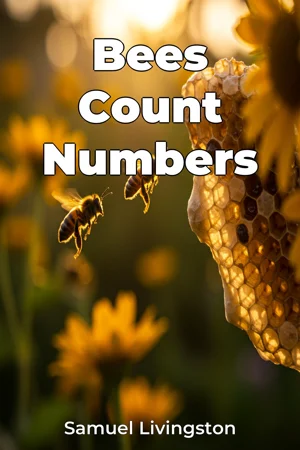
Did you know that bees can count? “Bees Count Numbers” delves into the surprising mathematical abilities of these fascinating insects, presenting compelling evidence derived from rigorous behavioral experiments. This book explores the cognitive capabilities of bees related to numeracy, their understanding of numerical concepts, and the implications of these findings for our broader understanding of animal intelligence and the evolution of cognition. The book centers around three main topics: the demonstration of numerical competence in bees, the cognitive mechanisms that underpin these abilities, and the evolutionary significance of numerical cognition in insects. These topics are important because they challenge long-held assumptions about the limitations of insect brains and offer new perspectives on the evolution of intelligence across different species. Understanding how bees process numerical information sheds light on the fundamental building blocks of cognition, potentially revealing shared cognitive mechanisms between insects and more complex organisms, including humans. To fully appreciate the discoveries presented, a basic understanding of experimental design in behavioral science and elementary concepts in evolutionary biology will be helpful. While technical jargon is minimized, familiarity with these areas will enhance the reader's comprehension of the research methodologies and the broader context of the findings. The central argument of “Bees Count Numbers” is that honeybees possess a rudimentary numerical sense, enabling them to perform simple mathematical tasks such as counting, ordering quantities, and even understanding the concept of zero. This argument is significant because it expands our understanding of the distribution of numerical abilities in the animal kingdom and suggests that numerical cognition may have evolved independently in different lineages. Demonstrating numerical abilities in insects necessitates a re-evaluation of current models of cognitive evolution. The book is structured to guide the reader through the evidence supporting the bee's numerical skills. It begins with an introduction to the field of animal cognition and an overview of the historical research on numerical abilities in animals. The heart of the book presents a detailed account of the behavioral experiments conducted to assess the numerical competence of bees. This includes chapters dedicated to experimental designs, data analysis, and interpretation of results. The final section of the book culminates in a discussion of the implications of these findings for our understanding of insect intelligence, the evolution of cognition, and potential applications in fields such as artificial intelligence. The evidence presented relies heavily on controlled behavioral experiments. These experiments involve training bees to associate specific quantities with rewards and then testing their ability to discriminate between different numbers of objects. The experiments use carefully designed visual stimuli and controlled environments to isolate the numerical variable from other potentially confounding factors. Statistical analyses of the bees' choices provide quantitative support for their numerical abilities. "Bees Count Numbers" connects to several other fields of study. First, it contributes to the field of cognitive science by providing insights into the fundamental cognitive mechanisms that underlie numerical processing. Second, it relates to evolutionary biology by exploring the evolutionary origins and adaptive significance of numerical abilities. Finally, it links to the field of artificial intelligence by suggesting novel approaches to designing intelligent systems based on the principles of insect cognition. This book offers a unique perspective by focusing specifically on the numerical abilities of bees, an area that has been relatively unexplored compared to research on cognition in other animal groups. The combination of rigorous experimental methodology and evolutionary interpretation sets it apart from other books in the animal cognition field. The writing style is designed to be accessible to a broad audience while maintaining scientific rigor. While the book presents complex scientific concepts, the language is clear and straightforward, making it suitable for both students and general readers with an interest in science. The target audience includes students and researchers in biology, cognitive science, and evolutionary biology, as well as anyone with a general interest in animal behavior and intelligence. The book offers valuable insights into the cognitive abilities of insects and the evolution of cognition, making it a valuable resource for both academic and general readers. As a non-fiction science book, "Bees Count Numbers" prioritizes factual accuracy, clear presentation of evidence, and rigorous scientific analysis. It adheres to the conventions of scientific writing, including detailed descriptions of methodologies, transparent presentation of data, and careful interpretation of results. The scope of the book is limited to the numerical abilities of honeybees investigated through behavioral experiments; it does not delve into other aspects of bee behavior or the broader field of insect cognition. The findings presented in "Bees Count Numbers" have potential real-world applications in areas such as robotics and artificial intelligence. Understanding how bees process numerical information could inspire the development of more efficient and robust algorithms for solving complex problems. The book also touches on ongoing debates regarding the nature of consciousness and intelligence in non-human animals. By demonstrating numerical abilities in bees, it contributes to the broader discussion about the cognitive capacities of different species and the criteria for defining intelligence.
Did you know that bees can count? “Bees Count Numbers” delves into the surprising mathematical abilities of these fascinating insects, presenting compelling evidence derived from rigorous behavioral experiments. This book explores the cognitive capabilities of bees related to numeracy, their understanding of numerical concepts, and the implications of these findings for our broader understanding of animal intelligence and the evolution of cognition. The book centers around three main topics: the demonstration of numerical competence in bees, the cognitive mechanisms that underpin these abilities, and the evolutionary significance of numerical cognition in insects. These topics are important because they challenge long-held assumptions about the limitations of insect brains and offer new perspectives on the evolution of intelligence across different species. Understanding how bees process numerical information sheds light on the fundamental building blocks of cognition, potentially revealing shared cognitive mechanisms between insects and more complex organisms, including humans. To fully appreciate the discoveries presented, a basic understanding of experimental design in behavioral science and elementary concepts in evolutionary biology will be helpful. While technical jargon is minimized, familiarity with these areas will enhance the reader's comprehension of the research methodologies and the broader context of the findings. The central argument of “Bees Count Numbers” is that honeybees possess a rudimentary numerical sense, enabling them to perform simple mathematical tasks such as counting, ordering quantities, and even understanding the concept of zero. This argument is significant because it expands our understanding of the distribution of numerical abilities in the animal kingdom and suggests that numerical cognition may have evolved independently in different lineages. Demonstrating numerical abilities in insects necessitates a re-evaluation of current models of cognitive evolution. The book is structured to guide the reader through the evidence supporting the bee's numerical skills. It begins with an introduction to the field of animal cognition and an overview of the historical research on numerical abilities in animals. The heart of the book presents a detailed account of the behavioral experiments conducted to assess the numerical competence of bees. This includes chapters dedicated to experimental designs, data analysis, and interpretation of results. The final section of the book culminates in a discussion of the implications of these findings for our understanding of insect intelligence, the evolution of cognition, and potential applications in fields such as artificial intelligence. The evidence presented relies heavily on controlled behavioral experiments. These experiments involve training bees to associate specific quantities with rewards and then testing their ability to discriminate between different numbers of objects. The experiments use carefully designed visual stimuli and controlled environments to isolate the numerical variable from other potentially confounding factors. Statistical analyses of the bees' choices provide quantitative support for their numerical abilities. "Bees Count Numbers" connects to several other fields of study. First, it contributes to the field of cognitive science by providing insights into the fundamental cognitive mechanisms that underlie numerical processing. Second, it relates to evolutionary biology by exploring the evolutionary origins and adaptive significance of numerical abilities. Finally, it links to the field of artificial intelligence by suggesting novel approaches to designing intelligent systems based on the principles of insect cognition. This book offers a unique perspective by focusing specifically on the numerical abilities of bees, an area that has been relatively unexplored compared to research on cognition in other animal groups. The combination of rigorous experimental methodology and evolutionary interpretation sets it apart from other books in the animal cognition field. The writing style is designed to be accessible to a broad audience while maintaining scientific rigor. While the book presents complex scientific concepts, the language is clear and straightforward, making it suitable for both students and general readers with an interest in science. The target audience includes students and researchers in biology, cognitive science, and evolutionary biology, as well as anyone with a general interest in animal behavior and intelligence. The book offers valuable insights into the cognitive abilities of insects and the evolution of cognition, making it a valuable resource for both academic and general readers. As a non-fiction science book, "Bees Count Numbers" prioritizes factual accuracy, clear presentation of evidence, and rigorous scientific analysis. It adheres to the conventions of scientific writing, including detailed descriptions of methodologies, transparent presentation of data, and careful interpretation of results. The scope of the book is limited to the numerical abilities of honeybees investigated through behavioral experiments; it does not delve into other aspects of bee behavior or the broader field of insect cognition. The findings presented in "Bees Count Numbers" have potential real-world applications in areas such as robotics and artificial intelligence. Understanding how bees process numerical information could inspire the development of more efficient and robust algorithms for solving complex problems. The book also touches on ongoing debates regarding the nature of consciousness and intelligence in non-human animals. By demonstrating numerical abilities in bees, it contributes to the broader discussion about the cognitive capacities of different species and the criteria for defining intelligence.
"Bees Count Numbers" reveals the surprising numerical abilities of bees, challenging assumptions about insect intelligence. Through rigorous behavioral experiments, the book demonstrates that bees can count, order quantities, and even understand the concept of zero. This discovery has significant implications for our understanding of animal cognition and the independent evolution of numerical skills across species. The book explores the cognitive mechanisms behind bee numeracy and its evolutionary significance. Findings suggest that bees' numerical competence necessitates a re-evaluation of current models of cognitive evolution. To support this, the book begins with an overview of animal cognition and historical research on numerical abilities, progressing to a detailed account of behavioral experiments, data analysis, and interpretation of results. This book offers a unique perspective by focusing specifically on bee numeracy. By emphasizing experimental methodology and evolutionary interpretation, "Bees Count Numbers" provides valuable insights for students, researchers, and anyone interested in cognitive science, biology, and artificial intelligence. The book highlights how understanding bee cognition could inspire novel approaches to designing intelligent systems.
Book Details
ISBN
9788235203045
Publisher
Publifye AS
Your Licenses
You don't own any licenses for this book
Purchase a license below to unlock this book and download the EPUB.
Purchase License
Select a tier to unlock this book
Need bulk licensing?
Contact us for enterprise agreements.