
About This Book
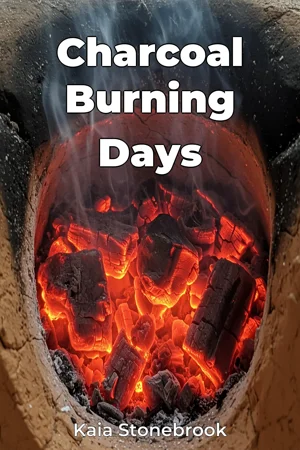
How did a seemingly simple process like charcoal burning become intertwined with the very fabric of family survival and energy independence? "Charcoal Burning Days" delves into the multifaceted world of charcoal production, exploring its critical role in meeting domestic energy needs while simultaneously examining its ecological and cultural implications. This book illuminates the science behind charcoal creation, its historical significance as a primary energy source, and its enduring relevance in various communities even today. This book addresses two key topics. First, the science, examining the chemical transformation of wood into charcoal, detailing the ideal conditions for efficient burning, and addressing common misconceptions about the process. Second, the social aspect, looking at how charcoal production has historically been a family affair, contributing to economic stability and community resilience. Its importance lies in the fact that even with advancements in energy technologies, charcoal remains a vital energy source for cooking and heating in many parts of the world, particularly in rural regions. Historically, charcoal burning was a widespread practice, predating modern energy sources like electricity and fossil fuels. It offered a readily available and relatively efficient form of fuel derived from renewable resources. Socially, it was often a family activity, with knowledge and skills passed down through generations. Understanding the chemistry of pyrolysis, the process of heating wood in the absence of oxygen, is essential for appreciating the science of charcoal production. "Charcoal Burning Days" argues that charcoal production, while often overlooked in discussions of modern energy solutions, continues to play a crucial role in meeting the energy needs of families worldwide and offers valuable insights into sustainable resource management. The significance of this argument resides in the fact that understanding traditional practices can inform more sustainable and equitable approaches to energy production and consumption in the future. The book is structured to provide a comprehensive understanding of charcoal production. It starts by introducing the fundamental scientific principles behind charcoal formation. Then, it examines the historical context of charcoal burning across different cultures and time periods. Major sections explore the environmental impact of charcoal production, including deforestation and greenhouse gas emissions, while also investigating sustainable charcoal production methods like agroforestry and efficient kiln designs. The book culminates by considering the future of charcoal as an energy source in the face of climate change and exploring its potential role in promoting energy access and rural development. Practical implications are examined in the final chapter, which details how families and communities can implement sustainable charcoal production practices. The book relies on a combination of scientific literature, historical accounts, and field research. Chemical analyses of charcoal samples are presented to illustrate the effects of different burning conditions. Historical documents, oral histories, and ethnographic studies are used to reconstruct the social and cultural dimensions of charcoal production in various regions. Data from field studies conducted in rural communities worldwide provide insights into current charcoal production practices and their impact on local livelihoods and ecosystems. "Charcoal Burning Days" also connects to other fields of study. It relates to environmental science through its examination of deforestation and carbon emissions. It connects to sociology and anthropology through its exploration of the social and cultural dimensions of energy production. It also relates to economics through its analysis of the economic role of charcoal in local economies. This book provides a practical and accessible perspective on the topic, combining scientific rigour with real-world examples. It emphasizes the importance of sustainable practices and highlights the potential of charcoal to contribute to a more equitable and environmentally responsible energy future. The target audience includes environmental scientists, historians, rural development practitioners, and anyone interested in sustainable energy solutions. The book is valuable to those seeking a deeper understanding of the historical, social, and environmental dimensions of charcoal production. As a science and nature book, "Charcoal Burning Days" emphasizes factual accuracy, scientific rigor, and clear explanations of complex processes. Data and evidence are presented objectively, and different perspectives on the topic are considered. The scope of the book encompasses the scientific, historical, social, and environmental dimensions of charcoal production. It does not delve into specific industrial uses of charcoal, focusing instead on its role in meeting family energy needs. The information can be applied practically by readers to promote sustainable charcoal production practices in their own communities. This includes implementing efficient kiln designs, adopting agroforestry techniques, and advocating for policies that support sustainable charcoal production. The book addresses the controversies surrounding charcoal production, including its contribution to deforestation and greenhouse gas emissions. It acknowledges that charcoal production can have negative environmental impacts but argues that these impacts can be mitigated through sustainable practices.
How did a seemingly simple process like charcoal burning become intertwined with the very fabric of family survival and energy independence? "Charcoal Burning Days" delves into the multifaceted world of charcoal production, exploring its critical role in meeting domestic energy needs while simultaneously examining its ecological and cultural implications. This book illuminates the science behind charcoal creation, its historical significance as a primary energy source, and its enduring relevance in various communities even today. This book addresses two key topics. First, the science, examining the chemical transformation of wood into charcoal, detailing the ideal conditions for efficient burning, and addressing common misconceptions about the process. Second, the social aspect, looking at how charcoal production has historically been a family affair, contributing to economic stability and community resilience. Its importance lies in the fact that even with advancements in energy technologies, charcoal remains a vital energy source for cooking and heating in many parts of the world, particularly in rural regions. Historically, charcoal burning was a widespread practice, predating modern energy sources like electricity and fossil fuels. It offered a readily available and relatively efficient form of fuel derived from renewable resources. Socially, it was often a family activity, with knowledge and skills passed down through generations. Understanding the chemistry of pyrolysis, the process of heating wood in the absence of oxygen, is essential for appreciating the science of charcoal production. "Charcoal Burning Days" argues that charcoal production, while often overlooked in discussions of modern energy solutions, continues to play a crucial role in meeting the energy needs of families worldwide and offers valuable insights into sustainable resource management. The significance of this argument resides in the fact that understanding traditional practices can inform more sustainable and equitable approaches to energy production and consumption in the future. The book is structured to provide a comprehensive understanding of charcoal production. It starts by introducing the fundamental scientific principles behind charcoal formation. Then, it examines the historical context of charcoal burning across different cultures and time periods. Major sections explore the environmental impact of charcoal production, including deforestation and greenhouse gas emissions, while also investigating sustainable charcoal production methods like agroforestry and efficient kiln designs. The book culminates by considering the future of charcoal as an energy source in the face of climate change and exploring its potential role in promoting energy access and rural development. Practical implications are examined in the final chapter, which details how families and communities can implement sustainable charcoal production practices. The book relies on a combination of scientific literature, historical accounts, and field research. Chemical analyses of charcoal samples are presented to illustrate the effects of different burning conditions. Historical documents, oral histories, and ethnographic studies are used to reconstruct the social and cultural dimensions of charcoal production in various regions. Data from field studies conducted in rural communities worldwide provide insights into current charcoal production practices and their impact on local livelihoods and ecosystems. "Charcoal Burning Days" also connects to other fields of study. It relates to environmental science through its examination of deforestation and carbon emissions. It connects to sociology and anthropology through its exploration of the social and cultural dimensions of energy production. It also relates to economics through its analysis of the economic role of charcoal in local economies. This book provides a practical and accessible perspective on the topic, combining scientific rigour with real-world examples. It emphasizes the importance of sustainable practices and highlights the potential of charcoal to contribute to a more equitable and environmentally responsible energy future. The target audience includes environmental scientists, historians, rural development practitioners, and anyone interested in sustainable energy solutions. The book is valuable to those seeking a deeper understanding of the historical, social, and environmental dimensions of charcoal production. As a science and nature book, "Charcoal Burning Days" emphasizes factual accuracy, scientific rigor, and clear explanations of complex processes. Data and evidence are presented objectively, and different perspectives on the topic are considered. The scope of the book encompasses the scientific, historical, social, and environmental dimensions of charcoal production. It does not delve into specific industrial uses of charcoal, focusing instead on its role in meeting family energy needs. The information can be applied practically by readers to promote sustainable charcoal production practices in their own communities. This includes implementing efficient kiln designs, adopting agroforestry techniques, and advocating for policies that support sustainable charcoal production. The book addresses the controversies surrounding charcoal production, including its contribution to deforestation and greenhouse gas emissions. It acknowledges that charcoal production can have negative environmental impacts but argues that these impacts can be mitigated through sustainable practices.
"Charcoal Burning Days" unveils the surprising significance of charcoal production, from its scientific underpinnings to its role in family survival and energy independence. The book explores pyrolysis, the chemical process of transforming wood into charcoal, highlighting how mastering this process was crucial for early communities. It also reveals how charcoal burning, often a family affair, contributed significantly to economic stability, particularly in rural regions where it remains a vital energy source for cooking and heating. The book takes readers on a journey, starting with the scientific principles of charcoal formation and then delving into its historical and cultural contexts. It addresses critical environmental concerns, such as deforestation and carbon emissions, while also championing sustainable methods like agroforestry and improved kiln designs. By blending scientific rigor with real-world examples, "Charcoal Burning Days" argues that traditional practices can inform more sustainable and equitable approaches to energy production. Ultimately, this book offers a comprehensive perspective on charcoal's past, present, and potential future. It emphasizes the importance of sustainable practices and highlights the potential of charcoal to contribute to a more environmentally responsible energy future, especially in promoting energy access and rural development. The book connects multiple fields, including environmental science, sociology, and economics, to provide a holistic perspective on charcoal production.
Book Details
ISBN
9788235202925
Publisher
Publifye AS
Your Licenses
You don't own any licenses for this book
Purchase a license below to unlock this book and download the EPUB.
Purchase License
Select a tier to unlock this book
Need bulk licensing?
Contact us for enterprise agreements.