
About This Book
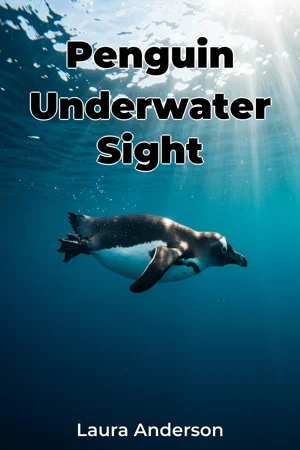
Have you ever wondered how penguins, seemingly awkward on land, transform into streamlined hunters beneath the waves? "Penguin Underwater Sight" delves into the fascinating adaptations that allow these birds to see clearly in both aquatic and terrestrial environments, exploring the evolutionary marvel of their vision. This book examines the intricate biological mechanisms that enable penguins to thrive in two vastly different visual worlds. At the core of this exploration lie three key topics: the anatomy and physiology of the penguin eye, the neurological processing of visual information, and the ecological pressures that have shaped their unique visual capabilities. Understanding these topics is crucial, as it offers insights not only into the specific adaptations of penguins but also into the broader principles of visual adaptation in the animal kingdom. Furthermore, examining penguin vision provides a unique lens through which to understand the interplay between evolution, environment, and sensory biology. This book builds upon decades of research in avian vision, marine biology, and neurobiology, synthesizing findings from various studies to present a comprehensive picture of penguin sight. A basic understanding of optics and animal physiology will aid the reader, though the text is designed to be accessible to a broad audience. The central argument of "Penguin Underwater Sight" is that the penguin's visual system represents a remarkable evolutionary compromise, perfectly tuned to meet the demands of both underwater hunting and terrestrial survival. This adaptation is not merely a sum of individual traits but a complex, integrated system where each component works in concert to provide optimal vision in both environments. Understanding this integrated system is key to appreciating the evolutionary success of penguins. The book unfolds in a structured manner, starting with an introduction to the penguin family and their diverse habitats. It then delves into the anatomy of the penguin eye, detailing the unique structure of the cornea, lens, and retina, and how these structures contribute to underwater and terrestrial vision. A dedicated section explores the neurological pathways involved in processing visual information, examining how the penguin brain interprets images received from the eyes. The book culminates by analyzing the ecological factors that drove the evolution of penguin vision, such as the need to detect prey in murky waters and avoid predators on land. The concluding chapter discusses the implications of understanding penguin vision for fields such as biomimicry and conservation. The evidence presented throughout the book draws from a wide range of sources, including anatomical studies, behavioral experiments, and neurophysiological recordings. Original data from field observations of penguin foraging behavior will also be presented, offering a unique perspective on how penguins use their vision in their natural environment. "Penguin Underwater Sight" connects to several other scientific disciplines. Firstly, it relates closely to evolutionary biology, providing a case study of adaptation through natural selection. Secondly, it connects to the field of ecology, demonstrating how environmental pressures can shape sensory systems. Finally, it links to the field of materials science through biomimicry, as the unique optical properties of the penguin eye could inspire the design of new underwater lenses or imaging systems. This book takes a novel approach by integrating anatomical, neurological, and ecological perspectives to provide a holistic understanding of penguin vision. Rather than focusing solely on one aspect, it examines how all components of the visual system work together to enable penguins to thrive in their dual environments. The tone of the book is informative and accessible, aiming to convey complex scientific concepts in a clear and engaging manner. While grounded in scientific rigor, the writing style avoids overly technical jargon, making it suitable for a broad audience. The target audience includes students and researchers in biology, zoology, and animal behavior, as well as anyone with a general interest in penguins, animal adaptations, or the science of vision. The book offers valuable insights into the fascinating world of penguin sensory biology and the power of evolution. As a work of science life sciences, nature, and biology writing, "Penguin Underwater Sight" adheres to the conventions of accuracy, objectivity, and evidence-based reasoning. The scope of the book is limited to the visual system of penguins, with a particular focus on the adaptations that enable underwater sight. While other sensory systems are briefly mentioned, they are not explored in detail. Understanding the principles of penguin vision has potential real-world applications. For example, the design of the penguin eye could inspire the development of new underwater cameras or optical sensors. Furthermore, studying penguin vision can inform conservation efforts by providing insights into how environmental changes may affect their ability to find food and avoid predators. While the basic principles of penguin vision are generally accepted, there are ongoing debates about the relative importance of different adaptations and how they interact with each other. This book will explore these controversies and present different perspectives from the scientific community.
Have you ever wondered how penguins, seemingly awkward on land, transform into streamlined hunters beneath the waves? "Penguin Underwater Sight" delves into the fascinating adaptations that allow these birds to see clearly in both aquatic and terrestrial environments, exploring the evolutionary marvel of their vision. This book examines the intricate biological mechanisms that enable penguins to thrive in two vastly different visual worlds. At the core of this exploration lie three key topics: the anatomy and physiology of the penguin eye, the neurological processing of visual information, and the ecological pressures that have shaped their unique visual capabilities. Understanding these topics is crucial, as it offers insights not only into the specific adaptations of penguins but also into the broader principles of visual adaptation in the animal kingdom. Furthermore, examining penguin vision provides a unique lens through which to understand the interplay between evolution, environment, and sensory biology. This book builds upon decades of research in avian vision, marine biology, and neurobiology, synthesizing findings from various studies to present a comprehensive picture of penguin sight. A basic understanding of optics and animal physiology will aid the reader, though the text is designed to be accessible to a broad audience. The central argument of "Penguin Underwater Sight" is that the penguin's visual system represents a remarkable evolutionary compromise, perfectly tuned to meet the demands of both underwater hunting and terrestrial survival. This adaptation is not merely a sum of individual traits but a complex, integrated system where each component works in concert to provide optimal vision in both environments. Understanding this integrated system is key to appreciating the evolutionary success of penguins. The book unfolds in a structured manner, starting with an introduction to the penguin family and their diverse habitats. It then delves into the anatomy of the penguin eye, detailing the unique structure of the cornea, lens, and retina, and how these structures contribute to underwater and terrestrial vision. A dedicated section explores the neurological pathways involved in processing visual information, examining how the penguin brain interprets images received from the eyes. The book culminates by analyzing the ecological factors that drove the evolution of penguin vision, such as the need to detect prey in murky waters and avoid predators on land. The concluding chapter discusses the implications of understanding penguin vision for fields such as biomimicry and conservation. The evidence presented throughout the book draws from a wide range of sources, including anatomical studies, behavioral experiments, and neurophysiological recordings. Original data from field observations of penguin foraging behavior will also be presented, offering a unique perspective on how penguins use their vision in their natural environment. "Penguin Underwater Sight" connects to several other scientific disciplines. Firstly, it relates closely to evolutionary biology, providing a case study of adaptation through natural selection. Secondly, it connects to the field of ecology, demonstrating how environmental pressures can shape sensory systems. Finally, it links to the field of materials science through biomimicry, as the unique optical properties of the penguin eye could inspire the design of new underwater lenses or imaging systems. This book takes a novel approach by integrating anatomical, neurological, and ecological perspectives to provide a holistic understanding of penguin vision. Rather than focusing solely on one aspect, it examines how all components of the visual system work together to enable penguins to thrive in their dual environments. The tone of the book is informative and accessible, aiming to convey complex scientific concepts in a clear and engaging manner. While grounded in scientific rigor, the writing style avoids overly technical jargon, making it suitable for a broad audience. The target audience includes students and researchers in biology, zoology, and animal behavior, as well as anyone with a general interest in penguins, animal adaptations, or the science of vision. The book offers valuable insights into the fascinating world of penguin sensory biology and the power of evolution. As a work of science life sciences, nature, and biology writing, "Penguin Underwater Sight" adheres to the conventions of accuracy, objectivity, and evidence-based reasoning. The scope of the book is limited to the visual system of penguins, with a particular focus on the adaptations that enable underwater sight. While other sensory systems are briefly mentioned, they are not explored in detail. Understanding the principles of penguin vision has potential real-world applications. For example, the design of the penguin eye could inspire the development of new underwater cameras or optical sensors. Furthermore, studying penguin vision can inform conservation efforts by providing insights into how environmental changes may affect their ability to find food and avoid predators. While the basic principles of penguin vision are generally accepted, there are ongoing debates about the relative importance of different adaptations and how they interact with each other. This book will explore these controversies and present different perspectives from the scientific community.
"Penguin Underwater Sight" explores the remarkable visual adaptations that allow penguins to thrive both on land and underwater. It delves into the evolutionary marvel of their vision, highlighting the intricate biological mechanisms that enable these birds to seamlessly transition between vastly different visual environments. For instance, the penguin eye possesses a unique structure of the cornea, lens, and retina, optimized for both aquatic and terrestrial sight. The book reveals how ecological pressures, such as the need to hunt prey in murky waters and avoid predators on land, have shaped their visual capabilities. This book takes a holistic approach, integrating anatomical, neurological, and ecological perspectives to offer a comprehensive understanding of penguin vision. It begins with an introduction to the penguin family and their habitats, progressing to the anatomy of the penguin eye and neurological pathways. Ultimately, the book analyzes the ecological factors driving the evolution of penguin vision. This integrated system demonstrates a remarkable evolutionary compromise, perfectly tuned to meet the demands of underwater hunting and terrestrial survival, making it a valuable resource for those interested in animal adaptations, marine biology, and sensory biology.
Book Details
ISBN
9788235202550
Publisher
Publifye AS
Your Licenses
You don't own any licenses for this book
Purchase a license below to unlock this book and download the EPUB.
Purchase License
Select a tier to unlock this book
Need bulk licensing?
Contact us for enterprise agreements.