
About This Book
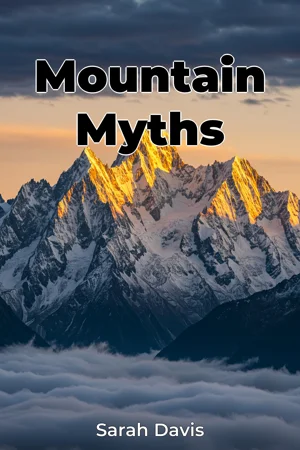
Why have mountains, seemingly inhospitable landscapes, consistently captured the human imagination as the dwelling places of gods, the stages for profound spiritual experiences, and sources of immense power? "Mountain Myths" explores the compelling story of how mountains across cultures and throughout history have transformed from geological formations into potent symbols of the sacred. This topic is crucial because understanding the human relationship with mountains reveals fundamental aspects of our spiritual, cultural, and psychological development. Mountains, often viewed simply as geographical barriers or resources, hold a much deeper significance that continues to shape our beliefs and behaviors. This book delves into the historical, religious, and cultural factors that have elevated mountains to their revered status. It argues that the imposing physical presence of mountains, combined with their inaccessibility and the dramatic natural phenomena they exhibit, fosters a sense of awe and otherness that humans interpret as divine. "Mountain Myths" examines how this perception has led to the creation of rich mythologies, elaborate rituals, and enduring traditions centered on specific peaks and ranges. To understand this phenomenon, the book provides a historical overview of mountain worship, tracing its origins from ancient civilizations to modern religions. This includes an examination of the social and environmental contexts that contributed to the sacralization of mountains, such as the need for water sources, strategic vantage points, and refuge from conflict. Readers do not require specialized knowledge but a familiarity with basic world history and religious concepts will be beneficial. The central argument posits that the enduring power of mountains as sacred sites stems from their ability to embody both the tangible and the transcendent. They are physical entities that simultaneously evoke a sense of the infinite and unknowable. This book demonstrates how this duality has been consistently exploited and celebrated in various cultural and religious practices. "Mountain Myths" unfolds in three major sections. The first section introduces the concept of sacred mountains and examines the universal human tendency to imbue natural landscapes with spiritual significance. The second section delves into specific case studies, exploring the mythologies and rituals associated with mountains such as Mount Olympus in Greece, Mount Sinai in the Middle East, Mount Fuji in Japan, and the Andes Mountains in South America. This section analyzes how different cultures have interpreted the sacredness of these mountains and how these beliefs have shaped their societies. The third section explores the modern implications of mountain reverence, including the impact of tourism, environmental conservation, and the ongoing relevance of mountain myths in a secular world. The evidence presented in "Mountain Myths" draws from a wide range of sources, including archaeological findings, ancient texts, ethnographic studies, and contemporary accounts. The methodologies employed include comparative analysis of religious traditions, historical research, and symbolic interpretation of cultural artifacts. Unique data sources include previously untranslated texts from ancient pilgrimage sites and recent anthropological fieldwork conducted in remote mountain communities. This book connects to several other fields. It intersects with anthropology, providing insights into cultural beliefs and practices. It relates to environmental studies, highlighting the importance of preserving sacred landscapes. It also connects with religious studies, offering a unique perspective on the origins and evolution of religious beliefs. These interdisciplinary connections enrich the book's argument by providing a more holistic understanding of the human relationship with mountains. "Mountain Myths" adopts a narrative non-fiction style, presenting information in an accessible and engaging manner while maintaining scholarly rigor. The target audience includes readers interested in history, religion, mythology, cultural studies, and environmentalism. This book would be valuable to them because it provides a fresh perspective on a familiar topic, offering new insights into the enduring power of mountains as sacred sites and symbols. The scope of the book is broad, covering a wide range of cultures and historical periods, but it is limited to a focus on the symbolic and spiritual significance of mountains. It does not delve deeply into the geological or biological aspects of mountain ecosystems. The information can be applied to a greater appreciation for cultural diversity, a deeper sensitivity to environmental conservation, and a more profound understanding of the human search for meaning and purpose.
Why have mountains, seemingly inhospitable landscapes, consistently captured the human imagination as the dwelling places of gods, the stages for profound spiritual experiences, and sources of immense power? "Mountain Myths" explores the compelling story of how mountains across cultures and throughout history have transformed from geological formations into potent symbols of the sacred. This topic is crucial because understanding the human relationship with mountains reveals fundamental aspects of our spiritual, cultural, and psychological development. Mountains, often viewed simply as geographical barriers or resources, hold a much deeper significance that continues to shape our beliefs and behaviors. This book delves into the historical, religious, and cultural factors that have elevated mountains to their revered status. It argues that the imposing physical presence of mountains, combined with their inaccessibility and the dramatic natural phenomena they exhibit, fosters a sense of awe and otherness that humans interpret as divine. "Mountain Myths" examines how this perception has led to the creation of rich mythologies, elaborate rituals, and enduring traditions centered on specific peaks and ranges. To understand this phenomenon, the book provides a historical overview of mountain worship, tracing its origins from ancient civilizations to modern religions. This includes an examination of the social and environmental contexts that contributed to the sacralization of mountains, such as the need for water sources, strategic vantage points, and refuge from conflict. Readers do not require specialized knowledge but a familiarity with basic world history and religious concepts will be beneficial. The central argument posits that the enduring power of mountains as sacred sites stems from their ability to embody both the tangible and the transcendent. They are physical entities that simultaneously evoke a sense of the infinite and unknowable. This book demonstrates how this duality has been consistently exploited and celebrated in various cultural and religious practices. "Mountain Myths" unfolds in three major sections. The first section introduces the concept of sacred mountains and examines the universal human tendency to imbue natural landscapes with spiritual significance. The second section delves into specific case studies, exploring the mythologies and rituals associated with mountains such as Mount Olympus in Greece, Mount Sinai in the Middle East, Mount Fuji in Japan, and the Andes Mountains in South America. This section analyzes how different cultures have interpreted the sacredness of these mountains and how these beliefs have shaped their societies. The third section explores the modern implications of mountain reverence, including the impact of tourism, environmental conservation, and the ongoing relevance of mountain myths in a secular world. The evidence presented in "Mountain Myths" draws from a wide range of sources, including archaeological findings, ancient texts, ethnographic studies, and contemporary accounts. The methodologies employed include comparative analysis of religious traditions, historical research, and symbolic interpretation of cultural artifacts. Unique data sources include previously untranslated texts from ancient pilgrimage sites and recent anthropological fieldwork conducted in remote mountain communities. This book connects to several other fields. It intersects with anthropology, providing insights into cultural beliefs and practices. It relates to environmental studies, highlighting the importance of preserving sacred landscapes. It also connects with religious studies, offering a unique perspective on the origins and evolution of religious beliefs. These interdisciplinary connections enrich the book's argument by providing a more holistic understanding of the human relationship with mountains. "Mountain Myths" adopts a narrative non-fiction style, presenting information in an accessible and engaging manner while maintaining scholarly rigor. The target audience includes readers interested in history, religion, mythology, cultural studies, and environmentalism. This book would be valuable to them because it provides a fresh perspective on a familiar topic, offering new insights into the enduring power of mountains as sacred sites and symbols. The scope of the book is broad, covering a wide range of cultures and historical periods, but it is limited to a focus on the symbolic and spiritual significance of mountains. It does not delve deeply into the geological or biological aspects of mountain ecosystems. The information can be applied to a greater appreciation for cultural diversity, a deeper sensitivity to environmental conservation, and a more profound understanding of the human search for meaning and purpose.
"Mountain Myths" unveils the captivating story of mountains as sacred spaces across diverse cultures and eras, exploring their transformation from mere geological features into potent symbols of the divine. Mountains, often perceived as inhospitable, have consistently been imagined as dwelling places of gods, inspiring profound spiritual experiences, and emanating immense power. This book examines how these majestic formations, with their imposing presence and dramatic natural phenomena, foster a sense of awe that humans interpret as divine, leading to rich mythologies and enduring traditions. The book traces the origins of mountain worship from ancient civilizations to modern religions, highlighting the social and environmental factors contributing to their sacralization. It explores specific case studies, such as Mount Olympus, Mount Sinai, Mount Fuji, and the Andes Mountains, analyzing how different cultures have interpreted their sacredness. The narrative progresses across three sections, beginning with the universal human tendency to imbue landscapes with spiritual significance, then delving into specific mountain mythologies, and finally exploring the modern implications of mountain reverence, including tourism and environmental conservation.
Book Details
ISBN
9788235202475
Publisher
Publifye AS
Your Licenses
You don't own any licenses for this book
Purchase a license below to unlock this book and download the EPUB.
Purchase License
Select a tier to unlock this book
Need bulk licensing?
Contact us for enterprise agreements.