
About This Book
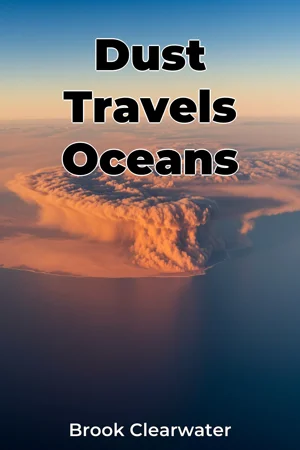
Did you know that the dust swirling outside your window might have traveled thousands of miles across an ocean? "Dust Travels Oceans" unveils the remarkable journey of Saharan dust, tracing its trans-Atlantic voyage to the Americas, a phenomenon observed and meticulously tracked through advanced satellite data. This book explores the profound influence of this airborne sediment on ecological systems, climate patterns, and even human health, highlighting the interconnectedness of our planet's distant regions. This book focuses on three key areas: the mechanisms of dust transport across the Atlantic, the ecological and environmental impacts of Saharan dust deposition in the Americas, and the sophisticated satellite technologies that allow us to monitor these processes. Understanding these dynamics is crucial for predicting air quality changes, assessing the health of ecosystems, and refining climate models. The story of Saharan dust's journey is not new, but recent advancements in satellite technology have revolutionized our ability to track and analyze its movement. For decades, scientists have suspected that this dust plays a role in various ecological processes, but only now can we effectively quantify its impact. Therefore, we will rely on interpretations from a wide range of research papers that have established, in the recent past, the scientific basis for the claims expressed in this book. "Dust Travels Oceans" argues that Saharan dust transport is a significant, yet often overlooked, factor in shaping the environmental landscape of the Americas. By presenting detailed analyses of satellite-derived data, the book demonstrates that this dust has far-reaching consequences, affecting everything from soil fertility in the Amazon rainforest to coral reef health in the Caribbean. The book begins by introducing the fundamentals of aeolian dust transport: the sources of Saharan dust, the atmospheric processes that lift it into the air, and the wind patterns that carry it across the Atlantic. The second section focuses on the ecological impacts of dust deposition in the Americas, examining its effects on terrestrial and marine ecosystems. The final section explores the role of satellite technology in monitoring dust transport, highlighting the capabilities of various satellite instruments and data analysis techniques. The book concludes with a discussion of the practical implications of this research, exploring how this information can be used to improve air quality forecasts, manage ecosystems, and mitigate the effects of climate change. The evidence presented in this book is drawn primarily from satellite data, including measurements of aerosol optical depth, dust concentration, and wind speed. These data are supplemented by ground-based observations, such as air quality measurements and soil samples. The book also incorporates findings from other research done by other research teams. "Dust Travels Oceans" sits at the intersection of environmental science, earth sciences, and geography. It connects to fields like meteorology and oceanography. By integrating these perspectives, the book offers a holistic understanding of the Saharan dust phenomenon. This book stands out by providing a comprehensive analysis of Saharan dust transport based on the latest satellite data and techniques. It offers a fresh perspective on the interconnectedness of the Earth's systems. Written in a clear and engaging style, "Dust Travels Oceans" is aimed at a broad audience, including students, environmental professionals, and anyone interested in learning more about the Earth's environment. It will appeal to readers who value fact-based analysis and a deep understanding of complex scientific concepts. As a work of environmental non-fiction, "Dust Travels Oceans" adheres to the principles of accuracy, objectivity, and thoroughness. It presents a balanced view of the available evidence, acknowledging areas of uncertainty and ongoing research. The book focuses specifically on the trans-Atlantic transport of Saharan dust and its impacts on the Americas. This scope allows for a detailed and in-depth analysis of a specific phenomenon, while acknowledging that other dust sources and transport pathways also exist globally. The information presented can be used to inform environmental management practices, improve air quality forecasts, and refine climate models. Specifically, understanding the role of dust in nutrient cycling can help inform land management practices in the Amazon rainforest, while knowledge of dust-related air quality impacts can help local governments implement targeted pollution control measures. The book acknowledges that there are ongoing debates about the precise impacts of dust deposition on certain ecosystems, particularly coral reefs. It addresses these controversies by presenting a range of perspectives and highlighting areas where further research is needed.
Did you know that the dust swirling outside your window might have traveled thousands of miles across an ocean? "Dust Travels Oceans" unveils the remarkable journey of Saharan dust, tracing its trans-Atlantic voyage to the Americas, a phenomenon observed and meticulously tracked through advanced satellite data. This book explores the profound influence of this airborne sediment on ecological systems, climate patterns, and even human health, highlighting the interconnectedness of our planet's distant regions. This book focuses on three key areas: the mechanisms of dust transport across the Atlantic, the ecological and environmental impacts of Saharan dust deposition in the Americas, and the sophisticated satellite technologies that allow us to monitor these processes. Understanding these dynamics is crucial for predicting air quality changes, assessing the health of ecosystems, and refining climate models. The story of Saharan dust's journey is not new, but recent advancements in satellite technology have revolutionized our ability to track and analyze its movement. For decades, scientists have suspected that this dust plays a role in various ecological processes, but only now can we effectively quantify its impact. Therefore, we will rely on interpretations from a wide range of research papers that have established, in the recent past, the scientific basis for the claims expressed in this book. "Dust Travels Oceans" argues that Saharan dust transport is a significant, yet often overlooked, factor in shaping the environmental landscape of the Americas. By presenting detailed analyses of satellite-derived data, the book demonstrates that this dust has far-reaching consequences, affecting everything from soil fertility in the Amazon rainforest to coral reef health in the Caribbean. The book begins by introducing the fundamentals of aeolian dust transport: the sources of Saharan dust, the atmospheric processes that lift it into the air, and the wind patterns that carry it across the Atlantic. The second section focuses on the ecological impacts of dust deposition in the Americas, examining its effects on terrestrial and marine ecosystems. The final section explores the role of satellite technology in monitoring dust transport, highlighting the capabilities of various satellite instruments and data analysis techniques. The book concludes with a discussion of the practical implications of this research, exploring how this information can be used to improve air quality forecasts, manage ecosystems, and mitigate the effects of climate change. The evidence presented in this book is drawn primarily from satellite data, including measurements of aerosol optical depth, dust concentration, and wind speed. These data are supplemented by ground-based observations, such as air quality measurements and soil samples. The book also incorporates findings from other research done by other research teams. "Dust Travels Oceans" sits at the intersection of environmental science, earth sciences, and geography. It connects to fields like meteorology and oceanography. By integrating these perspectives, the book offers a holistic understanding of the Saharan dust phenomenon. This book stands out by providing a comprehensive analysis of Saharan dust transport based on the latest satellite data and techniques. It offers a fresh perspective on the interconnectedness of the Earth's systems. Written in a clear and engaging style, "Dust Travels Oceans" is aimed at a broad audience, including students, environmental professionals, and anyone interested in learning more about the Earth's environment. It will appeal to readers who value fact-based analysis and a deep understanding of complex scientific concepts. As a work of environmental non-fiction, "Dust Travels Oceans" adheres to the principles of accuracy, objectivity, and thoroughness. It presents a balanced view of the available evidence, acknowledging areas of uncertainty and ongoing research. The book focuses specifically on the trans-Atlantic transport of Saharan dust and its impacts on the Americas. This scope allows for a detailed and in-depth analysis of a specific phenomenon, while acknowledging that other dust sources and transport pathways also exist globally. The information presented can be used to inform environmental management practices, improve air quality forecasts, and refine climate models. Specifically, understanding the role of dust in nutrient cycling can help inform land management practices in the Amazon rainforest, while knowledge of dust-related air quality impacts can help local governments implement targeted pollution control measures. The book acknowledges that there are ongoing debates about the precise impacts of dust deposition on certain ecosystems, particularly coral reefs. It addresses these controversies by presenting a range of perspectives and highlighting areas where further research is needed.
"Dust Travels Oceans" unveils the long journey of Saharan dust across the Atlantic, revealing its impact on the Americas. Using satellite data, the book explores how this aeolian dust affects ecosystems, climate, and air quality. It demonstrates the interconnectedness of distant regions on our planet. One intriguing fact the book highlights is how Saharan dust plays a role in fertilizing the Amazon rainforest, providing essential nutrients. Another is its impact on coral reefs in the Caribbean, influencing their health and resilience. The book uniquely presents a comprehensive analysis of Saharan dust transport, relying on recent advancements in satellite technology to track and quantify its movement. The book's approach involves integrating environmental science, earth sciences, and geography to offer a holistic understanding. It progresses from the fundamentals of dust transport, including sources and atmospheric processes, to the ecological impacts of dust deposition. It concludes by exploring the role of satellite technology in monitoring dust and discussing its practical implications for environmental management and climate models.
Book Details
ISBN
9788235202246
Publisher
Publifye AS
Your Licenses
You don't own any licenses for this book
Purchase a license below to unlock this book and download the EPUB.
Purchase License
Select a tier to unlock this book
Need bulk licensing?
Contact us for enterprise agreements.