
About This Book
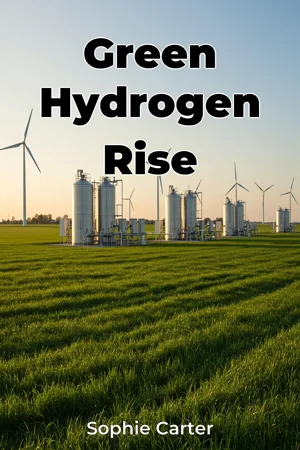
Can hydrogen, the most abundant element in the universe, become the cornerstone of a clean energy future? "Green Hydrogen Rise" explores this critical question, examining the potential of producing hydrogen fuel through electrolysis powered entirely by renewable energy sources. This book delves into the technological, environmental, and economic factors surrounding green hydrogen, offering a comprehensive analysis of its viability as a sustainable energy carrier. This book is important and relevant because the global imperative to decarbonize energy systems requires innovative solutions. Green hydrogen, produced without emitting greenhouse gases, offers a promising pathway to reduce reliance on fossil fuels across various sectors, including transportation, industry, and power generation. The book addresses concerns about climate change and energy security while providing insights into a rapidly evolving field. "Green Hydrogen Rise" provides essential context by tracing the history of hydrogen production and its various applications. It reviews conventional methods of hydrogen production, such as steam methane reforming, highlighting their environmental drawbacks. The book then transitions into a detailed examination of electrolysis, explaining the scientific principles behind this process and the different types of electrolyzers available. No prior extensive knowledge is presumed; fundamental concepts are introduced clearly. The central argument of this book is that green hydrogen, while not without its challenges, represents a crucial component of a sustainable energy future. It asserts that with continued technological advancements, strategic policy support, and well-planned infrastructure development, green hydrogen can significantly contribute to global decarbonization efforts. This argument's importance lies in its potential to reshape energy strategies and drive investments toward cleaner energy technologies. The book begins by introducing the concept of green hydrogen and its potential benefits. It dedicates sections to the science and technology of electrolysis, renewable energy integration, and hydrogen storage and transportation. It explores the economic viability of green hydrogen production, analyzing costs, market opportunities, and policy incentives, discussing real-world projects and case studies from around the globe, illustrating both successes and challenges. The book culminates by examining the potential for green hydrogen to transform various sectors and its implications for global energy security and climate change mitigation. The arguments presented are supported by extensive research, including data from scientific studies, industry reports, and government publications. The book draws upon academic literature on renewable energy, electrochemistry, and energy economics. It also analyzes data from pilot projects and demonstration facilities to assess the real-world performance and cost-effectiveness of green hydrogen technologies. The subject matter connects to several other fields. Firstly, it has strong links to material science in the development of more efficient and durable electrolyzers and fuel cells. Secondly, public policy and economics, since governmental incentives and market mechanisms are crucial for scaling up green hydrogen production. Finally, environmental science due to the assessment of lifecycle emissions and environmental impacts. This book adopts a holistic approach, not only examining the technical aspects of green hydrogen production but also considering its economic, environmental, and social implications. It offers a balanced perspective, acknowledging both the opportunities and challenges associated with this technology. The book adopts a fact-based approach, presenting information in a clear and concise manner. While grounded in scientific and technical details, the writing style remains accessible to a broad audience. This book targets policymakers, energy professionals, investors, researchers, and anyone interested in learning more about the potential of green hydrogen. It is valuable for those seeking to understand the role of hydrogen in the energy transition and to make informed decisions about energy investments and policies. As a Technology and Environment genres book, it provides in-depth technical explanations and real-world case studies while also addressing the environmental benefits and challenges of green hydrogen production. The scope of this book encompasses the entire value chain of green hydrogen, from production to end-use applications. However, it does not delve into the specific engineering designs of electrolyzers or fuel cells. The information can be applied by readers to evaluate the feasibility of green hydrogen projects, advocate for supportive policies, and inform investment decisions. It provides insights into the current state of the technology and its potential for future growth. The book addresses controversies surrounding the efficiency and cost-effectiveness of green hydrogen, presenting different perspectives and analyzing the factors that influence its economic viability. It also examines debates about the optimal pathways for hydrogen deployment and the role of different sectors in driving demand.
Can hydrogen, the most abundant element in the universe, become the cornerstone of a clean energy future? "Green Hydrogen Rise" explores this critical question, examining the potential of producing hydrogen fuel through electrolysis powered entirely by renewable energy sources. This book delves into the technological, environmental, and economic factors surrounding green hydrogen, offering a comprehensive analysis of its viability as a sustainable energy carrier. This book is important and relevant because the global imperative to decarbonize energy systems requires innovative solutions. Green hydrogen, produced without emitting greenhouse gases, offers a promising pathway to reduce reliance on fossil fuels across various sectors, including transportation, industry, and power generation. The book addresses concerns about climate change and energy security while providing insights into a rapidly evolving field. "Green Hydrogen Rise" provides essential context by tracing the history of hydrogen production and its various applications. It reviews conventional methods of hydrogen production, such as steam methane reforming, highlighting their environmental drawbacks. The book then transitions into a detailed examination of electrolysis, explaining the scientific principles behind this process and the different types of electrolyzers available. No prior extensive knowledge is presumed; fundamental concepts are introduced clearly. The central argument of this book is that green hydrogen, while not without its challenges, represents a crucial component of a sustainable energy future. It asserts that with continued technological advancements, strategic policy support, and well-planned infrastructure development, green hydrogen can significantly contribute to global decarbonization efforts. This argument's importance lies in its potential to reshape energy strategies and drive investments toward cleaner energy technologies. The book begins by introducing the concept of green hydrogen and its potential benefits. It dedicates sections to the science and technology of electrolysis, renewable energy integration, and hydrogen storage and transportation. It explores the economic viability of green hydrogen production, analyzing costs, market opportunities, and policy incentives, discussing real-world projects and case studies from around the globe, illustrating both successes and challenges. The book culminates by examining the potential for green hydrogen to transform various sectors and its implications for global energy security and climate change mitigation. The arguments presented are supported by extensive research, including data from scientific studies, industry reports, and government publications. The book draws upon academic literature on renewable energy, electrochemistry, and energy economics. It also analyzes data from pilot projects and demonstration facilities to assess the real-world performance and cost-effectiveness of green hydrogen technologies. The subject matter connects to several other fields. Firstly, it has strong links to material science in the development of more efficient and durable electrolyzers and fuel cells. Secondly, public policy and economics, since governmental incentives and market mechanisms are crucial for scaling up green hydrogen production. Finally, environmental science due to the assessment of lifecycle emissions and environmental impacts. This book adopts a holistic approach, not only examining the technical aspects of green hydrogen production but also considering its economic, environmental, and social implications. It offers a balanced perspective, acknowledging both the opportunities and challenges associated with this technology. The book adopts a fact-based approach, presenting information in a clear and concise manner. While grounded in scientific and technical details, the writing style remains accessible to a broad audience. This book targets policymakers, energy professionals, investors, researchers, and anyone interested in learning more about the potential of green hydrogen. It is valuable for those seeking to understand the role of hydrogen in the energy transition and to make informed decisions about energy investments and policies. As a Technology and Environment genres book, it provides in-depth technical explanations and real-world case studies while also addressing the environmental benefits and challenges of green hydrogen production. The scope of this book encompasses the entire value chain of green hydrogen, from production to end-use applications. However, it does not delve into the specific engineering designs of electrolyzers or fuel cells. The information can be applied by readers to evaluate the feasibility of green hydrogen projects, advocate for supportive policies, and inform investment decisions. It provides insights into the current state of the technology and its potential for future growth. The book addresses controversies surrounding the efficiency and cost-effectiveness of green hydrogen, presenting different perspectives and analyzing the factors that influence its economic viability. It also examines debates about the optimal pathways for hydrogen deployment and the role of different sectors in driving demand.
"Green Hydrogen Rise" explores the potential of green hydrogen, produced through electrolysis using renewable energy, as a key element in the energy transition and decarbonization efforts. It examines the viability of hydrogen fuel in sectors like transportation, industry, and power generation, offering insights into how it can combat climate change and bolster energy security. One intriguing fact highlighted is that green hydrogen production emits no greenhouse gases, offering a clean alternative to traditional methods. The book adopts a comprehensive approach, tracing the history of hydrogen production and diving into the science behind electrolysis and various electrolyzer types. The book argues that with technological advancements and strategic policy support, green hydrogen can significantly contribute to global decarbonization. It progresses logically, introducing the concept, detailing the technology of electrolysis, exploring renewable energy integration, and examining hydrogen storage and transportation. Real-world projects and case studies illustrate both successes and challenges, providing a balanced view of the technology's potential and limitations. This makes the book valuable for policymakers, energy professionals, and investors seeking to understand hydrogen's role in a sustainable energy future.
Book Details
ISBN
9788235201928
Publisher
Publifye AS
Your Licenses
You don't own any licenses for this book
Purchase a license below to unlock this book and download the EPUB.
Purchase License
Select a tier to unlock this book
Need bulk licensing?
Contact us for enterprise agreements.