
About This Book
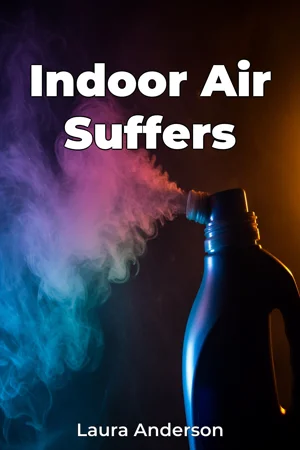
Are seemingly harmless household activities silently compromising the air we breathe within our homes? "Indoor Air Suffers" delves into the insidious presence of detergent vapors and their documented impact on indoor air quality, a concern increasingly relevant in our tightly sealed, energy-efficient homes. This book bridges the gap between consumer product use, environmental health, and personal well-being, providing a crucial understanding of the often-overlooked pollutants that permeate our living spaces. This book explores two primary topics: the chemical composition of common household detergents and cleaning products, and the results of comprehensive air quality testing conducted in various residential settings. Understanding the specific volatile organic compounds (VOCs) released by these products is critical, as many of these substances have known links to respiratory irritation, allergic reactions, and potentially long-term health complications. The significance of these topics lies in their direct impact on public health. As we spend a significant portion of our lives indoors, the quality of our indoor air directly influences our overall health and well-being. The book begins by establishing a historical context, examining the evolution of cleaning product formulations from basic soaps to complex chemical mixtures. It also provides a primer on basic air quality principles, explaining how ventilation, temperature, and humidity influence the concentration of airborne pollutants. Readers will gain an understanding of parts-per-million (PPM) measurements and permissible exposure limits (PELs) as they relate to indoor air. The central argument of "Indoor Air Suffers" posits that the cumulative effect of VOCs released from everyday cleaning products, particularly detergents, contributes significantly to indoor air pollution and poses a tangible risk to human health. This argument is crucial because it challenges the prevailing assumption that household cleaning products are inherently safe and highlights the need for greater awareness and regulation. The book is structured into three main sections. The first section introduces the chemical components of detergents and their potential health effects, based on existing toxicological studies. The second section presents the findings of air quality tests conducted in various homes, focusing on the identification and quantification of VOCs released after the use of different detergent products. This includes a detailed analysis of the types and amounts of VOCs detected, as well as an examination of the correlation between product usage and air quality degradation. Finally, the third section explores practical strategies for mitigating the risks associated with detergent vapors, including product selection, ventilation techniques, and alternative cleaning methods. The evidence presented in this book draws from a combination of existing scientific literature, including peer-reviewed studies on VOC emissions and their health effects, as well as original data collected from indoor air quality testing. This testing involved the use of specialized air sampling equipment and laboratory analysis to identify and quantify VOC concentrations in real-world residential environments. “Indoor Air Suffers” is connected to fields such as environmental science, public health, and chemistry. Its findings are likely to be of particular interest to researchers in environmental toxicology, policymakers involved in regulating consumer product safety, and healthcare professionals concerned with respiratory health. The book offers a fresh perspective by shifting the focus from outdoor air pollution, a commonly discussed topic, to the often-overlooked issue of indoor air quality deterioration caused by everyday household products. It emphasizes the importance of informed consumer choices and proactive measures to improve indoor environments. The book adopts a fact-based approach, presenting scientific evidence in a clear and accessible manner. While avoiding technical jargon, it maintains a level of scientific rigor appropriate for informed readers. The book is targeted towards environmentally conscious consumers, individuals with respiratory sensitivities, and anyone interested in improving their indoor living environment. It arms them with the knowledge to make informed decisions about the products they use and the steps they can take to protect their health. This book is not intended to be an exhaustive analysis of all sources of indoor air pollution. Rather, its scope is intentionally limited to the impact of detergent vapors, allowing for a focused and in-depth exploration of this specific issue. The book also avoids advocating for specific brands or products, instead focusing on providing objective information to empower readers to make their own informed choices. The information presented in "Indoor Air Suffers" can be applied directly by readers to improve the air quality in their homes. By understanding the potential risks associated with detergent vapors, readers can make more informed choices about the products they use, implement effective ventilation strategies, and explore alternative cleaning methods that minimize VOC emissions. The book also touches upon existing debates surrounding the regulation of VOCs in consumer products. While some argue for stricter regulations to protect public health, others express concerns about the potential economic impact of such measures. "Indoor Air Suffers" aims to provide a balanced perspective on these debates, presenting the scientific evidence while acknowledging the complexities of regulatory policymaking.
Are seemingly harmless household activities silently compromising the air we breathe within our homes? "Indoor Air Suffers" delves into the insidious presence of detergent vapors and their documented impact on indoor air quality, a concern increasingly relevant in our tightly sealed, energy-efficient homes. This book bridges the gap between consumer product use, environmental health, and personal well-being, providing a crucial understanding of the often-overlooked pollutants that permeate our living spaces. This book explores two primary topics: the chemical composition of common household detergents and cleaning products, and the results of comprehensive air quality testing conducted in various residential settings. Understanding the specific volatile organic compounds (VOCs) released by these products is critical, as many of these substances have known links to respiratory irritation, allergic reactions, and potentially long-term health complications. The significance of these topics lies in their direct impact on public health. As we spend a significant portion of our lives indoors, the quality of our indoor air directly influences our overall health and well-being. The book begins by establishing a historical context, examining the evolution of cleaning product formulations from basic soaps to complex chemical mixtures. It also provides a primer on basic air quality principles, explaining how ventilation, temperature, and humidity influence the concentration of airborne pollutants. Readers will gain an understanding of parts-per-million (PPM) measurements and permissible exposure limits (PELs) as they relate to indoor air. The central argument of "Indoor Air Suffers" posits that the cumulative effect of VOCs released from everyday cleaning products, particularly detergents, contributes significantly to indoor air pollution and poses a tangible risk to human health. This argument is crucial because it challenges the prevailing assumption that household cleaning products are inherently safe and highlights the need for greater awareness and regulation. The book is structured into three main sections. The first section introduces the chemical components of detergents and their potential health effects, based on existing toxicological studies. The second section presents the findings of air quality tests conducted in various homes, focusing on the identification and quantification of VOCs released after the use of different detergent products. This includes a detailed analysis of the types and amounts of VOCs detected, as well as an examination of the correlation between product usage and air quality degradation. Finally, the third section explores practical strategies for mitigating the risks associated with detergent vapors, including product selection, ventilation techniques, and alternative cleaning methods. The evidence presented in this book draws from a combination of existing scientific literature, including peer-reviewed studies on VOC emissions and their health effects, as well as original data collected from indoor air quality testing. This testing involved the use of specialized air sampling equipment and laboratory analysis to identify and quantify VOC concentrations in real-world residential environments. “Indoor Air Suffers” is connected to fields such as environmental science, public health, and chemistry. Its findings are likely to be of particular interest to researchers in environmental toxicology, policymakers involved in regulating consumer product safety, and healthcare professionals concerned with respiratory health. The book offers a fresh perspective by shifting the focus from outdoor air pollution, a commonly discussed topic, to the often-overlooked issue of indoor air quality deterioration caused by everyday household products. It emphasizes the importance of informed consumer choices and proactive measures to improve indoor environments. The book adopts a fact-based approach, presenting scientific evidence in a clear and accessible manner. While avoiding technical jargon, it maintains a level of scientific rigor appropriate for informed readers. The book is targeted towards environmentally conscious consumers, individuals with respiratory sensitivities, and anyone interested in improving their indoor living environment. It arms them with the knowledge to make informed decisions about the products they use and the steps they can take to protect their health. This book is not intended to be an exhaustive analysis of all sources of indoor air pollution. Rather, its scope is intentionally limited to the impact of detergent vapors, allowing for a focused and in-depth exploration of this specific issue. The book also avoids advocating for specific brands or products, instead focusing on providing objective information to empower readers to make their own informed choices. The information presented in "Indoor Air Suffers" can be applied directly by readers to improve the air quality in their homes. By understanding the potential risks associated with detergent vapors, readers can make more informed choices about the products they use, implement effective ventilation strategies, and explore alternative cleaning methods that minimize VOC emissions. The book also touches upon existing debates surrounding the regulation of VOCs in consumer products. While some argue for stricter regulations to protect public health, others express concerns about the potential economic impact of such measures. "Indoor Air Suffers" aims to provide a balanced perspective on these debates, presenting the scientific evidence while acknowledging the complexities of regulatory policymaking.
"Indoor Air Suffers" brings awareness to the often-ignored issue of indoor air quality, specifically how common household detergents contribute to air pollution inside our homes. As homes become more energy-efficient and tightly sealed, volatile organic compounds (VOCs) from cleaning products can accumulate, potentially leading to respiratory irritation and other health problems. The book uniquely connects consumer product use with environmental and personal health, emphasizing that public health is directly impacted by the air we breathe indoors. The book reveals that many detergents release VOCs, some of which have known links to health complications. It presents findings from air quality tests conducted in real homes, quantifying the types and amounts of VOCs released after using different detergents. "Indoor Air Suffers" begins by exploring the evolution of cleaning product formulations and basic air quality principles, then progresses to present testing results and, finally, practical strategies for mitigating risks, such as improved ventilation and alternative cleaning methods.
Book Details
ISBN
9788235201904
Publisher
Publifye AS
Your Licenses
You don't own any licenses for this book
Purchase a license below to unlock this book and download the EPUB.
Purchase License
Select a tier to unlock this book
Need bulk licensing?
Contact us for enterprise agreements.