
About This Book
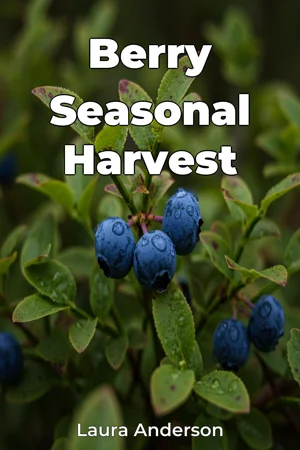
Have you ever considered the journey of a berry from wild field to your table, and the generations of knowledge that guide its harvest? "Berry Seasonal Harvest" explores the rich tapestry of wild and cultivated berry varieties across the northern hemisphere, interwoven with the traditional gathering practices that have sustained communities for centuries. This book delves into the intersection of culinary traditions, ecological awareness, and the enduring human connection to the natural world. This exploration is significant for several reasons. First, it underscores the critical role of berries in diverse cuisines and their nutritional importance. Second, it highlights the value of traditional ecological knowledge in sustainable harvesting and conservation. Third, it emphasizes the cultural significance of berry gathering as a communal activity, reflecting a deep understanding of seasonality and land stewardship. To fully appreciate the narrative, an awareness of basic botany and an interest in culinary traditions would be beneficial but not strictly required. The historical context is equally important. We trace the evolution of berry cultivation from ancient foraging practices to modern agricultural techniques, examining the social and economic impact of these changes on rural communities. The central argument of "Berry Seasonal Harvest" is that understanding the interplay between wild and cultivated berry varieties, combined with the wisdom of traditional gathering practices, can foster a more sustainable and culturally sensitive approach to food systems. This argument is important because it challenges conventional notions of food production, consumption, and our relationship with the environment. The book is structured to present a comprehensive overview of this topic. Initially, we introduce the main berry families, their botanical characteristics, and geographical distribution. Then, we delve into specific regions of the northern hemisphere, exploring the unique berry varieties found in each area and the corresponding traditional harvesting methods. We look at regions such as Scandinavia, the Pacific Northwest, and Eastern Europe. Each regional chapter will include detailed descriptions of specific berries, recipes showcasing their culinary uses, and interviews with local harvesters and food artisans. This is followed by an analysis of sustainable harvesting principles and the environmental impact of different gathering practices. Finally, we explore the future of berry cultivation and consumption, considering the challenges posed by climate change, habitat loss, and the industrialization of food systems. The book culminates with practical guidelines for ethical foraging and cultivating berries in your own garden. The book's arguments are supported by a combination of scientific research, historical records, and ethnographic data. We draw upon botanical studies, agricultural reports, and culinary archives to provide a comprehensive and fact-based account. The use of first-hand accounts from interviews with indigenous communities and experienced foragers provide valuable insights into traditional knowledge and ecological practices. "Berry Seasonal Harvest" connects to several other fields including anthropology (study of cultures and traditions), ecology (study of ecosystems and their interactions) and nutrition (study of the role of the food in the body). These connections enrich the book's argument by providing a more holistic understanding of the cultural, environmental, and health implications of berry consumption. The book takes a unique approach by combining scientific rigor with a narrative storytelling style. We seek to make the science accessible to a broad audience, while also capturing the human element of berry gathering and its cultural significance. The tone is informative but engaging, aiming to foster a sense of wonder and respect for the natural world. The writing style is clear, concise, and accessible, avoiding jargon and complex terminology whenever possible. The target audience includes food enthusiasts, gardeners, nature lovers, culinary professionals, and anyone interested in sustainable food systems. The value for these readers lies in the book's ability to expand their knowledge of berries, highlight the importance of traditional ecological practices, and offer practical guidance for ethical foraging and cultivation. As a non-fiction work, the book adheres to standards of accuracy, objectivity, and source documentation. It provides a balanced and unbiased perspective on the topic, acknowledging different viewpoints and controversies where applicable. The scope is limited to berry varieties found in the northern hemisphere, focusing primarily on regions with a rich history of berry gathering. While the book touches upon the environmental impact of berry cultivation, it does not delve into the detailed scientific analysis of soil composition or genetic manipulation. The information in "Berry Seasonal Harvest" can be applied practically by readers in numerous ways. It encourages readers to support local berry farmers and producers, to engage in ethical foraging practices, and to cultivate their own berry gardens. It also provides recipes and culinary tips for incorporating berries into their diets, promoting healthy eating and celebrating seasonal flavors. While berry harvesting is a subject with less controversy in the mainstream, the book will reference ongoing discussions around land access and indigenous rights related to traditional gathering areas. It will also touch upon the environmental impacts of large-scale berry farming on soil health and biodiversity.
Have you ever considered the journey of a berry from wild field to your table, and the generations of knowledge that guide its harvest? "Berry Seasonal Harvest" explores the rich tapestry of wild and cultivated berry varieties across the northern hemisphere, interwoven with the traditional gathering practices that have sustained communities for centuries. This book delves into the intersection of culinary traditions, ecological awareness, and the enduring human connection to the natural world. This exploration is significant for several reasons. First, it underscores the critical role of berries in diverse cuisines and their nutritional importance. Second, it highlights the value of traditional ecological knowledge in sustainable harvesting and conservation. Third, it emphasizes the cultural significance of berry gathering as a communal activity, reflecting a deep understanding of seasonality and land stewardship. To fully appreciate the narrative, an awareness of basic botany and an interest in culinary traditions would be beneficial but not strictly required. The historical context is equally important. We trace the evolution of berry cultivation from ancient foraging practices to modern agricultural techniques, examining the social and economic impact of these changes on rural communities. The central argument of "Berry Seasonal Harvest" is that understanding the interplay between wild and cultivated berry varieties, combined with the wisdom of traditional gathering practices, can foster a more sustainable and culturally sensitive approach to food systems. This argument is important because it challenges conventional notions of food production, consumption, and our relationship with the environment. The book is structured to present a comprehensive overview of this topic. Initially, we introduce the main berry families, their botanical characteristics, and geographical distribution. Then, we delve into specific regions of the northern hemisphere, exploring the unique berry varieties found in each area and the corresponding traditional harvesting methods. We look at regions such as Scandinavia, the Pacific Northwest, and Eastern Europe. Each regional chapter will include detailed descriptions of specific berries, recipes showcasing their culinary uses, and interviews with local harvesters and food artisans. This is followed by an analysis of sustainable harvesting principles and the environmental impact of different gathering practices. Finally, we explore the future of berry cultivation and consumption, considering the challenges posed by climate change, habitat loss, and the industrialization of food systems. The book culminates with practical guidelines for ethical foraging and cultivating berries in your own garden. The book's arguments are supported by a combination of scientific research, historical records, and ethnographic data. We draw upon botanical studies, agricultural reports, and culinary archives to provide a comprehensive and fact-based account. The use of first-hand accounts from interviews with indigenous communities and experienced foragers provide valuable insights into traditional knowledge and ecological practices. "Berry Seasonal Harvest" connects to several other fields including anthropology (study of cultures and traditions), ecology (study of ecosystems and their interactions) and nutrition (study of the role of the food in the body). These connections enrich the book's argument by providing a more holistic understanding of the cultural, environmental, and health implications of berry consumption. The book takes a unique approach by combining scientific rigor with a narrative storytelling style. We seek to make the science accessible to a broad audience, while also capturing the human element of berry gathering and its cultural significance. The tone is informative but engaging, aiming to foster a sense of wonder and respect for the natural world. The writing style is clear, concise, and accessible, avoiding jargon and complex terminology whenever possible. The target audience includes food enthusiasts, gardeners, nature lovers, culinary professionals, and anyone interested in sustainable food systems. The value for these readers lies in the book's ability to expand their knowledge of berries, highlight the importance of traditional ecological practices, and offer practical guidance for ethical foraging and cultivation. As a non-fiction work, the book adheres to standards of accuracy, objectivity, and source documentation. It provides a balanced and unbiased perspective on the topic, acknowledging different viewpoints and controversies where applicable. The scope is limited to berry varieties found in the northern hemisphere, focusing primarily on regions with a rich history of berry gathering. While the book touches upon the environmental impact of berry cultivation, it does not delve into the detailed scientific analysis of soil composition or genetic manipulation. The information in "Berry Seasonal Harvest" can be applied practically by readers in numerous ways. It encourages readers to support local berry farmers and producers, to engage in ethical foraging practices, and to cultivate their own berry gardens. It also provides recipes and culinary tips for incorporating berries into their diets, promoting healthy eating and celebrating seasonal flavors. While berry harvesting is a subject with less controversy in the mainstream, the book will reference ongoing discussions around land access and indigenous rights related to traditional gathering areas. It will also touch upon the environmental impacts of large-scale berry farming on soil health and biodiversity.
"Berry Seasonal Harvest" explores the fascinating world of berries in the northern hemisphere, from wild varieties to cultivated crops, and celebrates the time-honored traditions surrounding their harvest. This book connects culinary arts with nature, examining how these small fruits play a vital role in diverse cuisines and the importance of traditional ecological knowledge for sustainable harvesting. Discover the cultural significance of berry gathering as a communal activity, reflecting a deep understanding of seasonality and land stewardship. Did you know that berries have been a nutritional cornerstone for centuries, and that traditional harvesting practices are key to conservation? The book uniquely combines scientific insights with engaging storytelling, making complex concepts accessible to all readers. It begins by introducing the main berry families and their characteristics, then journeys through specific regions like Scandinavia and the Pacific Northwest, highlighting unique berry varieties and traditional harvesting methods. Each regional chapter features detailed descriptions, recipes, and interviews with local harvesters. The book culminates with guidelines for ethical foraging and cultivating berries in your own garden, empowering readers to engage with nature in a sustainable way.
Book Details
ISBN
9788235201836
Publisher
Publifye AS
Your Licenses
You don't own any licenses for this book
Purchase a license below to unlock this book and download the EPUB.
Purchase License
Select a tier to unlock this book
Need bulk licensing?
Contact us for enterprise agreements.