
About This Book
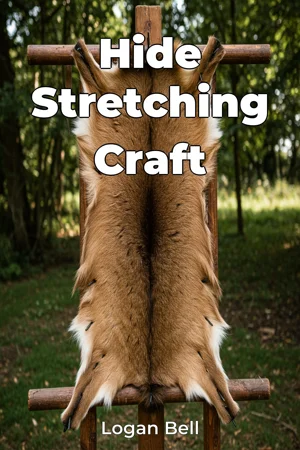
Have you ever wondered about the origins of the clothes on your back, tracing them back beyond factory production to a time when families provided for themselves directly from the land? This book, "Hide Stretching Craft," delves into the foundational craft of hide tanning and its central role in family clothing production throughout history. We explore not only the techniques themselves but also their social, economic, and historical significance. This book addresses two primary topics: the intricate process of hide tanning, from raw animal skin to durable and usable material, and the critical dependence of families on this skill for clothing and other essential goods. Understanding these topics provides insight into how communities were structured and how essential skills were passed down through generations. The context we provide stretches from pre-industrial societies to the early days of industrialization, illuminating hide tanning as a fundamental element of self-sufficiency. While no prior knowledge of tanning is required, a general interest in historical crafts and homesteading will enhance the reading experience. The central argument of "Hide Stretching Craft" is that hide tanning was more than just a practical skill; it was a cornerstone of family independence and a vital link to the natural world. By mastering this craft, families controlled a crucial aspect of their survival, reducing their dependence on external markets and fostering a deeper understanding of resource management. The book is structured to guide you through the tanning process comprehensively. We begin by introducing the different types of hides, discussing their properties, and detailing the tools needed for tanning. The subsequent sections systematically explore the various tanning methods, including brain tanning, vegetable tanning, and smoke tanning. Each method is analyzed in terms of its chemical processes, required materials, and the specific qualities it imparts to the finished leather. A later section focuses on crafting clothing from tanned hides, including patterns, cutting techniques, sewing methods, and embellishments. The book culminates by examining the cultural significance of hide tanning and its lasting impact on craft traditions. To support our arguments, we draw upon historical accounts, anthropological studies, and experimental archaeology. We will present findings from original experiments in which we replicated traditional tanning methods, providing a hands-on perspective on the challenges and rewards of this craft. "Hide Stretching Craft" intersects with several related fields, including anthropology (the study of human societies and cultures), environmental studies (the impact of human activities on the environment), and economics (the historical impact of self-sufficiency). By integrating these perspectives, we offer a richer and more complete understanding of the subject matter. Our approach is unique in its combination of detailed technical instruction with in-depth historical and cultural analysis. Previous works have often focused solely on either the practical aspects of tanning or its cultural significance. This book bridges the gap by demonstrating how the two are inextricably linked. The tone of the book is both informative and engaging, balancing technical accuracy with accessibility. We aim to provide a resource that is both educational and inspiring, appealing to a wide range of readers. The target audience includes history enthusiasts, crafters, homesteaders, and anyone interested in learning about traditional skills and self-sufficient living. The book is valuable to them as a comprehensive guide to a historically significant craft and a practical resource for creating their own leather goods. As a work within the History, Crafts & Hobbies genres, "Hide Stretching Craft" adheres to the conventions of providing accurate historical information, detailed instructions, and clear illustrations. We also address common questions and potential pitfalls that readers may encounter. The scope of the book is limited to traditional hide tanning methods used for clothing production, primarily focusing on North American and European traditions. We do not delve into industrial tanning processes or the use of modern chemicals. The information in this book can be applied to various real-world scenarios, from recreating historical garments to producing durable and sustainable leather goods for personal use. Readers can use these skills to reduce their reliance on mass-produced products and connect with traditional methods of craftsmanship. While hide tanning is generally viewed as a valuable skill, there are ongoing discussions about the ethical considerations of using animal products. We acknowledge these debates and encourage readers to consider the environmental and ethical implications of their craft practices.
Have you ever wondered about the origins of the clothes on your back, tracing them back beyond factory production to a time when families provided for themselves directly from the land? This book, "Hide Stretching Craft," delves into the foundational craft of hide tanning and its central role in family clothing production throughout history. We explore not only the techniques themselves but also their social, economic, and historical significance. This book addresses two primary topics: the intricate process of hide tanning, from raw animal skin to durable and usable material, and the critical dependence of families on this skill for clothing and other essential goods. Understanding these topics provides insight into how communities were structured and how essential skills were passed down through generations. The context we provide stretches from pre-industrial societies to the early days of industrialization, illuminating hide tanning as a fundamental element of self-sufficiency. While no prior knowledge of tanning is required, a general interest in historical crafts and homesteading will enhance the reading experience. The central argument of "Hide Stretching Craft" is that hide tanning was more than just a practical skill; it was a cornerstone of family independence and a vital link to the natural world. By mastering this craft, families controlled a crucial aspect of their survival, reducing their dependence on external markets and fostering a deeper understanding of resource management. The book is structured to guide you through the tanning process comprehensively. We begin by introducing the different types of hides, discussing their properties, and detailing the tools needed for tanning. The subsequent sections systematically explore the various tanning methods, including brain tanning, vegetable tanning, and smoke tanning. Each method is analyzed in terms of its chemical processes, required materials, and the specific qualities it imparts to the finished leather. A later section focuses on crafting clothing from tanned hides, including patterns, cutting techniques, sewing methods, and embellishments. The book culminates by examining the cultural significance of hide tanning and its lasting impact on craft traditions. To support our arguments, we draw upon historical accounts, anthropological studies, and experimental archaeology. We will present findings from original experiments in which we replicated traditional tanning methods, providing a hands-on perspective on the challenges and rewards of this craft. "Hide Stretching Craft" intersects with several related fields, including anthropology (the study of human societies and cultures), environmental studies (the impact of human activities on the environment), and economics (the historical impact of self-sufficiency). By integrating these perspectives, we offer a richer and more complete understanding of the subject matter. Our approach is unique in its combination of detailed technical instruction with in-depth historical and cultural analysis. Previous works have often focused solely on either the practical aspects of tanning or its cultural significance. This book bridges the gap by demonstrating how the two are inextricably linked. The tone of the book is both informative and engaging, balancing technical accuracy with accessibility. We aim to provide a resource that is both educational and inspiring, appealing to a wide range of readers. The target audience includes history enthusiasts, crafters, homesteaders, and anyone interested in learning about traditional skills and self-sufficient living. The book is valuable to them as a comprehensive guide to a historically significant craft and a practical resource for creating their own leather goods. As a work within the History, Crafts & Hobbies genres, "Hide Stretching Craft" adheres to the conventions of providing accurate historical information, detailed instructions, and clear illustrations. We also address common questions and potential pitfalls that readers may encounter. The scope of the book is limited to traditional hide tanning methods used for clothing production, primarily focusing on North American and European traditions. We do not delve into industrial tanning processes or the use of modern chemicals. The information in this book can be applied to various real-world scenarios, from recreating historical garments to producing durable and sustainable leather goods for personal use. Readers can use these skills to reduce their reliance on mass-produced products and connect with traditional methods of craftsmanship. While hide tanning is generally viewed as a valuable skill, there are ongoing discussions about the ethical considerations of using animal products. We acknowledge these debates and encourage readers to consider the environmental and ethical implications of their craft practices.
"Hide Stretching Craft" explores the crucial history of hide tanning and its vital role in family clothing production and self-sufficiency. More than just a manual, it examines how this craft shaped communities and passed down essential skills across generations. The book uniquely blends detailed technical instruction with in-depth historical and cultural analysis, demonstrating how the two are inextricably linked. The book guides readers through the entire tanning process, starting with different types of hides and the necessary tools. It systematically explores various tanning methods, such as brain tanning and vegetable tanning, analyzing their chemical processes and the qualities each imparts to the finished leather. Later sections focus on crafting clothing from tanned hides, including patterns and sewing methods. This approach provides a comprehensive understanding of traditional crafts and historical techniques, relevant for both history enthusiasts and those interested in homesteading. "Hide Stretching Craft" argues that hide tanning was a cornerstone of family independence, connecting them to the natural world. By mastering this craft, families reduced their dependence on external markets fostering a deeper understanding of resource management. The book draws upon historical accounts, anthropological studies, and experimental archaeology, offering a rich perspective on how families created essential leather goods and family clothing.
Book Details
ISBN
9788235201751
Publisher
Publifye AS
Your Licenses
You don't own any licenses for this book
Purchase a license below to unlock this book and download the EPUB.
Purchase License
Select a tier to unlock this book
Need bulk licensing?
Contact us for enterprise agreements.