
About This Book
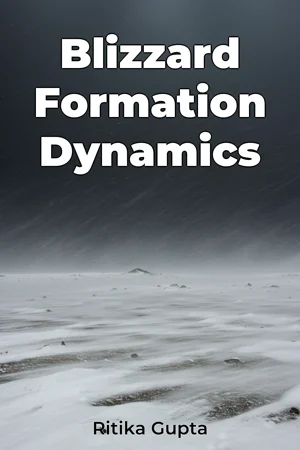
Have you ever wondered what confluence of atmospheric forces transforms a simple snowfall into a paralyzing blizzard? "Blizzard Formation Dynamics" unveils the intricate meteorological processes that govern the development and behavior of these formidable winter storms, delving into a subject of growing importance as climate patterns shift and extreme weather events become more frequent. This book explores the convergence of thermodynamics, atmospheric circulation, and microphysics that dictates how blizzards are born, intensified, and ultimately dissipate. The book focuses on three central themes: synoptic-scale meteorology, mesoscale dynamics, and the role of surface interactions. Synoptic-scale meteorology provides the broad overview, examining large-scale weather patterns and pressure systems that set the stage for blizzard formation. Mesoscale dynamics zooms in, exploring the smaller-scale atmospheric features like fronts, jet streaks, and terrain effects that intensify snowfall and generate strong winds. Finally, the book investigates how surface features like lake ice, snow cover, and topography affect the boundary layer and contribute to blizzard severity. These topics are significant because understanding them is crucial for improving forecasting accuracy, mitigating the impacts on transportation and infrastructure, and enhancing public safety. The central argument of "Blizzard Formation Dynamics" is that a comprehensive understanding of blizzard formation requires integrating knowledge across multiple scales – from planetary wind patterns to the microphysical properties of ice crystals. This synthesis allows us to move beyond descriptive accounts of blizzards and develop predictive models capable of anticipating future events with greater precision. The book highlights the inadequacy of relying solely on synoptic-scale weather models and emphasizes the critical role of mesoscale dynamics in capturing the localized intensity and duration of blizzards. The book begins by introducing the fundamental principles of atmospheric thermodynamics and dynamics, providing a foundation for understanding the more complex processes involved in blizzard formation. It then explores the synoptic-scale conditions conducive to blizzard development, such as the presence of strong temperature gradients, upper-level troughs, and abundant moisture. Subsequent chapters delve into mesoscale processes, including the formation of banded snowfall, the role of terrain in enhancing precipitation, and the dynamics of cold air damming. The book culminates in a discussion of regional variations in blizzard climatology, examining how local factors influence the characteristics of blizzards in different parts of the world. Finally, it explores the practical applications of this knowledge, focusing on improving weather forecasting models, developing more effective winter weather preparedness strategies, and mitigating the impacts of blizzards on critical infrastructure. "Blizzard Formation Dynamics" draws upon a wide range of data sources, including surface observations, weather radar, satellite imagery, and numerical weather models. It also presents case studies of specific blizzard events, analyzing the meteorological conditions that contributed to their severity and highlighting the challenges of forecasting these complex storms. The book incorporates recent research findings from field experiments, such as the Investigation of Microphysics and Precipitation for Atlantic Coast-Threatening Snowstorms (IMPACTS) project, to provide the most up-to-date understanding of blizzard processes. Interdisciplinary connections are vital to understanding blizzard dynamics. The book touches on climatology, examining long-term trends in blizzard frequency and intensity. It also considers the impact of blizzards on ecology, such as their effects on wildlife and vegetation. Lastly, it explores the socio-economic ramifications of blizzards, including transportation disruptions, power outages, and economic losses. These connections enhance the book's argument by demonstrating the far-reaching consequences of blizzards and the importance of understanding their formation. The approach employed is technical while remaining accessible, balancing mathematical derivations with qualitative explanations. The target audience includes meteorologists, atmospheric scientists, graduate students in related fields, and weather enthusiasts seeking a deeper understanding of blizzard formation. While the book covers a broad range of topics related to blizzard meteorology, it focuses primarily on the dynamics of blizzard formation, rather than the societal impacts of these events. The information contained within "Blizzard Formation Dynamics" has real-world applications for weather forecasters, emergency managers, and transportation officials. By providing a more complete understanding of the processes that drive blizzard formation, this book can contribute to improved forecasting accuracy, more effective winter weather preparedness strategies, and reduced impacts on society. The book addresses the ongoing debate about the impact of climate change on blizzard frequency and intensity. While it acknowledges the complexities of this issue, it presents evidence suggesting that a warming climate may lead to more intense but less frequent blizzards in some regions.
Have you ever wondered what confluence of atmospheric forces transforms a simple snowfall into a paralyzing blizzard? "Blizzard Formation Dynamics" unveils the intricate meteorological processes that govern the development and behavior of these formidable winter storms, delving into a subject of growing importance as climate patterns shift and extreme weather events become more frequent. This book explores the convergence of thermodynamics, atmospheric circulation, and microphysics that dictates how blizzards are born, intensified, and ultimately dissipate. The book focuses on three central themes: synoptic-scale meteorology, mesoscale dynamics, and the role of surface interactions. Synoptic-scale meteorology provides the broad overview, examining large-scale weather patterns and pressure systems that set the stage for blizzard formation. Mesoscale dynamics zooms in, exploring the smaller-scale atmospheric features like fronts, jet streaks, and terrain effects that intensify snowfall and generate strong winds. Finally, the book investigates how surface features like lake ice, snow cover, and topography affect the boundary layer and contribute to blizzard severity. These topics are significant because understanding them is crucial for improving forecasting accuracy, mitigating the impacts on transportation and infrastructure, and enhancing public safety. The central argument of "Blizzard Formation Dynamics" is that a comprehensive understanding of blizzard formation requires integrating knowledge across multiple scales – from planetary wind patterns to the microphysical properties of ice crystals. This synthesis allows us to move beyond descriptive accounts of blizzards and develop predictive models capable of anticipating future events with greater precision. The book highlights the inadequacy of relying solely on synoptic-scale weather models and emphasizes the critical role of mesoscale dynamics in capturing the localized intensity and duration of blizzards. The book begins by introducing the fundamental principles of atmospheric thermodynamics and dynamics, providing a foundation for understanding the more complex processes involved in blizzard formation. It then explores the synoptic-scale conditions conducive to blizzard development, such as the presence of strong temperature gradients, upper-level troughs, and abundant moisture. Subsequent chapters delve into mesoscale processes, including the formation of banded snowfall, the role of terrain in enhancing precipitation, and the dynamics of cold air damming. The book culminates in a discussion of regional variations in blizzard climatology, examining how local factors influence the characteristics of blizzards in different parts of the world. Finally, it explores the practical applications of this knowledge, focusing on improving weather forecasting models, developing more effective winter weather preparedness strategies, and mitigating the impacts of blizzards on critical infrastructure. "Blizzard Formation Dynamics" draws upon a wide range of data sources, including surface observations, weather radar, satellite imagery, and numerical weather models. It also presents case studies of specific blizzard events, analyzing the meteorological conditions that contributed to their severity and highlighting the challenges of forecasting these complex storms. The book incorporates recent research findings from field experiments, such as the Investigation of Microphysics and Precipitation for Atlantic Coast-Threatening Snowstorms (IMPACTS) project, to provide the most up-to-date understanding of blizzard processes. Interdisciplinary connections are vital to understanding blizzard dynamics. The book touches on climatology, examining long-term trends in blizzard frequency and intensity. It also considers the impact of blizzards on ecology, such as their effects on wildlife and vegetation. Lastly, it explores the socio-economic ramifications of blizzards, including transportation disruptions, power outages, and economic losses. These connections enhance the book's argument by demonstrating the far-reaching consequences of blizzards and the importance of understanding their formation. The approach employed is technical while remaining accessible, balancing mathematical derivations with qualitative explanations. The target audience includes meteorologists, atmospheric scientists, graduate students in related fields, and weather enthusiasts seeking a deeper understanding of blizzard formation. While the book covers a broad range of topics related to blizzard meteorology, it focuses primarily on the dynamics of blizzard formation, rather than the societal impacts of these events. The information contained within "Blizzard Formation Dynamics" has real-world applications for weather forecasters, emergency managers, and transportation officials. By providing a more complete understanding of the processes that drive blizzard formation, this book can contribute to improved forecasting accuracy, more effective winter weather preparedness strategies, and reduced impacts on society. The book addresses the ongoing debate about the impact of climate change on blizzard frequency and intensity. While it acknowledges the complexities of this issue, it presents evidence suggesting that a warming climate may lead to more intense but less frequent blizzards in some regions.
"Blizzard Formation Dynamics" explores the complex atmospheric science behind the creation of blizzards, offering insights into how these extreme weather events develop. It dives into the meteorological processes that transform ordinary snowfall into paralyzing storms, a topic of growing importance as climate change influences weather patterns. The book examines the convergence of thermodynamics, atmospheric circulation, and microphysics that dictates how blizzards intensify and dissipate. This book uniquely integrates synoptic-scale meteorology, mesoscale dynamics, and surface interactions to provide a comprehensive understanding of blizzard formation. For example, the text details how mesoscale features like fronts and terrain amplify snowfall, and it explores the role of surface features like snow cover in exacerbating blizzard conditions. By integrating knowledge across scales, the book provides predictive models capable of anticipating future events with greater precision. The book progresses from fundamental principles of atmospheric dynamics to synoptic-scale conditions, then delves into mesoscale processes, and concludes with regional variations in blizzard climatology. The book's approach balances mathematical explanations with qualitative discussions, making it valuable for meteorologists, atmospheric scientists, and weather enthusiasts interested in the dynamics of winter storms and weather forecasting.
Book Details
ISBN
9788235201713
Publisher
Publifye AS
Your Licenses
You don't own any licenses for this book
Purchase a license below to unlock this book and download the EPUB.
Purchase License
Select a tier to unlock this book
Need bulk licensing?
Contact us for enterprise agreements.