
About This Book
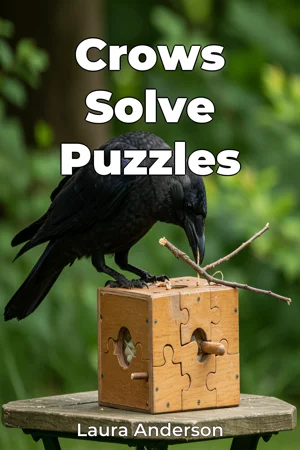
Are crows simply birds, or are they feathered intellects capable of complex problem-solving akin to some mammals? "Crows Solve Puzzles" delves into the captivating cognitive abilities of corvids, specifically crows, revealing their surprising aptitude for tool use, problem-solving, and adaptive learning. This book explores the fascinating intersection of animal behavior, cognitive science, and evolutionary biology, arguing that crows possess a level of intelligence that challenges traditional views of avian cognition. The book's main topics include: the neurobiological basis of corvid intelligence; the influence of social learning on their problem-solving skills; and the comparative analysis of crow cognition relative to other intelligent animals. Understanding these topics is important because it sheds light on the evolution of intelligence itself, offering insights into how different species have developed complex cognitive abilities to thrive in their environments. Furthermore, the study of crow intelligence has implications for understanding the neural mechanisms underlying problem-solving and decision-making across the animal kingdom. We will explore the scientific context behind the study of animal cognition, tracing back to early ethological studies and the development of cognitive ecology. The book assumes a basic understanding of biological concepts such as evolution, natural selection, and animal behavior. "Crows Solve Puzzles" argues that crows exhibit a remarkable capacity for flexible problem-solving, demonstrating cognitive skills that were once thought to be exclusive to primates. This argument challenges anthropocentric views of intelligence, emphasizing the importance of studying diverse species to gain a comprehensive understanding of cognitive evolution. This book unfolds in three major sections. The first section introduces the reader to the world of corvid cognition, examining their brain structure, sensory perception, and social behavior. The second section examines the experimental evidence for crow intelligence, focusing on their tool-use abilities, spatial memory, and capacity for planning. This section analyzes the specific types of puzzles crows are able to solve. The final section analyzes the implications of crow intelligence for our understanding of cognitive evolution and the relationship between brain structure, environment, and behavior. We consider how crow studies inform robotics and AI design. The book draws on a wide range of empirical evidence, including behavioral experiments conducted in both laboratory and field settings. We analyze data from observational studies of wild crow populations, as well as controlled experiments that assess their problem-solving abilities under different conditions. Additionally, the book references neuroimaging studies that investigate the brain activity of crows during cognitive tasks. The book connects to several other fields, including artificial intelligence, robotics, and conservation biology. By understanding the cognitive strategies employed by crows, researchers can develop more effective algorithms for solving complex problems in AI. The book also highlights the importance of conserving crow habitats to ensure that these intelligent creatures can continue to thrive and contribute to our understanding of the natural world. Corvid cognition models also provide crucial data to conservation efforts. "Crows Solve Puzzles" adopts a scientific yet accessible writing style, making complex concepts understandable to a broad audience. The book aims to be both informative and engaging, presenting research findings in a clear and concise manner while also captivating the reader with anecdotes and observations about crow behavior. The primary audience for this book includes students and researchers in biology, cognitive science, and animal behavior, in addition to anyone with a strong interest in the intelligence of animals or evolutionary biology. The detailed accounts of experimental designs and results will appeal to academic readers. In line with the conventions of science writing, the book prioritizes accuracy, objectivity, and evidence-based reasoning. It avoids speculation and focuses on presenting the scientific findings in a clear and unbiased manner. While the book focuses primarily on the cognitive abilities of crows, it acknowledges that other corvid species, such as ravens and jays, also exhibit remarkable intelligence. However, due to the wealth of research on crow cognition, the book emphasizes the specific findings related to this species. The insights into crow intelligence have practical applications in various fields, including conservation, education, and technology. Understanding how crows solve problems can inform conservation strategies aimed at protecting their habitats and ensuring their survival. Furthermore, examples of crow problem-solving can be used in educational settings to illustrate key concepts in cognitive science and evolutionary biology. While the evidence for crow intelligence is compelling, there are ongoing debates about the extent to which their cognitive abilities are comparable to those of primates. The book acknowledges these debates and presents different perspectives on the interpretation of the available evidence.
Are crows simply birds, or are they feathered intellects capable of complex problem-solving akin to some mammals? "Crows Solve Puzzles" delves into the captivating cognitive abilities of corvids, specifically crows, revealing their surprising aptitude for tool use, problem-solving, and adaptive learning. This book explores the fascinating intersection of animal behavior, cognitive science, and evolutionary biology, arguing that crows possess a level of intelligence that challenges traditional views of avian cognition. The book's main topics include: the neurobiological basis of corvid intelligence; the influence of social learning on their problem-solving skills; and the comparative analysis of crow cognition relative to other intelligent animals. Understanding these topics is important because it sheds light on the evolution of intelligence itself, offering insights into how different species have developed complex cognitive abilities to thrive in their environments. Furthermore, the study of crow intelligence has implications for understanding the neural mechanisms underlying problem-solving and decision-making across the animal kingdom. We will explore the scientific context behind the study of animal cognition, tracing back to early ethological studies and the development of cognitive ecology. The book assumes a basic understanding of biological concepts such as evolution, natural selection, and animal behavior. "Crows Solve Puzzles" argues that crows exhibit a remarkable capacity for flexible problem-solving, demonstrating cognitive skills that were once thought to be exclusive to primates. This argument challenges anthropocentric views of intelligence, emphasizing the importance of studying diverse species to gain a comprehensive understanding of cognitive evolution. This book unfolds in three major sections. The first section introduces the reader to the world of corvid cognition, examining their brain structure, sensory perception, and social behavior. The second section examines the experimental evidence for crow intelligence, focusing on their tool-use abilities, spatial memory, and capacity for planning. This section analyzes the specific types of puzzles crows are able to solve. The final section analyzes the implications of crow intelligence for our understanding of cognitive evolution and the relationship between brain structure, environment, and behavior. We consider how crow studies inform robotics and AI design. The book draws on a wide range of empirical evidence, including behavioral experiments conducted in both laboratory and field settings. We analyze data from observational studies of wild crow populations, as well as controlled experiments that assess their problem-solving abilities under different conditions. Additionally, the book references neuroimaging studies that investigate the brain activity of crows during cognitive tasks. The book connects to several other fields, including artificial intelligence, robotics, and conservation biology. By understanding the cognitive strategies employed by crows, researchers can develop more effective algorithms for solving complex problems in AI. The book also highlights the importance of conserving crow habitats to ensure that these intelligent creatures can continue to thrive and contribute to our understanding of the natural world. Corvid cognition models also provide crucial data to conservation efforts. "Crows Solve Puzzles" adopts a scientific yet accessible writing style, making complex concepts understandable to a broad audience. The book aims to be both informative and engaging, presenting research findings in a clear and concise manner while also captivating the reader with anecdotes and observations about crow behavior. The primary audience for this book includes students and researchers in biology, cognitive science, and animal behavior, in addition to anyone with a strong interest in the intelligence of animals or evolutionary biology. The detailed accounts of experimental designs and results will appeal to academic readers. In line with the conventions of science writing, the book prioritizes accuracy, objectivity, and evidence-based reasoning. It avoids speculation and focuses on presenting the scientific findings in a clear and unbiased manner. While the book focuses primarily on the cognitive abilities of crows, it acknowledges that other corvid species, such as ravens and jays, also exhibit remarkable intelligence. However, due to the wealth of research on crow cognition, the book emphasizes the specific findings related to this species. The insights into crow intelligence have practical applications in various fields, including conservation, education, and technology. Understanding how crows solve problems can inform conservation strategies aimed at protecting their habitats and ensuring their survival. Furthermore, examples of crow problem-solving can be used in educational settings to illustrate key concepts in cognitive science and evolutionary biology. While the evidence for crow intelligence is compelling, there are ongoing debates about the extent to which their cognitive abilities are comparable to those of primates. The book acknowledges these debates and presents different perspectives on the interpretation of the available evidence.
"Crows Solve Puzzles" explores the fascinating intelligence of crows, showcasing their complex problem-solving skills and challenging traditional views on avian cognition. Delving into animal behavior, cognitive science, and evolutionary biology, the book reveals how crows exhibit remarkable tool use and adaptive learning. One intriguing aspect highlighted is their capacity for social learning, influencing their problem-solving abilities. The book also considers the neurobiological basis of corvid intelligence. The book presents a comparative analysis of crow cognition relative to other intelligent animals, emphasizing their flexible approach to challenges. By drawing on empirical evidence from behavioral experiments, "Crows Solve Puzzles" analyzes the specific types of puzzles crows can solve. The book progresses through an introduction to corvid cognition, an examination of experimental evidence, and finally, an analysis of the implications for understanding cognitive evolution.
Book Details
ISBN
9788235201621
Publisher
Publifye AS
Your Licenses
You don't own any licenses for this book
Purchase a license below to unlock this book and download the EPUB.
Purchase License
Select a tier to unlock this book
Need bulk licensing?
Contact us for enterprise agreements.