
About This Book
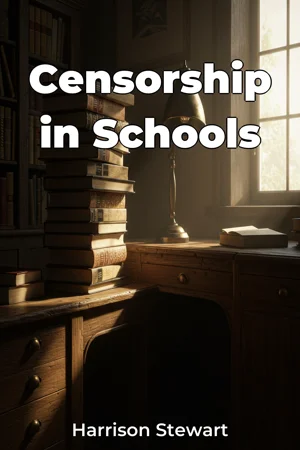
What if the stories we tell our children are incomplete, carefully curated to avoid uncomfortable truths? "Censorship in Schools" delves into the complex and often contentious history of intellectual freedom within the educational system, examining the profound effects of banned books, restricted curricula, and the suppression of diverse perspectives on generations of students. This book is not simply a historical account; it is a critical exploration of how censorship shapes societal values, limits intellectual growth, and ultimately impacts the very fabric of our democracy. The core of this book revolves around three key themes: the history of censorship attempts in American schools, the rationale behind these challenges, and the long-term consequences for students and society. Understanding the historical context, from the Scopes Trial to contemporary battles over LGBTQ+ literature, is vital for grasping the cyclical nature of these conflicts. Examining the motivations of those who advocate for censorship, whether driven by religious beliefs, political ideologies, or concerns about age appropriateness, provides crucial insights into the underlying power dynamics at play. Finally, analyzing the effects of censorship on students' critical thinking skills, their understanding of diverse perspectives, and their ability to engage in informed civic discourse is essential for evaluating the true cost of restricted access to information. "Censorship in Schools" argues that while the intent behind many censorship efforts may be well-meaning, the ultimate outcome is a disservice to students, hindering their intellectual development and limiting their capacity to navigate an increasingly complex and interconnected world. The book meticulously traces the evolution of censorship in education. Beginning with an introduction to the fundamental principles of intellectual freedom and the legal framework protecting students' rights, the book then moves into a chronological exploration of key censorship events throughout American history. Major sections address the rise of conservative activism in school boards, challenges to classic literature based on content deemed inappropriate, and the ongoing debates surrounding the inclusion of diverse voices and perspectives in the curriculum. The book culminates in a discussion of the impact of censorship on student achievement, civic engagement, and the overall health of democratic institutions, providing practical recommendations for educators, parents, and policymakers seeking to foster intellectual freedom in schools. The arguments presented in this book are supported by a wide range of evidence, including case studies of specific censorship incidents, analyses of school board policies, surveys of student attitudes, and legal scholarship on First Amendment rights in education. Unique data is drawn from archives of challenged books and curricula, providing firsthand accounts of the materials targeted and the reasons cited for their removal. This book draws connections to several other fields, including constitutional law, political science, and sociology. By examining the legal precedents surrounding freedom of speech in schools, the book highlights the ongoing tension between protecting students' rights and respecting community values. By exploring the political dynamics of school board elections and the influence of special interest groups, the book sheds light on the partisan nature of many censorship debates. By analyzing the sociological impact of censorship on student identity and social cohesion, the book reveals the ways in which restricted access to information can perpetuate inequalities and limit opportunities for marginalized groups. What distinguishes this book is its comprehensive approach, combining historical analysis with contemporary research to provide a nuanced understanding of the complex issues surrounding censorship in schools. Written in an accessible and engaging style, "Censorship in Schools" is aimed at educators, parents, policymakers, and anyone interested in understanding the vital role of intellectual freedom in a democratic society. As a textbook, it provides a detailed yet balanced view, encouraging critical thought. The scope of this book is primarily focused on the history and impact of censorship in American public schools, with limited attention given to international comparisons. The book acknowledges the ongoing controversies and debates surrounding issues such as critical race theory and gender identity in schools, providing a framework for understanding these complex issues while also recognizing the limitations of addressing every specific challenge in detail. Ultimately, "Censorship in Schools" aims to empower readers to become informed advocates for intellectual freedom, providing them with the knowledge and tools they need to challenge censorship efforts and create learning environments that foster critical thinking, open dialogue, and respect for diverse perspectives.
What if the stories we tell our children are incomplete, carefully curated to avoid uncomfortable truths? "Censorship in Schools" delves into the complex and often contentious history of intellectual freedom within the educational system, examining the profound effects of banned books, restricted curricula, and the suppression of diverse perspectives on generations of students. This book is not simply a historical account; it is a critical exploration of how censorship shapes societal values, limits intellectual growth, and ultimately impacts the very fabric of our democracy. The core of this book revolves around three key themes: the history of censorship attempts in American schools, the rationale behind these challenges, and the long-term consequences for students and society. Understanding the historical context, from the Scopes Trial to contemporary battles over LGBTQ+ literature, is vital for grasping the cyclical nature of these conflicts. Examining the motivations of those who advocate for censorship, whether driven by religious beliefs, political ideologies, or concerns about age appropriateness, provides crucial insights into the underlying power dynamics at play. Finally, analyzing the effects of censorship on students' critical thinking skills, their understanding of diverse perspectives, and their ability to engage in informed civic discourse is essential for evaluating the true cost of restricted access to information. "Censorship in Schools" argues that while the intent behind many censorship efforts may be well-meaning, the ultimate outcome is a disservice to students, hindering their intellectual development and limiting their capacity to navigate an increasingly complex and interconnected world. The book meticulously traces the evolution of censorship in education. Beginning with an introduction to the fundamental principles of intellectual freedom and the legal framework protecting students' rights, the book then moves into a chronological exploration of key censorship events throughout American history. Major sections address the rise of conservative activism in school boards, challenges to classic literature based on content deemed inappropriate, and the ongoing debates surrounding the inclusion of diverse voices and perspectives in the curriculum. The book culminates in a discussion of the impact of censorship on student achievement, civic engagement, and the overall health of democratic institutions, providing practical recommendations for educators, parents, and policymakers seeking to foster intellectual freedom in schools. The arguments presented in this book are supported by a wide range of evidence, including case studies of specific censorship incidents, analyses of school board policies, surveys of student attitudes, and legal scholarship on First Amendment rights in education. Unique data is drawn from archives of challenged books and curricula, providing firsthand accounts of the materials targeted and the reasons cited for their removal. This book draws connections to several other fields, including constitutional law, political science, and sociology. By examining the legal precedents surrounding freedom of speech in schools, the book highlights the ongoing tension between protecting students' rights and respecting community values. By exploring the political dynamics of school board elections and the influence of special interest groups, the book sheds light on the partisan nature of many censorship debates. By analyzing the sociological impact of censorship on student identity and social cohesion, the book reveals the ways in which restricted access to information can perpetuate inequalities and limit opportunities for marginalized groups. What distinguishes this book is its comprehensive approach, combining historical analysis with contemporary research to provide a nuanced understanding of the complex issues surrounding censorship in schools. Written in an accessible and engaging style, "Censorship in Schools" is aimed at educators, parents, policymakers, and anyone interested in understanding the vital role of intellectual freedom in a democratic society. As a textbook, it provides a detailed yet balanced view, encouraging critical thought. The scope of this book is primarily focused on the history and impact of censorship in American public schools, with limited attention given to international comparisons. The book acknowledges the ongoing controversies and debates surrounding issues such as critical race theory and gender identity in schools, providing a framework for understanding these complex issues while also recognizing the limitations of addressing every specific challenge in detail. Ultimately, "Censorship in Schools" aims to empower readers to become informed advocates for intellectual freedom, providing them with the knowledge and tools they need to challenge censorship efforts and create learning environments that foster critical thinking, open dialogue, and respect for diverse perspectives.
"Censorship in Schools" explores the multifaceted history of intellectual freedom within the American educational system, revealing how restrictions on books and curricula impact students and society. This textbook delves into the consequences of limiting diverse perspectives, hindering critical thinking, and ultimately affecting our democracy. The book highlights intriguing facts, such as the cyclical nature of censorship battles, from the Scopes Trial to contemporary debates over LGBTQ+ literature, and how motivations behind censorship, whether driven by religious beliefs or political ideologies, expose underlying power dynamics. The book's comprehensive approach combines historical analysis with contemporary research. The book meticulously traces the evolution of censorship in education, beginning with fundamental principles of intellectual freedom and then moving chronologically through key events. Major sections address the rise of conservative activism, challenges to literature, and debates about diverse voices. It uniquely draws data from archives of challenged materials, offering firsthand accounts. The book emphasizes the impact of censorship on student achievement, civic engagement, and democratic institutions, providing recommendations for fostering intellectual freedom and progresses chapter by chapter.
Book Details
ISBN
9788235201508
Publisher
Publifye AS
Your Licenses
You don't own any licenses for this book
Purchase a license below to unlock this book and download the EPUB.
Purchase License
Select a tier to unlock this book
Need bulk licensing?
Contact us for enterprise agreements.