
About This Book
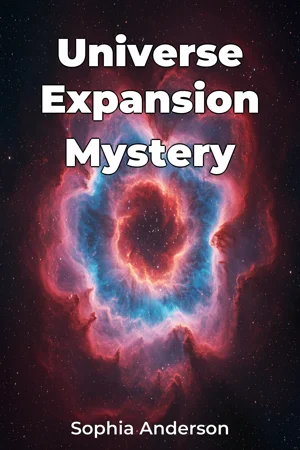
Is the universe destined to expand forever, or will gravity eventually halt and reverse this cosmic inflation? This fundamental question lies at the heart of our exploration into the accelerating expansion of the universe, a phenomenon that has reshaped our understanding of cosmology and the forces that govern the cosmos. "Universe Expansion Mystery" delves into the history, present state, and potential future of this accelerating expansion, offering a comprehensive yet accessible overview of the underlying physics. This book investigates three key areas: the observational evidence for accelerated expansion, the theoretical models attempting to explain this phenomenon (particularly dark energy and modified gravity), and the implications for the ultimate fate of the universe. These topics are of paramount importance because they challenge our current understanding of gravity, energy, and the fundamental laws that govern the universe on its grandest scales. To understand cosmic acceleration, we will first establish the historical context, tracing the development of cosmological models from Newton to Einstein, and then Hubble’s groundbreaking discovery of the expanding universe. The reader will require a basic understanding of Newtonian physics, general relativity, and basic cosmology—concepts which will be thoroughly reviewed and clarified. Our central argument is that while the observational evidence for an accelerating universe is robust, the theoretical explanation remains one of the greatest unsolved problems in modern physics. We aim to provide a critical evaluation of leading theories and a balanced perspective on the challenges and opportunities that lie ahead in this research. The book begins by introducing the observational evidence for accelerated expansion, derived from Type Ia supernovae, the cosmic microwave background, and baryon acoustic oscillations. We will present the data, explain its significance, and address potential sources of error. We will analyze the standard cosmological model (Lambda-CDM) and its shortcomings, particularly the need to invoke dark energy. Next, we will explore dark energy as a possible explanation, reviewing various models such as the cosmological constant, quintessence, and other scalar field theories. We will discuss the theoretical challenges associated with each, including the fine-tuning problem and the coincidence problem. Then, we will assess alternative explanations based on modifications to general relativity, such as f(R) gravity, Horndeski theory, and other approaches. These theories modify Einstein's equations to explain the observed acceleration without invoking dark energy. Finally, we will examine the implications of cosmic acceleration for the future evolution of the universe, considering scenarios such as the "Big Rip," the "Big Freeze," and the possibility of a cyclical universe. The evidence presented will consist of observational data from astronomical surveys, theoretical calculations based on general relativity and other gravitational theories, and simulations of cosmic structure formation. Data from the Planck satellite, the Dark Energy Survey, and other relevant experiments will be highlighted. This topic intersects with particle physics through the search for dark matter and dark energy candidates, with astrophysics in the observation and analysis of cosmic structures, and with mathematics through the development of theoretical models describing the universe's expansion. A unique aspect of our approach is a critical examination of the assumptions underlying both the observational evidence and the theoretical models. We will emphasize the limitations of current data and the uncertainties inherent in extrapolating our understanding of physics to cosmological scales. The tone of the book is scientific and rigorous, while remaining accessible to a broad audience of science enthusiasts, students, and researchers. We aim to present complex ideas in a clear and concise manner, avoiding jargon and providing ample explanations of key concepts. The target audience includes anyone with a strong interest in cosmology, astrophysics, and theoretical physics. This book will be valuable to students seeking an introduction to the field, researchers looking for a comprehensive overview, and scientifically literate readers eager to learn about one of the most exciting and challenging areas of modern science. "Universe Expansion Mystery" focuses on the physics and cosmology of the accelerating universe. It does not delve into the philosophical or metaphysical implications of these findings. It is designed to provide a thorough introduction to the topic and a critical assessment of current research. Understanding cosmic acceleration is crucial for predicting the long-term evolution of the universe and for possibly developing new technologies based on a deeper understanding of gravity and energy. The book will address the ongoing debate about the nature of dark energy, the validity of modified gravity theories, and the implications for the future of cosmology, fairly presenting all sides of the most important arguments. This book offers a clear and detailed perspective on the universe's biggest mysteries.
Is the universe destined to expand forever, or will gravity eventually halt and reverse this cosmic inflation? This fundamental question lies at the heart of our exploration into the accelerating expansion of the universe, a phenomenon that has reshaped our understanding of cosmology and the forces that govern the cosmos. "Universe Expansion Mystery" delves into the history, present state, and potential future of this accelerating expansion, offering a comprehensive yet accessible overview of the underlying physics. This book investigates three key areas: the observational evidence for accelerated expansion, the theoretical models attempting to explain this phenomenon (particularly dark energy and modified gravity), and the implications for the ultimate fate of the universe. These topics are of paramount importance because they challenge our current understanding of gravity, energy, and the fundamental laws that govern the universe on its grandest scales. To understand cosmic acceleration, we will first establish the historical context, tracing the development of cosmological models from Newton to Einstein, and then Hubble’s groundbreaking discovery of the expanding universe. The reader will require a basic understanding of Newtonian physics, general relativity, and basic cosmology—concepts which will be thoroughly reviewed and clarified. Our central argument is that while the observational evidence for an accelerating universe is robust, the theoretical explanation remains one of the greatest unsolved problems in modern physics. We aim to provide a critical evaluation of leading theories and a balanced perspective on the challenges and opportunities that lie ahead in this research. The book begins by introducing the observational evidence for accelerated expansion, derived from Type Ia supernovae, the cosmic microwave background, and baryon acoustic oscillations. We will present the data, explain its significance, and address potential sources of error. We will analyze the standard cosmological model (Lambda-CDM) and its shortcomings, particularly the need to invoke dark energy. Next, we will explore dark energy as a possible explanation, reviewing various models such as the cosmological constant, quintessence, and other scalar field theories. We will discuss the theoretical challenges associated with each, including the fine-tuning problem and the coincidence problem. Then, we will assess alternative explanations based on modifications to general relativity, such as f(R) gravity, Horndeski theory, and other approaches. These theories modify Einstein's equations to explain the observed acceleration without invoking dark energy. Finally, we will examine the implications of cosmic acceleration for the future evolution of the universe, considering scenarios such as the "Big Rip," the "Big Freeze," and the possibility of a cyclical universe. The evidence presented will consist of observational data from astronomical surveys, theoretical calculations based on general relativity and other gravitational theories, and simulations of cosmic structure formation. Data from the Planck satellite, the Dark Energy Survey, and other relevant experiments will be highlighted. This topic intersects with particle physics through the search for dark matter and dark energy candidates, with astrophysics in the observation and analysis of cosmic structures, and with mathematics through the development of theoretical models describing the universe's expansion. A unique aspect of our approach is a critical examination of the assumptions underlying both the observational evidence and the theoretical models. We will emphasize the limitations of current data and the uncertainties inherent in extrapolating our understanding of physics to cosmological scales. The tone of the book is scientific and rigorous, while remaining accessible to a broad audience of science enthusiasts, students, and researchers. We aim to present complex ideas in a clear and concise manner, avoiding jargon and providing ample explanations of key concepts. The target audience includes anyone with a strong interest in cosmology, astrophysics, and theoretical physics. This book will be valuable to students seeking an introduction to the field, researchers looking for a comprehensive overview, and scientifically literate readers eager to learn about one of the most exciting and challenging areas of modern science. "Universe Expansion Mystery" focuses on the physics and cosmology of the accelerating universe. It does not delve into the philosophical or metaphysical implications of these findings. It is designed to provide a thorough introduction to the topic and a critical assessment of current research. Understanding cosmic acceleration is crucial for predicting the long-term evolution of the universe and for possibly developing new technologies based on a deeper understanding of gravity and energy. The book will address the ongoing debate about the nature of dark energy, the validity of modified gravity theories, and the implications for the future of cosmology, fairly presenting all sides of the most important arguments. This book offers a clear and detailed perspective on the universe's biggest mysteries.
"Universe Expansion Mystery" explores the accelerating expansion of the universe, a phenomenon that challenges our understanding of cosmology. It examines the observational evidence supporting this acceleration, like data from Type Ia supernovae, cosmic microwave background, and baryon acoustic oscillations, while also analyzing theoretical models such as dark energy and modified gravity, particularly focusing on the Lambda-CDM model. The book highlights the ongoing quest to understand why the universe's expansion is speeding up and the implications for its ultimate fate, a quest driven by data from instruments like the Planck satellite. The book progresses by first establishing a historical context, then presenting observational data, and finally delving into the theoretical models attempting to explain cosmic acceleration. It critically evaluates these theories, addressing the challenges and opportunities in this area of research. A unique aspect is its critical examination of assumptions underlying both the observational evidence and the theoretical models, emphasizing the limitations of current data and the uncertainties inherent in extrapolating our understanding of physics to cosmological scales.
Book Details
ISBN
9788235201430
Publisher
Publifye AS
Your Licenses
You don't own any licenses for this book
Purchase a license below to unlock this book and download the EPUB.
Purchase License
Select a tier to unlock this book
Need bulk licensing?
Contact us for enterprise agreements.