
About This Book
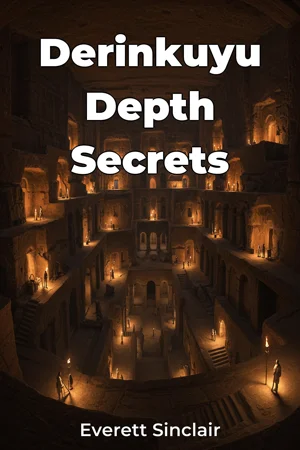
Imagine an entire city, not built upon the earth, but carved deep within it, a subterranean world predating recorded history. "Derinkuyu Depth Secrets" unveils the mysteries of one such marvel: the multi-level underground city in Cappadocia, Turkey, hewn from the rock before 1000 BCE. This book delves into the architectural ingenuity, historical context, and societal implications of this subterranean metropolis. The primary focus is threefold: the architectural design and construction of Derinkuyu, its historical purpose and the civilization(s) that created it, and the implications of its existence for our understanding of ancient human resourcefulness and survival strategies. These topics are crucial because they challenge conventional narratives of early human settlements and demonstrate a sophisticated ability to engineer complex environments in response to societal needs and environmental pressures. Cappadocia’s unique geological formations, characterized by soft volcanic rock easily carved yet structurally sound, provided the canvas for Derinkuyu. The region's turbulent history, marked by repeated invasions and conflicts, likely motivated the city's construction as a refuge. Understanding these factors is vital for appreciating the scale and complexity of the project. This book assumes a basic familiarity with ancient history and archaeological principles, while providing necessary context for those less acquainted with the region's specific history. The central argument of "Derinkuyu Depth Secrets" is that Derinkuyu represents a significant and previously underappreciated feat of ancient engineering and social organization, reflecting a deep understanding of architectural principles, resource management, and collective survival. This argument is important because it necessitates a re-evaluation of the capabilities and resourcefulness of pre-Classical societies and offers insights into their ability to adapt to challenging circumstances. The book begins by introducing the geographical and geological context of Cappadocia and outlining the discovery and initial exploration of Derinkuyu. It then progresses through a detailed analysis of the city's architecture, including its ventilation systems, water management, and defensive mechanisms. Subsequent chapters explore the potential origins of the city, examining archaeological evidence and historical accounts to determine the cultures most likely responsible for its creation. The book culminates in a discussion of the city’s role in the broader historical context of Anatolia, its potential connections to other underground settlements, and its enduring legacy as a testament to human resilience. The evidence presented in "Derinkuyu Depth Secrets" draws from archaeological surveys of the site, geological analyses of the rock formations, and comparative studies of other ancient underground structures. The book utilizes photographs, diagrams, and 3D renderings to illustrate the city's layout and architectural features. Primary source materials, where available, such as ancient texts and inscriptions, are examined alongside secondary scholarly analyses. The book connects to several other fields of study including geology (understanding the rock formations), sociology (analyzing social structures within the city), and military history (understanding defensive strategies). These interdisciplinary connections enrich the understanding of Derinkuyu by providing multiple perspectives on its creation, function, and significance. "Derinkuyu Depth Secrets" offers a fresh perspective by integrating architectural analysis, historical investigation, and geological insights to present a comprehensive picture of the underground city. This holistic approach moves beyond simple descriptions of the site to explore its deeper historical, social, and environmental significance. Written in a clear and accessible style, the book aims to engage both academic researchers and general readers interested in archaeology, history, and architectural marvels. It avoids technical jargon where possible, explaining complex concepts in a way that is easily understood. The target audience includes archaeology enthusiasts, history buffs, students of architecture and ancient civilizations, and anyone fascinated by the ingenuity of past cultures. The book is valuable to them because it provides a comprehensive and engaging account of a little-known but incredibly significant archaeological site. Adhering to the conventions of non-fiction architectural and historical writing, the book provides accurate information, properly cited sources, and a balanced analysis of competing theories. It presents a logical and well-supported argument, inviting readers to critically engage with the evidence and conclusions. The scope of the book is limited to Derinkuyu and its immediate historical and geographical context. It does not attempt to provide a comprehensive overview of all underground cities or all of Cappadocian history, focusing instead on providing a detailed and in-depth analysis of this specific site. The information in "Derinkuyu Depth Secrets" can be applied to contemporary architectural and urban planning discussions, offering insights into sustainable design principles, resource management strategies, and the potential for creating resilient communities in the face of environmental challenges. While there is general agreement that Derinkuyu served as a refuge, debates persist regarding the precise dating of its construction, the identity of its original inhabitants, and the full extent of its interconnectedness with other underground sites in Cappadocia. This book addresses these debates, presenting different perspectives and offering reasoned conclusions based on the available evidence.
Imagine an entire city, not built upon the earth, but carved deep within it, a subterranean world predating recorded history. "Derinkuyu Depth Secrets" unveils the mysteries of one such marvel: the multi-level underground city in Cappadocia, Turkey, hewn from the rock before 1000 BCE. This book delves into the architectural ingenuity, historical context, and societal implications of this subterranean metropolis. The primary focus is threefold: the architectural design and construction of Derinkuyu, its historical purpose and the civilization(s) that created it, and the implications of its existence for our understanding of ancient human resourcefulness and survival strategies. These topics are crucial because they challenge conventional narratives of early human settlements and demonstrate a sophisticated ability to engineer complex environments in response to societal needs and environmental pressures. Cappadocia’s unique geological formations, characterized by soft volcanic rock easily carved yet structurally sound, provided the canvas for Derinkuyu. The region's turbulent history, marked by repeated invasions and conflicts, likely motivated the city's construction as a refuge. Understanding these factors is vital for appreciating the scale and complexity of the project. This book assumes a basic familiarity with ancient history and archaeological principles, while providing necessary context for those less acquainted with the region's specific history. The central argument of "Derinkuyu Depth Secrets" is that Derinkuyu represents a significant and previously underappreciated feat of ancient engineering and social organization, reflecting a deep understanding of architectural principles, resource management, and collective survival. This argument is important because it necessitates a re-evaluation of the capabilities and resourcefulness of pre-Classical societies and offers insights into their ability to adapt to challenging circumstances. The book begins by introducing the geographical and geological context of Cappadocia and outlining the discovery and initial exploration of Derinkuyu. It then progresses through a detailed analysis of the city's architecture, including its ventilation systems, water management, and defensive mechanisms. Subsequent chapters explore the potential origins of the city, examining archaeological evidence and historical accounts to determine the cultures most likely responsible for its creation. The book culminates in a discussion of the city’s role in the broader historical context of Anatolia, its potential connections to other underground settlements, and its enduring legacy as a testament to human resilience. The evidence presented in "Derinkuyu Depth Secrets" draws from archaeological surveys of the site, geological analyses of the rock formations, and comparative studies of other ancient underground structures. The book utilizes photographs, diagrams, and 3D renderings to illustrate the city's layout and architectural features. Primary source materials, where available, such as ancient texts and inscriptions, are examined alongside secondary scholarly analyses. The book connects to several other fields of study including geology (understanding the rock formations), sociology (analyzing social structures within the city), and military history (understanding defensive strategies). These interdisciplinary connections enrich the understanding of Derinkuyu by providing multiple perspectives on its creation, function, and significance. "Derinkuyu Depth Secrets" offers a fresh perspective by integrating architectural analysis, historical investigation, and geological insights to present a comprehensive picture of the underground city. This holistic approach moves beyond simple descriptions of the site to explore its deeper historical, social, and environmental significance. Written in a clear and accessible style, the book aims to engage both academic researchers and general readers interested in archaeology, history, and architectural marvels. It avoids technical jargon where possible, explaining complex concepts in a way that is easily understood. The target audience includes archaeology enthusiasts, history buffs, students of architecture and ancient civilizations, and anyone fascinated by the ingenuity of past cultures. The book is valuable to them because it provides a comprehensive and engaging account of a little-known but incredibly significant archaeological site. Adhering to the conventions of non-fiction architectural and historical writing, the book provides accurate information, properly cited sources, and a balanced analysis of competing theories. It presents a logical and well-supported argument, inviting readers to critically engage with the evidence and conclusions. The scope of the book is limited to Derinkuyu and its immediate historical and geographical context. It does not attempt to provide a comprehensive overview of all underground cities or all of Cappadocian history, focusing instead on providing a detailed and in-depth analysis of this specific site. The information in "Derinkuyu Depth Secrets" can be applied to contemporary architectural and urban planning discussions, offering insights into sustainable design principles, resource management strategies, and the potential for creating resilient communities in the face of environmental challenges. While there is general agreement that Derinkuyu served as a refuge, debates persist regarding the precise dating of its construction, the identity of its original inhabitants, and the full extent of its interconnectedness with other underground sites in Cappadocia. This book addresses these debates, presenting different perspectives and offering reasoned conclusions based on the available evidence.
"Derinkuyu Depth Secrets" explores the extraordinary underground city of Derinkuyu in Cappadocia, Turkey, a testament to ancient engineering and societal organization. Carved from volcanic rock before 1000 BCE, this multi-level subterranean metropolis reveals the resourcefulness of ancient civilizations in creating complex environments. The book delves into the architectural design, historical purpose, and the civilization(s) responsible for this remarkable feat, challenging conventional narratives of early human settlements. Derinkuyu's sophisticated ventilation systems and intricate water management showcase an impressive understanding of architectural principles. The book investigates Cappadocia’s geological context and turbulent history to understand the city’s construction as a refuge. Beginning with the discovery and geography of Derinkuyu, the book progresses through a detailed analysis of its architecture and defensive mechanisms. Subsequent chapters explore the city's potential origins, examining archaeological evidence and historical accounts. The book concludes by placing Derinkuyu within the broader historical context of Anatolia, highlighting its lasting legacy as a symbol of human resilience.
Book Details
ISBN
9788235201300
Publisher
Publifye AS
Your Licenses
You don't own any licenses for this book
Purchase a license below to unlock this book and download the EPUB.
Purchase License
Select a tier to unlock this book
Need bulk licensing?
Contact us for enterprise agreements.