
About This Book
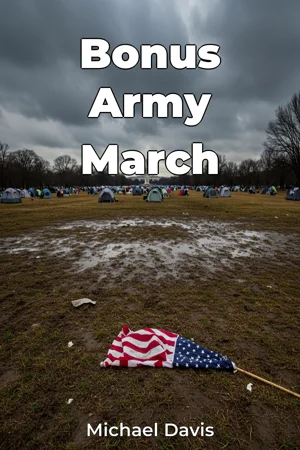
What happens when a nation turns its back on those who served it? "Bonus Army March" delves into the heart of this question, meticulously examining the events surrounding the 1932 protests in Washington D.C. by World War I veterans demanding early payment of their promised bonuses. This book explores the confluence of economic desperation, governmental response, and the enduring legacy of military service during the Great Depression. The book focuses on three core themes: the economic realities faced by veterans during the Depression, the political machinations surrounding the bonus bill, and the human cost of the government's reaction to the protests. Understanding these interconnected elements is vital to grasping the complexities of this pivotal moment in American history and its lasting effects on veterans' affairs. The narrative unfolds against the backdrop of the Great Depression, a period of unprecedented economic hardship. Millions were unemployed, and many World War I veterans, promised a bonus for their service, found themselves struggling to survive. The initial legislation for the bonus was the World War Adjusted Compensation Act in 1924, granting veterans certificates redeemable in 1945. As the Depression deepened, the demand for immediate payment grew intense. This book argues that the government's delayed response to the veterans' plight reveals a fundamental disconnect between its professed gratitude and its actual support for those who had risked their lives in service. "Bonus Army March" traces the veterans' journey from across the nation to the nation’s capital, the establishment of their encampments, and their persistent lobbying efforts. The book analyzes the political climate within Congress and the Hoover administration, detailing the debates surrounding the bonus bill and the rationales behind its ultimate rejection. It argues that the Hoover administration's handling of the Bonus Army was a significant contributor to his unpopularity and subsequent defeat in the 1932 election. The book dedicates significant portions to providing an hour-by-hour account of how the situation deteriorated. The book begins by establishing the historical context of World War I and the promises made to veterans upon their return. It then moves to the onset of the Great Depression and the subsequent economic hardships that fueled the Bonus Army movement. The central chapters detail the march on Washington, the establishment of "Hooverville" settlements, and the veterans' interactions with Congress. The book culminates with an analysis of the government's decision to forcibly evict the veterans, the role of General Douglas MacArthur, and the long-term consequences of the event. The arguments presented are supported by an extensive analysis of primary source materials, including government documents, newspaper articles, personal letters from veterans, and photographs. The book also draws upon secondary sources from military historians and scholars of the Great Depression to provide a comprehensive and nuanced account of the Bonus Army March. This book also touches upon fields such as political science, exploring the dynamics of power and public opinion during times of crisis. It connects to sociological studies of social movements, examining the motivations and strategies of collective action. Furthermore, it relates to economic history, analyzing the impact of the Great Depression on various segments of American society. This interdisciplinary approach enriches the book's overall argument by situating the Bonus Army March within a broader historical and social context. This book offers a fresh perspective by focusing on the individual experiences of veterans, highlighting their resilience and determination in the face of adversity. It does not shy away from examining controversial aspects of the government's response, providing a balanced and objective assessment of the events. Written in a narrative non-fiction style, "Bonus Army March" aims to be both informative and engaging. The book is intended for general readers interested in American history, military history, and the Great Depression, as well as students and scholars in related fields. It provides valuable insights into a pivotal moment in American history and its enduring relevance to contemporary issues of veterans' affairs and social justice. The scope of the book is limited to the events surrounding the Bonus Army March of 1932, with some context provided by the initial legislation. While it acknowledges the broader history of veterans' affairs in the United States, it primarily focuses on this specific episode. Readers can apply the lessons learned from this historical event to contemporary debates about veterans' benefits, government responsibility, and social inequality. The book addresses the ongoing debate about the government's responsibility to its veterans. It explores the conflicting perspectives on the Bonus Army March, considering both the veterans' demands and the government's concerns about fiscal responsibility. By presenting a balanced account of the events, the book encourages readers to critically examine the complexities of this historical episode and its relevance to contemporary issues.
What happens when a nation turns its back on those who served it? "Bonus Army March" delves into the heart of this question, meticulously examining the events surrounding the 1932 protests in Washington D.C. by World War I veterans demanding early payment of their promised bonuses. This book explores the confluence of economic desperation, governmental response, and the enduring legacy of military service during the Great Depression. The book focuses on three core themes: the economic realities faced by veterans during the Depression, the political machinations surrounding the bonus bill, and the human cost of the government's reaction to the protests. Understanding these interconnected elements is vital to grasping the complexities of this pivotal moment in American history and its lasting effects on veterans' affairs. The narrative unfolds against the backdrop of the Great Depression, a period of unprecedented economic hardship. Millions were unemployed, and many World War I veterans, promised a bonus for their service, found themselves struggling to survive. The initial legislation for the bonus was the World War Adjusted Compensation Act in 1924, granting veterans certificates redeemable in 1945. As the Depression deepened, the demand for immediate payment grew intense. This book argues that the government's delayed response to the veterans' plight reveals a fundamental disconnect between its professed gratitude and its actual support for those who had risked their lives in service. "Bonus Army March" traces the veterans' journey from across the nation to the nation’s capital, the establishment of their encampments, and their persistent lobbying efforts. The book analyzes the political climate within Congress and the Hoover administration, detailing the debates surrounding the bonus bill and the rationales behind its ultimate rejection. It argues that the Hoover administration's handling of the Bonus Army was a significant contributor to his unpopularity and subsequent defeat in the 1932 election. The book dedicates significant portions to providing an hour-by-hour account of how the situation deteriorated. The book begins by establishing the historical context of World War I and the promises made to veterans upon their return. It then moves to the onset of the Great Depression and the subsequent economic hardships that fueled the Bonus Army movement. The central chapters detail the march on Washington, the establishment of "Hooverville" settlements, and the veterans' interactions with Congress. The book culminates with an analysis of the government's decision to forcibly evict the veterans, the role of General Douglas MacArthur, and the long-term consequences of the event. The arguments presented are supported by an extensive analysis of primary source materials, including government documents, newspaper articles, personal letters from veterans, and photographs. The book also draws upon secondary sources from military historians and scholars of the Great Depression to provide a comprehensive and nuanced account of the Bonus Army March. This book also touches upon fields such as political science, exploring the dynamics of power and public opinion during times of crisis. It connects to sociological studies of social movements, examining the motivations and strategies of collective action. Furthermore, it relates to economic history, analyzing the impact of the Great Depression on various segments of American society. This interdisciplinary approach enriches the book's overall argument by situating the Bonus Army March within a broader historical and social context. This book offers a fresh perspective by focusing on the individual experiences of veterans, highlighting their resilience and determination in the face of adversity. It does not shy away from examining controversial aspects of the government's response, providing a balanced and objective assessment of the events. Written in a narrative non-fiction style, "Bonus Army March" aims to be both informative and engaging. The book is intended for general readers interested in American history, military history, and the Great Depression, as well as students and scholars in related fields. It provides valuable insights into a pivotal moment in American history and its enduring relevance to contemporary issues of veterans' affairs and social justice. The scope of the book is limited to the events surrounding the Bonus Army March of 1932, with some context provided by the initial legislation. While it acknowledges the broader history of veterans' affairs in the United States, it primarily focuses on this specific episode. Readers can apply the lessons learned from this historical event to contemporary debates about veterans' benefits, government responsibility, and social inequality. The book addresses the ongoing debate about the government's responsibility to its veterans. It explores the conflicting perspectives on the Bonus Army March, considering both the veterans' demands and the government's concerns about fiscal responsibility. By presenting a balanced account of the events, the book encourages readers to critically examine the complexities of this historical episode and its relevance to contemporary issues.
"Bonus Army March" examines the 1932 protests in Washington D.C., where World War I veterans sought early payment of their promised bonuses amid the Great Depression. This book uniquely connects the economic desperation of veterans, the political debates surrounding the bonus bill, and the severe consequences of the government's response. The narrative reveals how the Hoover administration's actions contributed to its unpopularity. The book traces the veterans' journey to Washington, their establishment of encampments, and their interactions with Congress. It highlights that the initial bonus legislation was the World War Adjusted Compensation Act in 1924, but as economic hardship intensified, veterans demanded immediate relief. Supported by primary sources like letters and government documents, the book progresses from establishing the historical context of WWI, through the march on Washington, and culminates in the government's controversial eviction of the veterans. It provides a comprehensive account of a pivotal moment in American history, detailing the social movements, veterans' affairs, and the government’s handling of the economic hardship. The book provides a balanced perspective on the events and encourages readers to consider the ongoing debate about the government’s responsibility to its veterans.
Book Details
ISBN
9788235201287
Publisher
Publifye AS
Your Licenses
You don't own any licenses for this book
Purchase a license below to unlock this book and download the EPUB.
Purchase License
Select a tier to unlock this book
Need bulk licensing?
Contact us for enterprise agreements.