
About This Book
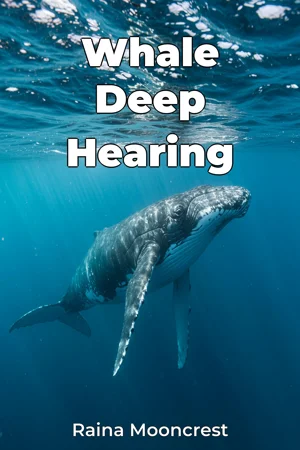
Have you ever wondered how whales, the giants of the ocean, communicate across hundreds or even thousands of miles? "Whale Deep Hearing" delves into the fascinating world of whale bioacoustics, exploring how these marine mammals use low-frequency sounds to navigate, find food, and maintain social connections in the vast underwater realm. This book examines the fundamental principles of underwater acoustics, whale vocalizations, and the complex interplay between whale communication and their environment. This exploration is critical because understanding whale communication is essential for conservation efforts, particularly as human activities increasingly impact their acoustic habitat. We begin by establishing the scientific context of underwater sound propagation. We explore how sound travels differently in water compared to air and how factors like temperature, salinity, and depth affect acoustic transmission. We introduce the diverse repertoire of whale sounds, from the haunting songs of humpback whales to the broadband clicks used by dolphins for echolocation. We detail the anatomical structures that allow whales to produce and receive these sounds. Our central argument is that whale communication is far more sophisticated than previously understood and that studying it provides insights into whale behavior, social structure, and the health of marine ecosystems. We will demonstrate how human-generated noise pollution threatens this delicate acoustic balance, potentially disrupting whale communication, navigation, and foraging behavior. The book unfolds in three major sections. The first section establishes the scientific foundations of whale bioacoustics, covering acoustics, whale anatomy, and the physics of sound production and reception. The second section analyzes different types of whale vocalizations, examining their function in various contexts such as mating, foraging, and social bonding. This section includes detailed case studies of specific whale species such as Humpbacks, Blues, and Orcas, showcasing the diversity and complexity of their acoustic behavior. The third section explores the impact of anthropogenic noise on whale communication and behavior, examining the effects of shipping, sonar, and industrial activities. Finally, we conclude with a discussion of conservation strategies aimed at mitigating noise pollution and protecting whale acoustic habitats. Evidence presented throughout the book draws from a wide range of sources, including hydrophone recordings, behavioral observations, anatomical studies, and modelling. We utilize data collected from long-term acoustic monitoring programs and controlled playback experiments to support our claims. This book connects to several interdisciplinary fields, including oceanography, marine biology, and environmental science. By integrating knowledge from these disciplines, we provide a holistic understanding of whale communication and its ecological significance. "Whale Deep Hearing" adopts a scientific yet accessible approach, making it appealing to a broad audience, including marine biologists, conservationists, and anyone interested in the natural world. While the book delves into scientific concepts, it avoids overly technical jargon, providing clear explanations and illustrative examples to enhance reader comprehension. Our primary target audience is undergraduate and graduate students in marine biology, ecology, and conservation, as well as researchers and policymakers. The general public with an interest in marine conservation will also find this book valuable. This work contributes to the discourse around ocean conservation and highlights the importance of mitigating human impacts on marine ecosystems. We acknowledge the limitations of our understanding of whale communication. While significant progress has been made, many aspects of whale acoustic behavior remain a mystery. The information presented in this book has real-world applications for marine conservation. Understanding how noise pollution affects whale communication can inform the development of mitigation strategies, such as quieter ship designs and restrictions on sonar use in critical whale habitats. We address some of the ongoing debates regarding the interpretation of complex whale vocalizations and the extent to which noise pollution directly impacts whale populations. By presenting a balanced overview of the scientific evidence, we encourage critical thinking and informed decision-making.
Have you ever wondered how whales, the giants of the ocean, communicate across hundreds or even thousands of miles? "Whale Deep Hearing" delves into the fascinating world of whale bioacoustics, exploring how these marine mammals use low-frequency sounds to navigate, find food, and maintain social connections in the vast underwater realm. This book examines the fundamental principles of underwater acoustics, whale vocalizations, and the complex interplay between whale communication and their environment. This exploration is critical because understanding whale communication is essential for conservation efforts, particularly as human activities increasingly impact their acoustic habitat. We begin by establishing the scientific context of underwater sound propagation. We explore how sound travels differently in water compared to air and how factors like temperature, salinity, and depth affect acoustic transmission. We introduce the diverse repertoire of whale sounds, from the haunting songs of humpback whales to the broadband clicks used by dolphins for echolocation. We detail the anatomical structures that allow whales to produce and receive these sounds. Our central argument is that whale communication is far more sophisticated than previously understood and that studying it provides insights into whale behavior, social structure, and the health of marine ecosystems. We will demonstrate how human-generated noise pollution threatens this delicate acoustic balance, potentially disrupting whale communication, navigation, and foraging behavior. The book unfolds in three major sections. The first section establishes the scientific foundations of whale bioacoustics, covering acoustics, whale anatomy, and the physics of sound production and reception. The second section analyzes different types of whale vocalizations, examining their function in various contexts such as mating, foraging, and social bonding. This section includes detailed case studies of specific whale species such as Humpbacks, Blues, and Orcas, showcasing the diversity and complexity of their acoustic behavior. The third section explores the impact of anthropogenic noise on whale communication and behavior, examining the effects of shipping, sonar, and industrial activities. Finally, we conclude with a discussion of conservation strategies aimed at mitigating noise pollution and protecting whale acoustic habitats. Evidence presented throughout the book draws from a wide range of sources, including hydrophone recordings, behavioral observations, anatomical studies, and modelling. We utilize data collected from long-term acoustic monitoring programs and controlled playback experiments to support our claims. This book connects to several interdisciplinary fields, including oceanography, marine biology, and environmental science. By integrating knowledge from these disciplines, we provide a holistic understanding of whale communication and its ecological significance. "Whale Deep Hearing" adopts a scientific yet accessible approach, making it appealing to a broad audience, including marine biologists, conservationists, and anyone interested in the natural world. While the book delves into scientific concepts, it avoids overly technical jargon, providing clear explanations and illustrative examples to enhance reader comprehension. Our primary target audience is undergraduate and graduate students in marine biology, ecology, and conservation, as well as researchers and policymakers. The general public with an interest in marine conservation will also find this book valuable. This work contributes to the discourse around ocean conservation and highlights the importance of mitigating human impacts on marine ecosystems. We acknowledge the limitations of our understanding of whale communication. While significant progress has been made, many aspects of whale acoustic behavior remain a mystery. The information presented in this book has real-world applications for marine conservation. Understanding how noise pollution affects whale communication can inform the development of mitigation strategies, such as quieter ship designs and restrictions on sonar use in critical whale habitats. We address some of the ongoing debates regarding the interpretation of complex whale vocalizations and the extent to which noise pollution directly impacts whale populations. By presenting a balanced overview of the scientific evidence, we encourage critical thinking and informed decision-making.
"Whale Deep Hearing" explores the captivating realm of whale bioacoustics, revealing how these marine mammals use sound for communication, navigation, and social interaction. It delves into the physics of underwater acoustics, explaining how factors like temperature and salinity affect sound propagation. The book highlights the diversity of whale vocalizations, from the haunting songs of humpback whales to the echolocation clicks of orcas, emphasizing the sophistication of whale communication. The book examines the impact of human-generated noise pollution on whale communication and behavior, revealing how shipping, sonar, and industrial activities disrupt their acoustic habitat. It presents evidence from hydrophone recordings, behavioral observations, and anatomical studies to support its claims. This interdisciplinary approach, integrating oceanography, marine biology, and environmental science, provides a holistic understanding of whale communication and its ecological significance. The book progresses from the scientific foundations of whale bioacoustics to an analysis of different types of whale vocalizations and concludes with a discussion of conservation strategies. By presenting the information in a scientific yet accessible manner, "Whale Deep Hearing" is a valuable resource for marine biologists, conservationists, and anyone interested in ocean conservation.
Book Details
ISBN
9788235201249
Publisher
Publifye AS
Your Licenses
You don't own any licenses for this book
Purchase a license below to unlock this book and download the EPUB.
Purchase License
Select a tier to unlock this book
Need bulk licensing?
Contact us for enterprise agreements.