
About This Book
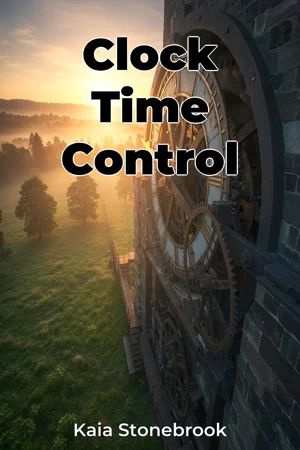
Are we truly masters of time, or has time, specifically as measured by clocks, mastered us? "Clock Time Control" delves into this profound question, examining how the seemingly neutral technology of timekeeping has shaped human civilization, social structures, and even our internal biological rhythms. This book explores the multifaceted impact of standardized time, focusing on its crucial role in enabling global navigation, coordinating industrial production, and ultimately, reshaping our fundamental relationship with the natural world. These topics are important because they expose the often-unacknowledged ways that a seemingly objective system of measurement influences our daily lives, work patterns, and perceptions of reality. Historically, time was a localized and fluid concept, closely tied to natural phenomena such as sunrise, sunset, and seasonal changes. With the advent of increasingly accurate mechanical clocks, particularly during the Age of Exploration and the Industrial Revolution, a transition began towards a more abstract, uniform system of time. This shift was not merely technological; it represented a profound social and cultural transformation. "Clock Time Control" argues that the standardization of time, while enabling large-scale coordination and progress, has simultaneously alienated us from natural rhythms, fostering a sense of detachment from the environment and contributing to the pressures of modern life. The book begins by tracing the evolution of timekeeping devices, from sundials and water clocks to the atomic clocks of today. It then investigates the development of standardized time zones and the global adoption of Greenwich Mean Time, highlighting the political, economic, and social forces that drove this process. The core of the book is divided into three major sections. First, it examines the role of clock time in revolutionizing maritime navigation, allowing for accurate determination of longitude and enabling global trade networks. Second, it analyzes the impact of standardized time on industrial production, focusing on how it facilitated the coordination of labor and the rise of factory systems. Finally, it explores the less tangible, but equally profound, effects of clock time on human consciousness and behavior, including its influence on sleep patterns, work-life balance, and our perception of time itself. The argument culminates in a discussion of the potential for reclaiming a more balanced relationship with time, one that acknowledges the benefits of standardized systems while also respecting natural rhythms and individual needs. The evidence presented in "Clock Time Control" draws upon a variety of sources, including historical records, scientific studies on circadian rhythms, and sociological analyses of work culture. Unique data sources include early factory schedules, ship logs, and personal diaries that reveal the lived experience of adapting to clock time. Interdisciplinary connections are explored through the lenses of sociology, environmental science, and economics. The book examines how the demands of clock time have contributed to environmental degradation, how sociological research reveals the impact on work culture, and how the concept relates to productivity in economics. A unique aspect of "Clock Time Control" is its examination of the subtle ways that clock-based systems influence our cognitive processes and emotional well-being. It adopts a perspective that combines historical analysis with insights from contemporary science, providing a nuanced understanding of time's multifaceted impact. The book is written in an accessible style, suitable for a broad audience interested in history, science, and the social impact of technology. It is specifically aimed at readers who are curious about the hidden forces that shape their daily lives and who are interested in exploring alternative ways of relating to time. As a work of non-fiction, "Clock Time Control" adheres to the genre's conventions of factual accuracy, rigorous research, and clear presentation of evidence. The scope of the book is intentionally broad, encompassing the history of timekeeping, its impact on various sectors of society, and its psychological and environmental consequences. However, it focuses primarily on the Western experience of clock time, acknowledging that other cultures have different relationships with time that warrant further exploration. The information presented in "Clock Time Control" has practical applications for readers seeking to improve their work-life balance, reduce stress, and cultivate a deeper connection with the natural world. By understanding the historical and social forces that have shaped our relationship with time, we can begin to exercise greater agency over our own lives. Despite the inherent benefits that clock time brought to navigation and production, "Clock Time Control" will address the ongoing debates about the optimal ways to manage time in the modern world, including discussions of flexible work schedules, the importance of rest and recovery, and the potential for creating more sustainable and humane systems of time management.
Are we truly masters of time, or has time, specifically as measured by clocks, mastered us? "Clock Time Control" delves into this profound question, examining how the seemingly neutral technology of timekeeping has shaped human civilization, social structures, and even our internal biological rhythms. This book explores the multifaceted impact of standardized time, focusing on its crucial role in enabling global navigation, coordinating industrial production, and ultimately, reshaping our fundamental relationship with the natural world. These topics are important because they expose the often-unacknowledged ways that a seemingly objective system of measurement influences our daily lives, work patterns, and perceptions of reality. Historically, time was a localized and fluid concept, closely tied to natural phenomena such as sunrise, sunset, and seasonal changes. With the advent of increasingly accurate mechanical clocks, particularly during the Age of Exploration and the Industrial Revolution, a transition began towards a more abstract, uniform system of time. This shift was not merely technological; it represented a profound social and cultural transformation. "Clock Time Control" argues that the standardization of time, while enabling large-scale coordination and progress, has simultaneously alienated us from natural rhythms, fostering a sense of detachment from the environment and contributing to the pressures of modern life. The book begins by tracing the evolution of timekeeping devices, from sundials and water clocks to the atomic clocks of today. It then investigates the development of standardized time zones and the global adoption of Greenwich Mean Time, highlighting the political, economic, and social forces that drove this process. The core of the book is divided into three major sections. First, it examines the role of clock time in revolutionizing maritime navigation, allowing for accurate determination of longitude and enabling global trade networks. Second, it analyzes the impact of standardized time on industrial production, focusing on how it facilitated the coordination of labor and the rise of factory systems. Finally, it explores the less tangible, but equally profound, effects of clock time on human consciousness and behavior, including its influence on sleep patterns, work-life balance, and our perception of time itself. The argument culminates in a discussion of the potential for reclaiming a more balanced relationship with time, one that acknowledges the benefits of standardized systems while also respecting natural rhythms and individual needs. The evidence presented in "Clock Time Control" draws upon a variety of sources, including historical records, scientific studies on circadian rhythms, and sociological analyses of work culture. Unique data sources include early factory schedules, ship logs, and personal diaries that reveal the lived experience of adapting to clock time. Interdisciplinary connections are explored through the lenses of sociology, environmental science, and economics. The book examines how the demands of clock time have contributed to environmental degradation, how sociological research reveals the impact on work culture, and how the concept relates to productivity in economics. A unique aspect of "Clock Time Control" is its examination of the subtle ways that clock-based systems influence our cognitive processes and emotional well-being. It adopts a perspective that combines historical analysis with insights from contemporary science, providing a nuanced understanding of time's multifaceted impact. The book is written in an accessible style, suitable for a broad audience interested in history, science, and the social impact of technology. It is specifically aimed at readers who are curious about the hidden forces that shape their daily lives and who are interested in exploring alternative ways of relating to time. As a work of non-fiction, "Clock Time Control" adheres to the genre's conventions of factual accuracy, rigorous research, and clear presentation of evidence. The scope of the book is intentionally broad, encompassing the history of timekeeping, its impact on various sectors of society, and its psychological and environmental consequences. However, it focuses primarily on the Western experience of clock time, acknowledging that other cultures have different relationships with time that warrant further exploration. The information presented in "Clock Time Control" has practical applications for readers seeking to improve their work-life balance, reduce stress, and cultivate a deeper connection with the natural world. By understanding the historical and social forces that have shaped our relationship with time, we can begin to exercise greater agency over our own lives. Despite the inherent benefits that clock time brought to navigation and production, "Clock Time Control" will address the ongoing debates about the optimal ways to manage time in the modern world, including discussions of flexible work schedules, the importance of rest and recovery, and the potential for creating more sustainable and humane systems of time management.
"Clock Time Control" explores how standardized time, initially a neutral tool, has profoundly shaped society and individual lives. The book examines the historical evolution of timekeeping, from ancient methods to modern atomic clocks, revealing how clock time revolutionized maritime navigation by enabling accurate longitude determination, and how it coordinated industrial production, impacting work patterns globally. The book delves into the social impact of technology, particularly how standardized time, driven by economic and political forces, has influenced our work-life balance and even our circadian rhythms. It highlights the shift from localized, natural time to an abstract system, arguing that this transition has, in some ways, alienated us from the environment. The book progresses by first tracing the history of timekeeping, then analyzing its impact on navigation and industry, and finally, exploring its effects on human consciousness and behavior. Uniquely, "Clock Time Control" combines historical analysis with contemporary scientific insights, presenting an interdisciplinary view that connects sociology, environmental science, and economics. It examines the subtle ways clock-based systems influence our cognitive well-being, offering a nuanced understanding of time's multifaceted impact and encouraging readers to consider alternative ways of managing time in a modern world.
Book Details
ISBN
9788235201188
Publisher
Publifye AS
Your Licenses
You don't own any licenses for this book
Purchase a license below to unlock this book and download the EPUB.
Purchase License
Select a tier to unlock this book
Need bulk licensing?
Contact us for enterprise agreements.