
About This Book
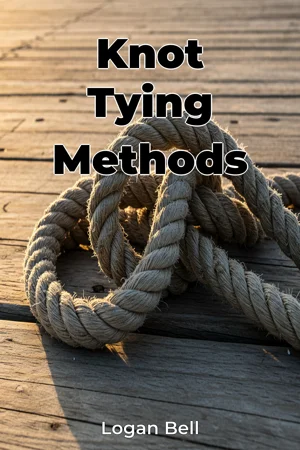
Have you ever considered the profound impact of something as simple as a knot? This book, "Knot Tying Methods," delves into the intricate world of rope manipulation, exploring its rich history, diverse applications, and the crucial role it plays in various trades and activities. Far more than just a practical guide, this work examines knot tying as a form of knowledge preservation and a testament to human ingenuity across maritime pursuits, climbing, and everyday life. The book focuses on three primary concepts: the mechanics of different knot types, the historical evolution of knot tying techniques within specific industries, and the cultural significance of knots as a means of transmitting practical knowledge through generations. These topics are of paramount importance because they reveal the underlying principles of force distribution, material science, and the enduring human need for secure connections. Understanding knots is not simply about tying ropes together; it’s about comprehending the physics of tension, friction, and load bearing, skills crucial in fields ranging from sailing to rescue operations. Historically, the use of knots dates back millennia, with evidence found in ancient civilizations. Their development is intertwined with the rise of seafaring, where lives depended on the reliability of specific knots for rigging and anchoring. The book contextualizes knot tying within these historical frameworks, providing insights into the social structures and economic activities that fostered their refinement. To fully appreciate the nuances of knot tying, a basic understanding of physics, particularly concepts like tension, friction, and shear force, is beneficial, though the book provides clear explanations of these principles as they relate to knot construction and application. The central argument of "Knot Tying Methods" is that knot tying represents a tangible form of embodied knowledge, passed down through practical application and apprenticeship, which encapsulates both functional utility and cultural heritage. This argument highlights the importance of preserving these skills in an increasingly digital world. The book asserts that while modern technology offers alternatives, the fundamental principles embodied in knot tying remain essential for safety, efficiency, and a deeper understanding of material properties. The book systematically introduces basic knotting principles, progresses through intermediate techniques used in specialized applications such as sailing and climbing, and culminates in an analysis of advanced knots used in complex rigging systems. The structure begins with an introduction to the terminology and basic knot families (e.g., bends, hitches, loops). It then develops into chapters focusing on specific applications, such as maritime knots for boat handling and securing cargo, climbing knots for personal safety and rescue, and general-purpose knots for everyday tasks. The concluding section of the book discusses the implications of knot tying knowledge for contemporary problem-solving and its potential role in sustainable practices. The evidence presented will include detailed diagrams, step-by-step instructions, comparative strength testing data, and historical accounts gathered from maritime logs, climbing journals, and craft guilds. Unique data sources will include unpublished knotting manuals and interviews with experienced practitioners from various fields. Interdisciplinary connections will be drawn to fields such as engineering, physics, history, and cultural anthropology. Engineering principles explain the structural integrity of knots; physics governs the distribution of forces within them; history illuminates their evolution; and anthropology explores their cultural significance as tools of knowledge transfer. These connections enrich the book's argument by demonstrating the broad applicability of knot tying knowledge. A unique aspect of this book is its blend of practical instruction with theoretical analysis. It presents knot tying not merely as a skill to be learned, but as a system of knowledge with deep roots in human history and a continued relevance for modern challenges. The tone of the book is both informative and accessible, blending a clear instructional style with engaging historical anecdotes and practical examples. It aims to be comprehensive without being overly technical, making it suitable for a wide range of readers. The target audience includes outdoor enthusiasts (climbers, sailors, hikers), craftspeople, historians of technology, members of the scouting movement, and anyone interested in learning practical skills and exploring the intersection of knowledge and culture. The book's value lies in its comprehensive coverage, practical instruction, and unique perspective on knot tying as a form of cultural heritage. As a crafts and hobbies book, "Knot Tying Methods" provides clear, step-by-step instructions and diagrams for each knot, ensuring that readers can easily learn and practice the techniques described. It also adheres to the conventions of the adventure genre by highlighting the role of knots in exploration, survival, and overcoming challenges. The scope of the book is intentionally broad, covering a wide range of knots and their applications, but it is limited to hand-tied knots, excluding more specialized techniques like splicing or machine-made cordage. The information can be applied practically by readers in numerous ways, from securing a load on a vehicle to creating a rescue system in an emergency situation. The skills learned can enhance safety, efficiency, and self-reliance in a variety of settings. While knot tying may seem straightforward, there are ongoing debates about the relative strength and reliability of different knots in specific applications. The book addresses these controversies by presenting evidence-based analyses and offering practical guidelines for selecting the appropriate knot for a given task.
Have you ever considered the profound impact of something as simple as a knot? This book, "Knot Tying Methods," delves into the intricate world of rope manipulation, exploring its rich history, diverse applications, and the crucial role it plays in various trades and activities. Far more than just a practical guide, this work examines knot tying as a form of knowledge preservation and a testament to human ingenuity across maritime pursuits, climbing, and everyday life. The book focuses on three primary concepts: the mechanics of different knot types, the historical evolution of knot tying techniques within specific industries, and the cultural significance of knots as a means of transmitting practical knowledge through generations. These topics are of paramount importance because they reveal the underlying principles of force distribution, material science, and the enduring human need for secure connections. Understanding knots is not simply about tying ropes together; it’s about comprehending the physics of tension, friction, and load bearing, skills crucial in fields ranging from sailing to rescue operations. Historically, the use of knots dates back millennia, with evidence found in ancient civilizations. Their development is intertwined with the rise of seafaring, where lives depended on the reliability of specific knots for rigging and anchoring. The book contextualizes knot tying within these historical frameworks, providing insights into the social structures and economic activities that fostered their refinement. To fully appreciate the nuances of knot tying, a basic understanding of physics, particularly concepts like tension, friction, and shear force, is beneficial, though the book provides clear explanations of these principles as they relate to knot construction and application. The central argument of "Knot Tying Methods" is that knot tying represents a tangible form of embodied knowledge, passed down through practical application and apprenticeship, which encapsulates both functional utility and cultural heritage. This argument highlights the importance of preserving these skills in an increasingly digital world. The book asserts that while modern technology offers alternatives, the fundamental principles embodied in knot tying remain essential for safety, efficiency, and a deeper understanding of material properties. The book systematically introduces basic knotting principles, progresses through intermediate techniques used in specialized applications such as sailing and climbing, and culminates in an analysis of advanced knots used in complex rigging systems. The structure begins with an introduction to the terminology and basic knot families (e.g., bends, hitches, loops). It then develops into chapters focusing on specific applications, such as maritime knots for boat handling and securing cargo, climbing knots for personal safety and rescue, and general-purpose knots for everyday tasks. The concluding section of the book discusses the implications of knot tying knowledge for contemporary problem-solving and its potential role in sustainable practices. The evidence presented will include detailed diagrams, step-by-step instructions, comparative strength testing data, and historical accounts gathered from maritime logs, climbing journals, and craft guilds. Unique data sources will include unpublished knotting manuals and interviews with experienced practitioners from various fields. Interdisciplinary connections will be drawn to fields such as engineering, physics, history, and cultural anthropology. Engineering principles explain the structural integrity of knots; physics governs the distribution of forces within them; history illuminates their evolution; and anthropology explores their cultural significance as tools of knowledge transfer. These connections enrich the book's argument by demonstrating the broad applicability of knot tying knowledge. A unique aspect of this book is its blend of practical instruction with theoretical analysis. It presents knot tying not merely as a skill to be learned, but as a system of knowledge with deep roots in human history and a continued relevance for modern challenges. The tone of the book is both informative and accessible, blending a clear instructional style with engaging historical anecdotes and practical examples. It aims to be comprehensive without being overly technical, making it suitable for a wide range of readers. The target audience includes outdoor enthusiasts (climbers, sailors, hikers), craftspeople, historians of technology, members of the scouting movement, and anyone interested in learning practical skills and exploring the intersection of knowledge and culture. The book's value lies in its comprehensive coverage, practical instruction, and unique perspective on knot tying as a form of cultural heritage. As a crafts and hobbies book, "Knot Tying Methods" provides clear, step-by-step instructions and diagrams for each knot, ensuring that readers can easily learn and practice the techniques described. It also adheres to the conventions of the adventure genre by highlighting the role of knots in exploration, survival, and overcoming challenges. The scope of the book is intentionally broad, covering a wide range of knots and their applications, but it is limited to hand-tied knots, excluding more specialized techniques like splicing or machine-made cordage. The information can be applied practically by readers in numerous ways, from securing a load on a vehicle to creating a rescue system in an emergency situation. The skills learned can enhance safety, efficiency, and self-reliance in a variety of settings. While knot tying may seem straightforward, there are ongoing debates about the relative strength and reliability of different knots in specific applications. The book addresses these controversies by presenting evidence-based analyses and offering practical guidelines for selecting the appropriate knot for a given task.
"Knot Tying Methods" explores the fascinating world of knots, revealing their historical significance and practical applications in adventure, crafts, and hobbies. More than a simple how-to guide, this book examines knot tying as a form of knowledge passed down through generations. Did you know lives depended on reliable knots in seafaring, influencing rigging and anchoring methods? The book uniquely balances practical instruction with theoretical analysis, presenting knot tying as a system of knowledge deeply rooted in human history. The book progresses systematically, starting with basic principles and moving through intermediate techniques used in sailing and climbing. It culminates with advanced knots used in complex rigging. Detailed diagrams and step-by-step instructions make learning easy. The book highlights the role of knots in exploration, survival, and overcoming challenges. Readers will gain a deeper understanding of how physics, like tension and friction, apply to knot construction, essential for safety and efficiency in various fields.
Book Details
ISBN
9788235200952
Publisher
Publifye AS
Your Licenses
You don't own any licenses for this book
Purchase a license below to unlock this book and download the EPUB.
Purchase License
Select a tier to unlock this book
Need bulk licensing?
Contact us for enterprise agreements.