
About This Book
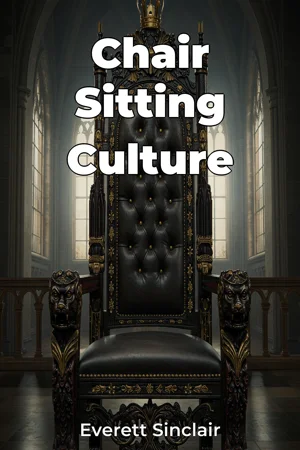
Have you ever considered the profound social and cultural narratives embedded within something as seemingly simple as a chair? "Chair Sitting Culture" delves into the multifaceted history of seating furniture, exploring its evolution from rudimentary forms to sophisticated designs, revealing how chairs have not only shaped our posture but also mirrored our societies. This book examines seating as a key indicator of ergonomic innovation and a potent symbol of status across diverse cultures and historical periods. The core of the book lies in understanding two central concepts: ergonomic adaptation and social signification. Ergonomic adaptation explores how chair design has responded to the human body’s needs, focusing on comfort, health, and productivity. Social signification analyzes how chairs have been used to denote power, prestige, and social roles across different societies. These topics are crucial because they offer a unique lens through which to understand the interplay between technology, society, and the human body. To provide context, the book draws upon historical records, archaeological findings, and design theory. It traces the development of seating from ancient civilizations, where chairs were often reserved for rulers and elites, to modern times, where mass production has made comfortable seating accessible to a broad range of people. Understanding this progression requires some familiarity with basic concepts of design history and social anthropology. The central argument of "Chair Sitting Culture" is that the evolution of chair design is inextricably linked to societal structures and technological advancements. Changes in seating arrangements and chair styles reflect deeper shifts in social hierarchies, cultural values, and technological capabilities. This argument is significant because it challenges the perception of furniture as merely functional objects, revealing their capacity to embody and reinforce social norms. The book is structured in three primary sections. The first section introduces the fundamental principles of ergonomic design and social symbolism in seating. The second section chronologically examines the evolution of chair design across different historical periods and cultures, focusing on specific case studies such as ancient Egypt, medieval Europe, and contemporary Japan. This section highlights how chairs have been used to express power, facilitate social interaction, and accommodate changing lifestyles. The third section synthesizes the historical analysis to offer insights into the future of seating, including the impact of new materials and technologies on chair design, as well as the potential for chairs to promote physical and social well-being. The evidence presented in the book draws upon diverse sources, including museum collections, historical texts, design patents, and ethnographic studies. It uses a multidisciplinary approach, combining historical analysis with ergonomic principles and social theory to provide a comprehensive understanding of chair sitting culture. This study connects to several interdisciplinary fields including anthropology, sociology, and engineering. The book’s analysis of social stratification connects to sociological theories of inequality and power. Its exploration of ergonomic design relates to engineering principles of biomechanics and human factors. The book offers a unique perspective by integrating design history with social and ergonomic analysis. It challenges traditional narratives of design by emphasizing the social and cultural dimensions of seating furniture. The overall tone is academic, aiming to provide rigorous analysis while remaining accessible to a broad audience. The writing style is clear and concise, focusing on presenting complex ideas in a straightforward manner. The target audience includes students and scholars of design history, social history, and cultural studies, as well as designers, architects, and anyone interested in the cultural significance of everyday objects. The book would be valuable to them because it provides a comprehensive and insightful analysis of a topic often overlooked in academic discourse. As a work of Design History, the book adheres to scholarly standards of research and citation, presenting evidence-based arguments supported by primary and secondary sources. The book's scope is broad, covering chair design across various cultures and historical periods, but it focuses primarily on Western and East Asian societies due to the availability of research materials. The information in the book can be applied practically by designers and architects seeking to create seating solutions that are both functional and socially responsible. Understanding the historical and cultural context of chair design can inform the development of innovative and meaningful seating solutions for the future. "Chair Sitting Culture" addresses ongoing debates about the relationship between design, technology, and society, contributing to a better understanding of how material objects shape our lives.
Have you ever considered the profound social and cultural narratives embedded within something as seemingly simple as a chair? "Chair Sitting Culture" delves into the multifaceted history of seating furniture, exploring its evolution from rudimentary forms to sophisticated designs, revealing how chairs have not only shaped our posture but also mirrored our societies. This book examines seating as a key indicator of ergonomic innovation and a potent symbol of status across diverse cultures and historical periods. The core of the book lies in understanding two central concepts: ergonomic adaptation and social signification. Ergonomic adaptation explores how chair design has responded to the human body’s needs, focusing on comfort, health, and productivity. Social signification analyzes how chairs have been used to denote power, prestige, and social roles across different societies. These topics are crucial because they offer a unique lens through which to understand the interplay between technology, society, and the human body. To provide context, the book draws upon historical records, archaeological findings, and design theory. It traces the development of seating from ancient civilizations, where chairs were often reserved for rulers and elites, to modern times, where mass production has made comfortable seating accessible to a broad range of people. Understanding this progression requires some familiarity with basic concepts of design history and social anthropology. The central argument of "Chair Sitting Culture" is that the evolution of chair design is inextricably linked to societal structures and technological advancements. Changes in seating arrangements and chair styles reflect deeper shifts in social hierarchies, cultural values, and technological capabilities. This argument is significant because it challenges the perception of furniture as merely functional objects, revealing their capacity to embody and reinforce social norms. The book is structured in three primary sections. The first section introduces the fundamental principles of ergonomic design and social symbolism in seating. The second section chronologically examines the evolution of chair design across different historical periods and cultures, focusing on specific case studies such as ancient Egypt, medieval Europe, and contemporary Japan. This section highlights how chairs have been used to express power, facilitate social interaction, and accommodate changing lifestyles. The third section synthesizes the historical analysis to offer insights into the future of seating, including the impact of new materials and technologies on chair design, as well as the potential for chairs to promote physical and social well-being. The evidence presented in the book draws upon diverse sources, including museum collections, historical texts, design patents, and ethnographic studies. It uses a multidisciplinary approach, combining historical analysis with ergonomic principles and social theory to provide a comprehensive understanding of chair sitting culture. This study connects to several interdisciplinary fields including anthropology, sociology, and engineering. The book’s analysis of social stratification connects to sociological theories of inequality and power. Its exploration of ergonomic design relates to engineering principles of biomechanics and human factors. The book offers a unique perspective by integrating design history with social and ergonomic analysis. It challenges traditional narratives of design by emphasizing the social and cultural dimensions of seating furniture. The overall tone is academic, aiming to provide rigorous analysis while remaining accessible to a broad audience. The writing style is clear and concise, focusing on presenting complex ideas in a straightforward manner. The target audience includes students and scholars of design history, social history, and cultural studies, as well as designers, architects, and anyone interested in the cultural significance of everyday objects. The book would be valuable to them because it provides a comprehensive and insightful analysis of a topic often overlooked in academic discourse. As a work of Design History, the book adheres to scholarly standards of research and citation, presenting evidence-based arguments supported by primary and secondary sources. The book's scope is broad, covering chair design across various cultures and historical periods, but it focuses primarily on Western and East Asian societies due to the availability of research materials. The information in the book can be applied practically by designers and architects seeking to create seating solutions that are both functional and socially responsible. Understanding the historical and cultural context of chair design can inform the development of innovative and meaningful seating solutions for the future. "Chair Sitting Culture" addresses ongoing debates about the relationship between design, technology, and society, contributing to a better understanding of how material objects shape our lives.
"Chair Sitting Culture" explores the rich history of chairs, revealing how these seemingly simple objects reflect and shape our societies. The book uncovers intriguing facts, such as how chairs were once symbols of power reserved for elites, and how ergonomic design has evolved to meet the human body's needs for comfort and productivity. By examining seating furniture through the lenses of ergonomic adaptation and social signification, the book demonstrates how design influences not only our physical well-being but also our social interactions and hierarchies. This study uniquely integrates design history with social and ergonomic analysis, challenging the perception of chairs as mere functional items. Drawing upon historical records, archaeological findings, and design theory, the book presents a multidisciplinary approach to understanding chair sitting culture. It progresses through an introduction to ergonomic design and social symbolism, a chronological examination of chair design across various cultures, and a synthesis offering insights into the future of seating. The book's value lies in its comprehensive and insightful analysis, making it a valuable resource for students, scholars, designers, and anyone interested in the cultural significance of everyday objects. It emphasizes the social and cultural dimensions of seating furniture, contributing to a deeper understanding of how material objects shape our lives by exploring the evolution and social symbolism of chair design across different historical periods and cultures.
Book Details
ISBN
9788235200747
Publisher
Publifye AS
Your Licenses
You don't own any licenses for this book
Purchase a license below to unlock this book and download the EPUB.
Purchase License
Select a tier to unlock this book
Need bulk licensing?
Contact us for enterprise agreements.