
About This Book
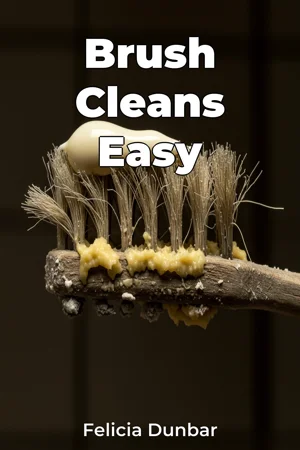
Have you ever considered the profound impact of seemingly simple inventions on public health? "Brush Cleans Easy" delves into the surprisingly rich history of toothbrush bristle design, charting its evolution from rudimentary beginnings in the 1700s to modern innovations focused on enhancing hygiene and preventing disease. This book addresses two central topics: the historical progression of toothbrush bristle materials and designs, and the significant improvements in oral hygiene resulting from these advancements. These topics matter because they reveal how incremental changes to everyday objects can lead to substantial public health benefits, and how understanding the past can inform future innovations. The story begins in the 18th century, a period marked by limited understanding of germ theory and rudimentary hygiene practices. Toothbrushes of the time, often crafted from animal bristles, presented significant challenges. These bristles, prone to harboring bacteria and degrading quickly, frequently did more harm than good. Against this backdrop, "Brush Cleans Easy" traces the early attempts to create more effective and hygienic toothbrushes. Understanding this history requires some basic familiarity with the pre-industrial era and the prevailing medical beliefs of the time. The central argument of "Brush Cleans Easy" is that continuous innovation in toothbrush bristle design has been a crucial, yet often overlooked, factor in improving global oral health and overall public hygiene. This argument is vital because it highlights the power of iterative improvements in everyday technologies and underscores the connection between oral hygiene and systemic health. The book is structured chronologically, starting with an introduction to early toothbrush designs and materials. It proceeds to develop its argument in three major sections. First, it examines the problems associated with early bristle materials, detailing the prevalence of bacterial contamination and the limited cleaning efficacy. Second, it explores the shift towards synthetic bristles in the 20th century, focusing on the development of nylon and other polymers. This section will highlight the advantages of these materials in terms of durability, hygiene, and cost-effectiveness. Third, the book analyzes contemporary innovations in bristle design, such as tapered bristles, angled configurations, and built-in antimicrobial agents. The book culminates with a discussion of the future of toothbrush technology, including potential applications of nanotechnology and personalized bristle designs. It also explores the broader implications for public health policy. "Brush Cleans Easy" relies on a variety of evidence sources, including historical patents, dental health records, material science studies, and microbiological analyses. It draws on unique datasets comparing the bacterial retention rates of different bristle materials. The book also incorporates insights from the history of technology, material science, and public health. It connects to fields like microbiology by examining the bacterial properties of different bristle types and to the history of medicine by placing toothbrush innovation within the broader context of evolving hygiene practices. From a medical perspective, the book will discuss the clinical implications of improved oral hygiene, such as reduced risks of cardiovascular disease and other systemic conditions. This book offers a distinctive perspective by focusing specifically on the evolution of bristle design, an aspect often overlooked in broader histories of dental hygiene. It adopts a fact-based and accessible writing style, making complex scientific information understandable to a broad audience. It is targeted at readers interested in medical history, public health, and the history of technology, as well as dental professionals seeking a deeper understanding of the tools they use daily. "Brush Cleans Easy" caters to the expectations of the 'Medical General, History' genres by presenting meticulously researched information in a clear, engaging, and historically grounded manner. The scope of the book is intentionally limited to bristle design, excluding other aspects of toothbrush construction such as handle ergonomics. This focused approach allows for an in-depth exploration of the topic. The information presented can be applied practically by individuals seeking to make informed choices about their oral hygiene products and by dental professionals looking to advise their patients effectively. It aims to reveal the importance of continuous improvement and diligent care in the field of seemingly mundane, yet crucial, everyday tools.
Have you ever considered the profound impact of seemingly simple inventions on public health? "Brush Cleans Easy" delves into the surprisingly rich history of toothbrush bristle design, charting its evolution from rudimentary beginnings in the 1700s to modern innovations focused on enhancing hygiene and preventing disease. This book addresses two central topics: the historical progression of toothbrush bristle materials and designs, and the significant improvements in oral hygiene resulting from these advancements. These topics matter because they reveal how incremental changes to everyday objects can lead to substantial public health benefits, and how understanding the past can inform future innovations. The story begins in the 18th century, a period marked by limited understanding of germ theory and rudimentary hygiene practices. Toothbrushes of the time, often crafted from animal bristles, presented significant challenges. These bristles, prone to harboring bacteria and degrading quickly, frequently did more harm than good. Against this backdrop, "Brush Cleans Easy" traces the early attempts to create more effective and hygienic toothbrushes. Understanding this history requires some basic familiarity with the pre-industrial era and the prevailing medical beliefs of the time. The central argument of "Brush Cleans Easy" is that continuous innovation in toothbrush bristle design has been a crucial, yet often overlooked, factor in improving global oral health and overall public hygiene. This argument is vital because it highlights the power of iterative improvements in everyday technologies and underscores the connection between oral hygiene and systemic health. The book is structured chronologically, starting with an introduction to early toothbrush designs and materials. It proceeds to develop its argument in three major sections. First, it examines the problems associated with early bristle materials, detailing the prevalence of bacterial contamination and the limited cleaning efficacy. Second, it explores the shift towards synthetic bristles in the 20th century, focusing on the development of nylon and other polymers. This section will highlight the advantages of these materials in terms of durability, hygiene, and cost-effectiveness. Third, the book analyzes contemporary innovations in bristle design, such as tapered bristles, angled configurations, and built-in antimicrobial agents. The book culminates with a discussion of the future of toothbrush technology, including potential applications of nanotechnology and personalized bristle designs. It also explores the broader implications for public health policy. "Brush Cleans Easy" relies on a variety of evidence sources, including historical patents, dental health records, material science studies, and microbiological analyses. It draws on unique datasets comparing the bacterial retention rates of different bristle materials. The book also incorporates insights from the history of technology, material science, and public health. It connects to fields like microbiology by examining the bacterial properties of different bristle types and to the history of medicine by placing toothbrush innovation within the broader context of evolving hygiene practices. From a medical perspective, the book will discuss the clinical implications of improved oral hygiene, such as reduced risks of cardiovascular disease and other systemic conditions. This book offers a distinctive perspective by focusing specifically on the evolution of bristle design, an aspect often overlooked in broader histories of dental hygiene. It adopts a fact-based and accessible writing style, making complex scientific information understandable to a broad audience. It is targeted at readers interested in medical history, public health, and the history of technology, as well as dental professionals seeking a deeper understanding of the tools they use daily. "Brush Cleans Easy" caters to the expectations of the 'Medical General, History' genres by presenting meticulously researched information in a clear, engaging, and historically grounded manner. The scope of the book is intentionally limited to bristle design, excluding other aspects of toothbrush construction such as handle ergonomics. This focused approach allows for an in-depth exploration of the topic. The information presented can be applied practically by individuals seeking to make informed choices about their oral hygiene products and by dental professionals looking to advise their patients effectively. It aims to reveal the importance of continuous improvement and diligent care in the field of seemingly mundane, yet crucial, everyday tools.
"Brush Cleans Easy" explores the evolution of toothbrush bristle design and its impact on public health, highlighting how advancements in this area have significantly improved oral hygiene. The book traces the journey from early toothbrushes, often made with animal bristles that harbored bacteria, to the development of more hygienic synthetic options. One intriguing fact is how the shift to nylon bristles in the 20th century dramatically improved durability and reduced bacterial contamination, marking a turning point in dental care. The book argues that continuous innovation in bristle design is a crucial, yet often overlooked, factor in global oral health. It begins with an introduction to early toothbrush designs and materials. It then examines the problems associated with early bristle materials, detailing the prevalence of bacterial contamination. This is followed by an exploration into the development of synthetic bristles and a discussion of contemporary innovations, such as antimicrobial bristles. By focusing specifically on bristle design, the book offers a unique perspective on dental hygiene history, revealing the importance of seemingly small improvements in everyday tools.
Book Details
ISBN
9788235200709
Publisher
Publifye AS
Your Licenses
You don't own any licenses for this book
Purchase a license below to unlock this book and download the EPUB.
Purchase License
Select a tier to unlock this book
Need bulk licensing?
Contact us for enterprise agreements.