
About This Book
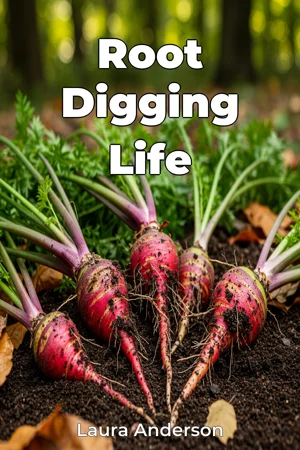
How did the humble root vegetable shape the social fabric of rural communities? "Root Digging Life" delves into the often-overlooked reliance on foraged roots as a cornerstone of family subsistence in rural areas. This book explores the intersection of nature and society, examining the historical and contemporary significance of root vegetable foraging as a crucial element of survival and community resilience. We uncover the intricate web of knowledge, skills, and social structures woven around this practice. This book argues that understanding the past and present role of root vegetable foraging provides vital insights into sustainable living, food security, and the enduring connection between humans and the natural world. The book's investigation is organized around three primary themes: the ecological knowledge required for successful foraging, the social dynamics of family and community involvement in root harvesting, and the historical context of reliance on foraged foods. We begin by establishing the ecological foundations, identifying common edible root species, their nutritional value, and optimal harvesting techniques passed down through generations. Then, we will explore the social structures – the roles of different family members (men, women, and children), the sharing of knowledge and resources, and the communal aspects of foraging in ensuring the well-being of the group. Central to this section is understanding how these practices have fostered unique social bonds and traditions. Finally, we trace the historical trends of dependency on root vegetables, illustrating how they have served as buffers against famine, economic hardship, and social disruption. This exploration relies on a combination of ethnobotanical surveys, oral histories, and archival research. Our methodology involved interviewing long-time residents of rural communities, gathering firsthand accounts of foraging practices, and documenting traditional ecological knowledge. We also analyzed historical records, such as agricultural reports, census data, and local chronicles, to establish timelines of root vegetable reliance. The synthesis of these diverse sources provides a rich and nuanced understanding of the subject. "Root Digging Life" bridges the disciplines of ecology, anthropology, and history. It connects to ecological studies by examining plant-human interactions and sustainable harvesting practices. It informs anthropological research by exploring the cultural significance of food and the social organization of foraging societies. It contributes to historical understanding by illuminating the everyday lives of rural populations and their strategies for survival. What sets this book apart is its focus on the experiential knowledge of root vegetable foraging as a form of localized expertise, emphasizing its relevance to contemporary food security concerns. By elevating the voices of community members and examining the historical record, we challenge conventional narratives of rural life and offer a fresh perspective on human-environment interactions. Written in an accessible style, "Root Digging Life" targets a broad audience, including students and scholars in environmental studies, anthropology, and rural sociology, as well as policymakers, and anyone with an interest in sustainable living and food security. The book offers valuable insights for those seeking to understand the complex relationship between humans and the natural world and how these connections shape community resilience. Acknowledging the scope of this study, we focus primarily on root vegetable foraging in temperate climate zones. While the principles discussed can be applied to other regions and foraging practices, our research is intentionally delimited to provide a detailed and nuanced analysis within a specific context. The knowledge presented in "Root Digging Life" has practical applications for contemporary food security initiatives. The book offers insights into diversifying food sources, promoting sustainable harvesting practices, and fostering community-based resilience in the face of environmental change. The book will provide a critical exploration of the debates surrounding food sovereignty, land access, and the preservation of traditional ecological knowledge. "Root Digging Life" provides a compelling exploration for a sustainable future.
How did the humble root vegetable shape the social fabric of rural communities? "Root Digging Life" delves into the often-overlooked reliance on foraged roots as a cornerstone of family subsistence in rural areas. This book explores the intersection of nature and society, examining the historical and contemporary significance of root vegetable foraging as a crucial element of survival and community resilience. We uncover the intricate web of knowledge, skills, and social structures woven around this practice. This book argues that understanding the past and present role of root vegetable foraging provides vital insights into sustainable living, food security, and the enduring connection between humans and the natural world. The book's investigation is organized around three primary themes: the ecological knowledge required for successful foraging, the social dynamics of family and community involvement in root harvesting, and the historical context of reliance on foraged foods. We begin by establishing the ecological foundations, identifying common edible root species, their nutritional value, and optimal harvesting techniques passed down through generations. Then, we will explore the social structures – the roles of different family members (men, women, and children), the sharing of knowledge and resources, and the communal aspects of foraging in ensuring the well-being of the group. Central to this section is understanding how these practices have fostered unique social bonds and traditions. Finally, we trace the historical trends of dependency on root vegetables, illustrating how they have served as buffers against famine, economic hardship, and social disruption. This exploration relies on a combination of ethnobotanical surveys, oral histories, and archival research. Our methodology involved interviewing long-time residents of rural communities, gathering firsthand accounts of foraging practices, and documenting traditional ecological knowledge. We also analyzed historical records, such as agricultural reports, census data, and local chronicles, to establish timelines of root vegetable reliance. The synthesis of these diverse sources provides a rich and nuanced understanding of the subject. "Root Digging Life" bridges the disciplines of ecology, anthropology, and history. It connects to ecological studies by examining plant-human interactions and sustainable harvesting practices. It informs anthropological research by exploring the cultural significance of food and the social organization of foraging societies. It contributes to historical understanding by illuminating the everyday lives of rural populations and their strategies for survival. What sets this book apart is its focus on the experiential knowledge of root vegetable foraging as a form of localized expertise, emphasizing its relevance to contemporary food security concerns. By elevating the voices of community members and examining the historical record, we challenge conventional narratives of rural life and offer a fresh perspective on human-environment interactions. Written in an accessible style, "Root Digging Life" targets a broad audience, including students and scholars in environmental studies, anthropology, and rural sociology, as well as policymakers, and anyone with an interest in sustainable living and food security. The book offers valuable insights for those seeking to understand the complex relationship between humans and the natural world and how these connections shape community resilience. Acknowledging the scope of this study, we focus primarily on root vegetable foraging in temperate climate zones. While the principles discussed can be applied to other regions and foraging practices, our research is intentionally delimited to provide a detailed and nuanced analysis within a specific context. The knowledge presented in "Root Digging Life" has practical applications for contemporary food security initiatives. The book offers insights into diversifying food sources, promoting sustainable harvesting practices, and fostering community-based resilience in the face of environmental change. The book will provide a critical exploration of the debates surrounding food sovereignty, land access, and the preservation of traditional ecological knowledge. "Root Digging Life" provides a compelling exploration for a sustainable future.
"Root Digging Life" explores the profound connection between rural communities and the foraging of root vegetables, revealing how this practice has shaped social structures, ecological knowledge, and resilience. Did you know that specific foraging techniques, including when and how to harvest, have been passed down through generations, reflecting a deep understanding of plant-human interactions? Or that root vegetables have historically served as vital buffers against famine and economic hardship? The book examines this relationship through three lenses: the ecological understanding needed for successful foraging, the social dynamics within families and communities during root harvesting, and the historical context of dependence on these foraged foods. It uniquely combines ethnobotany, oral histories, and archival research to elevate the voices of community members and challenge conventional views of rural life. By delving into topics like sustainable living and food security, "Root Digging Life" demonstrates how traditional ecological knowledge remains relevant today. The book begins by establishing the ecological foundations of root vegetable foraging, then explores the social structures that underpin this practice, before tracing the historical trends of reliance on root vegetables. This comprehensive approach offers valuable insights for students, scholars, policymakers, and anyone interested in the enduring connection between humans and nature.
Book Details
ISBN
9788235200518
Publisher
Publifye AS
Your Licenses
You don't own any licenses for this book
Purchase a license below to unlock this book and download the EPUB.
Purchase License
Select a tier to unlock this book
Need bulk licensing?
Contact us for enterprise agreements.