
About This Book
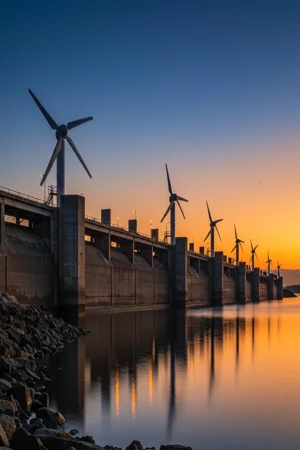
Can the ebb and flow of the tides provide a reliable and sustainable energy source for the future? "Tidal Barrage Potential" delves into the science, technology, and environmental considerations surrounding tidal barrages, aiming to answer this critical question. This book explores how these structures harness the power of tidal movements to generate electricity, offering a consistent and predictable alternative to traditional fossil fuels and intermittent renewable sources like solar and wind. We examine the potential benefits and inherent challenges associated with this technology, providing a comprehensive overview for anyone interested in the future of energy production. This book primarily focuses on three key areas: the engineering principles behind tidal barrage design and operation, the environmental impact of these structures on marine ecosystems, and the economic viability of tidal barrages as a long-term energy solution. Understanding these factors is crucial for making informed decisions about the role of tidal energy in a sustainable future. We will explore the historical context of tidal energy development, from early mills to modern large-scale projects, providing the necessary background to appreciate the current state of the technology. The central argument of "Tidal Barrage Potential" is that while tidal barrages offer a significant and predictable source of renewable energy, their widespread adoption hinges on careful planning and mitigation strategies to minimize environmental disruption and ensure economic feasibility. We contend that a balanced approach, considering both the potential benefits and drawbacks, is essential for realizing the full potential of this technology. The book is structured to provide a comprehensive understanding of tidal barrages. We begin with an introduction to the fundamental principles of tidal energy and the basic design of a tidal barrage. Subsequent chapters delve into specific aspects of barrage construction, turbine technology, and energy storage solutions. A significant portion of the book is dedicated to assessing the environmental consequences of tidal barrages, including impacts on fish populations, sediment transport, and water quality. We then analyze the economic factors, such as construction costs, operational expenses, and energy market dynamics. The book culminates with a discussion of future research directions and policy recommendations for promoting the responsible development of tidal energy. The analysis presented in this book relies on a variety of data sources, including engineering reports, environmental impact assessments, and economic analyses of existing and proposed tidal barrage projects. We incorporate case studies from around the world, examining successful and unsuccessful projects to draw valuable lessons. Furthermore, we utilize hydrodynamic models and ecological simulations to quantify the potential impacts of tidal barrages on marine environments. "Tidal Barrage Potential" connects to several other fields, including environmental science, civil engineering, and economics. The environmental science perspective is essential for understanding the ecological impacts of tidal barrages. Civil engineering principles are crucial for the design and construction of these structures. And economic analysis is necessary to assess the financial viability of tidal energy projects. These interdisciplinary connections provide a holistic understanding of the topic. This book offers a unique perspective by integrating the latest scientific research with practical engineering considerations. We move beyond simple advocacy for or against tidal barrages, instead providing a nuanced assessment of their potential and limitations. The writing style is factual and accessible, making complex concepts understandable to a broad audience. The target audience for this book includes engineers, scientists, policymakers, and anyone interested in renewable energy and environmental sustainability. This book would be particularly valuable for students and researchers in related fields. It serves as a comprehensive resource for understanding the technical, environmental, and economic aspects of tidal barrage technology. As a work of science and technology, this book adheres to the genre's standards for accuracy, objectivity, and clarity. We strive to present information in a balanced and unbiased manner, relying on verifiable data and peer-reviewed research. The scope of this book is limited to tidal barrage technology, excluding other forms of tidal energy, such as tidal stream turbines. While we acknowledge the importance of these alternative technologies, we focus specifically on tidal barrages to provide a more in-depth analysis. The information presented in this book can be applied to real-world scenarios, such as evaluating the feasibility of proposed tidal barrage projects, developing mitigation strategies to minimize environmental impacts, and informing policy decisions related to renewable energy development. The book addresses ongoing debates surrounding the environmental impact of tidal barrages, particularly regarding their effects on fish migration and sediment transport. We present different perspectives on these issues and offer potential solutions for mitigating negative impacts.
Can the ebb and flow of the tides provide a reliable and sustainable energy source for the future? "Tidal Barrage Potential" delves into the science, technology, and environmental considerations surrounding tidal barrages, aiming to answer this critical question. This book explores how these structures harness the power of tidal movements to generate electricity, offering a consistent and predictable alternative to traditional fossil fuels and intermittent renewable sources like solar and wind. We examine the potential benefits and inherent challenges associated with this technology, providing a comprehensive overview for anyone interested in the future of energy production. This book primarily focuses on three key areas: the engineering principles behind tidal barrage design and operation, the environmental impact of these structures on marine ecosystems, and the economic viability of tidal barrages as a long-term energy solution. Understanding these factors is crucial for making informed decisions about the role of tidal energy in a sustainable future. We will explore the historical context of tidal energy development, from early mills to modern large-scale projects, providing the necessary background to appreciate the current state of the technology. The central argument of "Tidal Barrage Potential" is that while tidal barrages offer a significant and predictable source of renewable energy, their widespread adoption hinges on careful planning and mitigation strategies to minimize environmental disruption and ensure economic feasibility. We contend that a balanced approach, considering both the potential benefits and drawbacks, is essential for realizing the full potential of this technology. The book is structured to provide a comprehensive understanding of tidal barrages. We begin with an introduction to the fundamental principles of tidal energy and the basic design of a tidal barrage. Subsequent chapters delve into specific aspects of barrage construction, turbine technology, and energy storage solutions. A significant portion of the book is dedicated to assessing the environmental consequences of tidal barrages, including impacts on fish populations, sediment transport, and water quality. We then analyze the economic factors, such as construction costs, operational expenses, and energy market dynamics. The book culminates with a discussion of future research directions and policy recommendations for promoting the responsible development of tidal energy. The analysis presented in this book relies on a variety of data sources, including engineering reports, environmental impact assessments, and economic analyses of existing and proposed tidal barrage projects. We incorporate case studies from around the world, examining successful and unsuccessful projects to draw valuable lessons. Furthermore, we utilize hydrodynamic models and ecological simulations to quantify the potential impacts of tidal barrages on marine environments. "Tidal Barrage Potential" connects to several other fields, including environmental science, civil engineering, and economics. The environmental science perspective is essential for understanding the ecological impacts of tidal barrages. Civil engineering principles are crucial for the design and construction of these structures. And economic analysis is necessary to assess the financial viability of tidal energy projects. These interdisciplinary connections provide a holistic understanding of the topic. This book offers a unique perspective by integrating the latest scientific research with practical engineering considerations. We move beyond simple advocacy for or against tidal barrages, instead providing a nuanced assessment of their potential and limitations. The writing style is factual and accessible, making complex concepts understandable to a broad audience. The target audience for this book includes engineers, scientists, policymakers, and anyone interested in renewable energy and environmental sustainability. This book would be particularly valuable for students and researchers in related fields. It serves as a comprehensive resource for understanding the technical, environmental, and economic aspects of tidal barrage technology. As a work of science and technology, this book adheres to the genre's standards for accuracy, objectivity, and clarity. We strive to present information in a balanced and unbiased manner, relying on verifiable data and peer-reviewed research. The scope of this book is limited to tidal barrage technology, excluding other forms of tidal energy, such as tidal stream turbines. While we acknowledge the importance of these alternative technologies, we focus specifically on tidal barrages to provide a more in-depth analysis. The information presented in this book can be applied to real-world scenarios, such as evaluating the feasibility of proposed tidal barrage projects, developing mitigation strategies to minimize environmental impacts, and informing policy decisions related to renewable energy development. The book addresses ongoing debates surrounding the environmental impact of tidal barrages, particularly regarding their effects on fish migration and sediment transport. We present different perspectives on these issues and offer potential solutions for mitigating negative impacts.
"Tidal Barrage Potential" explores the viability of tidal barrages as a source of renewable energy. It examines how these structures, harnessing tidal power, could offer a predictable alternative to fossil fuels. The book dives into the engineering principles of barrage design, the impact on marine ecosystems, and the economic viability of these projects. Readers will discover that while tidal barrages offer a steady energy source, their adoption relies on minimizing environmental disruption and ensuring economic feasibility. The book uniquely integrates scientific research with practical engineering, providing a balanced assessment of the technology's potential and limitations. It begins by introducing tidal energy principles and barrage design, then progresses through construction, turbine technology, and energy storage. A significant portion addresses environmental consequences, using hydrodynamic models and ecological simulations to quantify impacts on marine life. Case studies from successful and unsuccessful projects worldwide provide valuable lessons. Ultimately, the book offers policy recommendations for responsible tidal energy development.
Book Details
ISBN
9788235200488
Publisher
Publifye AS
Your Licenses
You don't own any licenses for this book
Purchase a license below to unlock this book and download the EPUB.
Purchase License
Select a tier to unlock this book
Need bulk licensing?
Contact us for enterprise agreements.