
About This Book
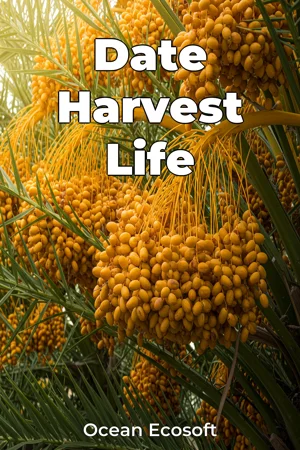
Have you ever considered the pivotal role of a single fruit in shaping the health and cultural identity of desert families? "Date Harvest Life" delves into this very question, exploring the multifaceted significance of date picking and its profound impact on the diets and traditions of families residing in arid environments. This book examines how dates, beyond being a mere food source, form the cornerstone of nutritional well-being, intergenerational knowledge, and cultural continuity in these unique communities. Central to our exploration are three key topics: the nutritional profile of dates and their adaptability to desert diets, the social dynamics of date harvesting, and the preservation of traditional knowledge surrounding date cultivation and consumption. Each topic is crucial to understanding the holistic importance of dates. Their high sugar content provides essential energy in harsh climates, while the harvesting process strengthens family bonds and transmits agricultural wisdom across generations. Historically, dates have sustained desert populations for millennia. Their cultivation is intrinsically linked to the development of oasis agriculture and water management techniques. Socially, the date harvest represents a time of communal effort and celebration, reinforcing kinship ties and collective identity. Scientifically, modern nutritional research validates the inherent health benefits of dates, confirming their role as a vital source of vitamins, minerals, and antioxidants. The central argument of "Date Harvest Life" is that the practice of date picking is not simply an agricultural activity but a crucial element in the sustainable livelihoods and cultural resilience of desert families. This argument is vital because it challenges conventional notions of food security by highlighting the importance of locally adapted, traditional food systems in ensuring nutritional well-being and cultural preservation. The book unfolds in a structured manner. Initially, we introduce the historical and environmental context of date cultivation in desert regions. We will then discuss the nutritional significance of dates, detailing their composition and health benefits within the context of desert diets, while also discussing common misconceptions about date consumption. Next, the book shifts its focus to the social aspects of date harvesting, analyzing its role in strengthening family bonds, promoting gender roles, and transmitting traditional knowledge. After establishing the nutritional and social significance of date picking, we examine the sustainability of traditional date farming practices. Finally, we explore the challenges faced by date farmers today, including climate change, economic pressures, and the loss of traditional knowledge, concluding with strategies for sustaining date harvesting for future generations. To support our arguments, "Date Harvest Life" draws upon a diverse range of evidence, including ethnographic studies of date-farming communities, nutritional analyses of date varieties, and historical accounts of date cultivation practices. We will incorporate interviews with date farmers and family members, adding a layer of personal narrative to the scholarly analysis. This book connects to several other fields, including anthropology (studying cultural practices), nutrition science (analyzing health benefits), and environmental studies (examining sustainable agriculture). These interdisciplinary connections enhance the book's argument by providing a more holistic understanding of the significance of date picking. What sets this book apart is its integrated approach, combining rigorous scientific analysis with rich ethnographic detail to provide a nuanced and compelling account of the role of dates in desert family life. Our tone is informative and accessible, aiming to engage both academic and general audiences interested in food studies, cultural preservation, and sustainable agriculture. The target audience includes students and researchers in food studies, anthropology, nutrition science, and environmental studies, as well as anyone interested in learning about the cultural and nutritional significance of traditional food systems. This book would be valuable to them by providing insights into the complex interplay between food, culture, and environment. As a work of social science and cooking, "Date Harvest Life" integrates recipes and cooking tips using dates alongside sociological insights to offer a comprehensive understanding of the subject matter. The scope of this book encompasses date picking and its impact on the food practices of desert families, with a focus on agricultural traditions. The book limits its coverage to the social system surrounding date farming, while acknowledging the rich cultural heritage associated with date songs, stories, and the role of dates in festivals and celebrations. The practical applications of this book are numerous. It can inform the development of sustainable food policies, promote the preservation of traditional farming practices, and raise awareness about the nutritional benefits of dates. While the nutritional benefits of dates are widely accepted, debates exist regarding the sustainability of large-scale date production and its potential environmental impacts. "Date Harvest Life" addresses these debates by examining the ecological footprint of different date farming practices.
Have you ever considered the pivotal role of a single fruit in shaping the health and cultural identity of desert families? "Date Harvest Life" delves into this very question, exploring the multifaceted significance of date picking and its profound impact on the diets and traditions of families residing in arid environments. This book examines how dates, beyond being a mere food source, form the cornerstone of nutritional well-being, intergenerational knowledge, and cultural continuity in these unique communities. Central to our exploration are three key topics: the nutritional profile of dates and their adaptability to desert diets, the social dynamics of date harvesting, and the preservation of traditional knowledge surrounding date cultivation and consumption. Each topic is crucial to understanding the holistic importance of dates. Their high sugar content provides essential energy in harsh climates, while the harvesting process strengthens family bonds and transmits agricultural wisdom across generations. Historically, dates have sustained desert populations for millennia. Their cultivation is intrinsically linked to the development of oasis agriculture and water management techniques. Socially, the date harvest represents a time of communal effort and celebration, reinforcing kinship ties and collective identity. Scientifically, modern nutritional research validates the inherent health benefits of dates, confirming their role as a vital source of vitamins, minerals, and antioxidants. The central argument of "Date Harvest Life" is that the practice of date picking is not simply an agricultural activity but a crucial element in the sustainable livelihoods and cultural resilience of desert families. This argument is vital because it challenges conventional notions of food security by highlighting the importance of locally adapted, traditional food systems in ensuring nutritional well-being and cultural preservation. The book unfolds in a structured manner. Initially, we introduce the historical and environmental context of date cultivation in desert regions. We will then discuss the nutritional significance of dates, detailing their composition and health benefits within the context of desert diets, while also discussing common misconceptions about date consumption. Next, the book shifts its focus to the social aspects of date harvesting, analyzing its role in strengthening family bonds, promoting gender roles, and transmitting traditional knowledge. After establishing the nutritional and social significance of date picking, we examine the sustainability of traditional date farming practices. Finally, we explore the challenges faced by date farmers today, including climate change, economic pressures, and the loss of traditional knowledge, concluding with strategies for sustaining date harvesting for future generations. To support our arguments, "Date Harvest Life" draws upon a diverse range of evidence, including ethnographic studies of date-farming communities, nutritional analyses of date varieties, and historical accounts of date cultivation practices. We will incorporate interviews with date farmers and family members, adding a layer of personal narrative to the scholarly analysis. This book connects to several other fields, including anthropology (studying cultural practices), nutrition science (analyzing health benefits), and environmental studies (examining sustainable agriculture). These interdisciplinary connections enhance the book's argument by providing a more holistic understanding of the significance of date picking. What sets this book apart is its integrated approach, combining rigorous scientific analysis with rich ethnographic detail to provide a nuanced and compelling account of the role of dates in desert family life. Our tone is informative and accessible, aiming to engage both academic and general audiences interested in food studies, cultural preservation, and sustainable agriculture. The target audience includes students and researchers in food studies, anthropology, nutrition science, and environmental studies, as well as anyone interested in learning about the cultural and nutritional significance of traditional food systems. This book would be valuable to them by providing insights into the complex interplay between food, culture, and environment. As a work of social science and cooking, "Date Harvest Life" integrates recipes and cooking tips using dates alongside sociological insights to offer a comprehensive understanding of the subject matter. The scope of this book encompasses date picking and its impact on the food practices of desert families, with a focus on agricultural traditions. The book limits its coverage to the social system surrounding date farming, while acknowledging the rich cultural heritage associated with date songs, stories, and the role of dates in festivals and celebrations. The practical applications of this book are numerous. It can inform the development of sustainable food policies, promote the preservation of traditional farming practices, and raise awareness about the nutritional benefits of dates. While the nutritional benefits of dates are widely accepted, debates exist regarding the sustainability of large-scale date production and its potential environmental impacts. "Date Harvest Life" addresses these debates by examining the ecological footprint of different date farming practices.
"Date Harvest Life" explores the vital role of dates in the diets, cultural identity, and sustainable livelihoods of desert families. This book illuminates how date picking extends beyond mere agriculture, acting as a cornerstone of nutritional well-being and intergenerational knowledge transfer. Discover how the date harvest fosters kinship ties and transmits agricultural wisdom, ensuring food security in harsh desert environments. The book examines the nutritional significance of dates, highlighting their essential energy provision in arid climates. It also delves into the social dynamics of date harvesting, emphasizing its role in strengthening family bonds and preserving traditional knowledge. Through ethnographic studies and nutritional analyses, "Date Harvest Life" offers a unique perspective on the cultural preservation and sustainable agriculture intertwined with date farming. The book unfolds by first introducing the historical context of date cultivation and then discussing the nutritional and social significance of dates. It then shifts to examining the sustainability of traditional date farming practices and concludes with strategies for sustaining date harvesting for future generations, making it a valuable resource for anyone interested in food studies and cultural heritage.
Book Details
ISBN
9788235200372
Publisher
Publifye AS
Your Licenses
You don't own any licenses for this book
Purchase a license below to unlock this book and download the EPUB.
Purchase License
Select a tier to unlock this book
Need bulk licensing?
Contact us for enterprise agreements.