
About This Book
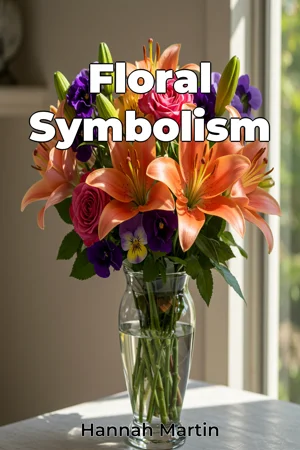
Have you ever considered the silent language of flowers, the messages woven into their petals throughout history and across cultures? "Floral Symbolism" delves into this rich tapestry, exploring how flowers have served as potent metaphors in literature, poetry, religious texts, and art. This book unveils the hidden meanings behind floral representations, revealing how these botanical symbols have been used to convey complex emotions, social commentary, and spiritual truths. The core of this exploration rests on three key pillars: identifying the specific historical and cultural contexts in which flowers acquired symbolic meanings; analyzing the recurring floral motifs in various art forms; and understanding how these symbols evolved and transformed over time. These topics are vital because they provide a lens through which we can better interpret artistic and literary works, appreciating the nuanced layers of meaning embedded within them. Grasping floral symbolism enriches our understanding of human history and cross-cultural communication. To fully appreciate the depth of floral symbolism requires some understanding of historical periods, particularly those that significantly shaped artistic expression: the Renaissance, the Victorian era, and the Modernist movement. Basic knowledge of mythology and major religious traditions will also prove useful. "Floral Symbolism" proposes that flowers possess a universal language, transcending linguistic barriers to communicate fundamental human experiences. While the specific meanings attributed to certain flowers vary across cultures and time periods, the underlying principle of using flora to represent abstract concepts remains constant. This book aims to demonstrate the enduring power of floral symbolism and its relevance in understanding human expression. The book is structured to guide readers through a comprehensive exploration of this topic. First, it introduces core concepts of semiotics, symbolism, and the historical context for floral representation. Second, individual chapters are dedicated to roses, lilies, and violets. Each chapter details the flower's historical origins, cultural significance, and recurring use in various art forms. Third, the book examines the influence of religious and mythological narratives on floral symbolism, considering how these narratives have shaped our understanding of specific flowers. Finally, the concluding chapter synthesizes the previous discussions and explores the contemporary applications of floral symbolism in fields such as marketing, design, and personal expression. The analysis relies on a diverse range of sources, including historical records, literary texts, art historical analyses, botanical studies, and religious scriptures. Visual examples are incorporated throughout, illustrating how floral motifs have been used in paintings, sculptures, and other art forms. "Floral Symbolism" connects to a number of disciplines, including art history, literature, religious studies, and cultural anthropology. By drawing on insights from these diverse fields, the book provides a multifaceted perspective on floral symbolism and its significance in human culture. This book adopts an interdisciplinary approach, combining art historical analysis with literary criticism and cultural studies. This approach allows "Floral Symbolism" to offer a fresh perspective on a topic that has often been examined within narrow disciplinary boundaries. The book is written in an accessible and engaging style, designed to appeal to a broad audience of students, scholars, and general readers interested in art, literature, and cultural history. "Floral Symbolism" directly targets students and enthusiasts of art history, literature, and religious studies. It will also be of interest to gardeners, florists, and anyone seeking a deeper understanding of the symbolic meanings associated with flowers. As a work of non-fiction, "Floral Symbolism" adheres to the conventions of academic scholarship, presenting well-researched arguments supported by evidence from primary and secondary sources. The book focuses on the most widely recognized and culturally significant flowers. While acknowledging that numerous other flowers possess symbolic meanings, the limitations enable a more in-depth analysis of select examples. Understanding floral symbolism has practical applications in several areas. It can enhance our appreciation of art and literature, inform our understanding of cultural traditions, and provide a language for expressing emotions and ideas. While the interpretation of floral symbolism is generally consistent within specific cultural contexts, there are instances of conflicting or evolving meanings. The book addresses these complexities, acknowledging the subjective nature of symbolic interpretation and the potential for diverse perspectives.
Have you ever considered the silent language of flowers, the messages woven into their petals throughout history and across cultures? "Floral Symbolism" delves into this rich tapestry, exploring how flowers have served as potent metaphors in literature, poetry, religious texts, and art. This book unveils the hidden meanings behind floral representations, revealing how these botanical symbols have been used to convey complex emotions, social commentary, and spiritual truths. The core of this exploration rests on three key pillars: identifying the specific historical and cultural contexts in which flowers acquired symbolic meanings; analyzing the recurring floral motifs in various art forms; and understanding how these symbols evolved and transformed over time. These topics are vital because they provide a lens through which we can better interpret artistic and literary works, appreciating the nuanced layers of meaning embedded within them. Grasping floral symbolism enriches our understanding of human history and cross-cultural communication. To fully appreciate the depth of floral symbolism requires some understanding of historical periods, particularly those that significantly shaped artistic expression: the Renaissance, the Victorian era, and the Modernist movement. Basic knowledge of mythology and major religious traditions will also prove useful. "Floral Symbolism" proposes that flowers possess a universal language, transcending linguistic barriers to communicate fundamental human experiences. While the specific meanings attributed to certain flowers vary across cultures and time periods, the underlying principle of using flora to represent abstract concepts remains constant. This book aims to demonstrate the enduring power of floral symbolism and its relevance in understanding human expression. The book is structured to guide readers through a comprehensive exploration of this topic. First, it introduces core concepts of semiotics, symbolism, and the historical context for floral representation. Second, individual chapters are dedicated to roses, lilies, and violets. Each chapter details the flower's historical origins, cultural significance, and recurring use in various art forms. Third, the book examines the influence of religious and mythological narratives on floral symbolism, considering how these narratives have shaped our understanding of specific flowers. Finally, the concluding chapter synthesizes the previous discussions and explores the contemporary applications of floral symbolism in fields such as marketing, design, and personal expression. The analysis relies on a diverse range of sources, including historical records, literary texts, art historical analyses, botanical studies, and religious scriptures. Visual examples are incorporated throughout, illustrating how floral motifs have been used in paintings, sculptures, and other art forms. "Floral Symbolism" connects to a number of disciplines, including art history, literature, religious studies, and cultural anthropology. By drawing on insights from these diverse fields, the book provides a multifaceted perspective on floral symbolism and its significance in human culture. This book adopts an interdisciplinary approach, combining art historical analysis with literary criticism and cultural studies. This approach allows "Floral Symbolism" to offer a fresh perspective on a topic that has often been examined within narrow disciplinary boundaries. The book is written in an accessible and engaging style, designed to appeal to a broad audience of students, scholars, and general readers interested in art, literature, and cultural history. "Floral Symbolism" directly targets students and enthusiasts of art history, literature, and religious studies. It will also be of interest to gardeners, florists, and anyone seeking a deeper understanding of the symbolic meanings associated with flowers. As a work of non-fiction, "Floral Symbolism" adheres to the conventions of academic scholarship, presenting well-researched arguments supported by evidence from primary and secondary sources. The book focuses on the most widely recognized and culturally significant flowers. While acknowledging that numerous other flowers possess symbolic meanings, the limitations enable a more in-depth analysis of select examples. Understanding floral symbolism has practical applications in several areas. It can enhance our appreciation of art and literature, inform our understanding of cultural traditions, and provide a language for expressing emotions and ideas. While the interpretation of floral symbolism is generally consistent within specific cultural contexts, there are instances of conflicting or evolving meanings. The book addresses these complexities, acknowledging the subjective nature of symbolic interpretation and the potential for diverse perspectives.
"Floral Symbolism" explores the hidden language of flowers, revealing their symbolic meanings in art, literature, and culture. The book highlights how floral motifs have been used to convey complex emotions, social commentary, and spiritual truths throughout history. For instance, the rose often symbolizes love and passion, while the lily can represent purity and resurrection. Understanding these botanical symbols enriches our interpretation of artistic and literary works. The book examines floral symbolism through historical and cultural contexts, analyzing recurring motifs and their evolution. It explains how flowers possess a universal language, transcending linguistic barriers to communicate fundamental human experiences. The Renaissance and Victorian eras are particularly focused on as periods that significantly shaped floral symbolism. Structured to provide a comprehensive overview, "Floral Symbolism" begins with core concepts of semiotics and symbolism. Individual chapters then delve into specific flowers like roses, lilies, and violets, detailing their origins and significance. The book concludes by exploring contemporary applications of floral symbolism, making it a valuable resource for art enthusiasts and anyone interested in cultural symbolism.
Book Details
ISBN
9788235200273
Publisher
Publifye AS
Your Licenses
You don't own any licenses for this book
Purchase a license below to unlock this book and download the EPUB.
Purchase License
Select a tier to unlock this book
Need bulk licensing?
Contact us for enterprise agreements.