
About This Book
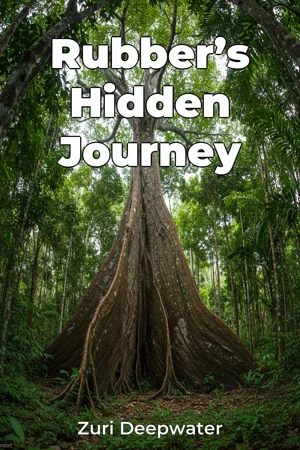
Did you know that the humble rubber band is entangled with colonialism, industrial revolutions, and even the development of space travel? "Rubber’s Hidden Journey" unveils the surprisingly complex and often overlooked history of rubber, tracing its profound impact on modern technology, global economics, and everyday life. This book explores how a seemingly simple material has shaped our world in ways we rarely consider. We delve into three central themes: the natural history of rubber, focusing on its origins in the Amazon rainforest and the Indigenous knowledge surrounding its properties; the transformative impact of vulcanization and the subsequent industrial boom it ignited; and the synthetic rubber revolution, which propelled technological advancements during wartime and beyond. These topics are critical because they reveal how a natural resource became a strategic commodity, driving innovation and geopolitical power struggles. To understand rubber's story, we must first appreciate the ecological context of its natural source, Hevea brasiliensis, and the traditional practices of harvesting it sustainably. We will examine Charles Goodyear’s accidental discovery of vulcanization in 1839, a pivotal moment that unlocked rubber's potential for widespread industrial applications. The narrative extends to the 20th century, exploring the urgent need for synthetic alternatives during World War II when natural rubber supplies were disrupted. The central argument of "Rubber’s Hidden Journey" is that rubber's history serves as a microcosm of broader historical forces, illustrating the interplay between scientific discovery, economic exploitation, and technological innovation. This argument is essential because it challenges the perception of rubber as a mere commodity, revealing its significance as a catalyst for global change and a reflection of humanity's relationship with the natural world. The book begins by introducing the botanical origins of rubber and the early uses by Indigenous Amazonian communities. The narrative then transitions to the 19th-century rubber boom, analyzing the social and environmental consequences of its extraction. We then explore the science behind vulcanization and its role in revolutionizing industries such as transportation and manufacturing. A significant portion of the book is dedicated to the development of synthetic rubber, highlighting its impact on wartime technology and post-war consumer culture. The book culminates by examining future prospects for sustainable rubber production in an era of environmental consciousness. This account is built upon extensive historical research, drawing from archival documents, scientific publications, and economic reports. We also incorporate insights from ethnobotanical studies, offering a holistic perspective on rubber's journey from the rainforest to the modern world. "Rubber’s Hidden Journey" connects to several academic disciplines, including economic history, materials science, and environmental studies. By exploring the economics of rubber production, we gain insights into global trade patterns and resource management. By examining the chemistry and physics of rubber, we gain a deeper understanding of material science. By analyzing the environmental impact of rubber plantations, we contribute to ecological debates about sustainability. This book differentiates itself by taking a comprehensive, interdisciplinary approach to the history of rubber. It moves beyond a purely technological or economic perspective, offering a nuanced account that considers the social, environmental, and cultural dimensions of this ubiquitous material. Written in a clear, accessible style, the book balances detailed analysis with engaging storytelling, avoiding jargon to appeal to a broad audience. The target audience includes general readers interested in the history of science and technology, environmental issues, and economic development. It will also appeal to students and researchers in related academic fields. This book is valuable because it sheds light on the hidden histories behind everyday objects, encouraging readers to think critically about the materials that shape our world. As a work of non-fiction, "Rubber’s Hidden Journey" adheres to standards of accuracy, objectivity, and evidence-based analysis. It avoids speculation, presenting a well-documented account of rubber's history and its impact. The book’s scope encompasses the global history of rubber from its origins to the present day, with intentional limitations on delving into highly technical aspects of polymer chemistry. Readers will gain a deeper understanding of the global supply chains that underpin modern consumer culture and will be better equipped to evaluate the social and environmental implications of their purchasing decisions. The book addresses controversies surrounding the ethical sourcing of natural rubber, the environmental impact of large-scale plantations, and the search for more sustainable alternatives, stimulating reflection on responsible consumption.
Did you know that the humble rubber band is entangled with colonialism, industrial revolutions, and even the development of space travel? "Rubber’s Hidden Journey" unveils the surprisingly complex and often overlooked history of rubber, tracing its profound impact on modern technology, global economics, and everyday life. This book explores how a seemingly simple material has shaped our world in ways we rarely consider. We delve into three central themes: the natural history of rubber, focusing on its origins in the Amazon rainforest and the Indigenous knowledge surrounding its properties; the transformative impact of vulcanization and the subsequent industrial boom it ignited; and the synthetic rubber revolution, which propelled technological advancements during wartime and beyond. These topics are critical because they reveal how a natural resource became a strategic commodity, driving innovation and geopolitical power struggles. To understand rubber's story, we must first appreciate the ecological context of its natural source, Hevea brasiliensis, and the traditional practices of harvesting it sustainably. We will examine Charles Goodyear’s accidental discovery of vulcanization in 1839, a pivotal moment that unlocked rubber's potential for widespread industrial applications. The narrative extends to the 20th century, exploring the urgent need for synthetic alternatives during World War II when natural rubber supplies were disrupted. The central argument of "Rubber’s Hidden Journey" is that rubber's history serves as a microcosm of broader historical forces, illustrating the interplay between scientific discovery, economic exploitation, and technological innovation. This argument is essential because it challenges the perception of rubber as a mere commodity, revealing its significance as a catalyst for global change and a reflection of humanity's relationship with the natural world. The book begins by introducing the botanical origins of rubber and the early uses by Indigenous Amazonian communities. The narrative then transitions to the 19th-century rubber boom, analyzing the social and environmental consequences of its extraction. We then explore the science behind vulcanization and its role in revolutionizing industries such as transportation and manufacturing. A significant portion of the book is dedicated to the development of synthetic rubber, highlighting its impact on wartime technology and post-war consumer culture. The book culminates by examining future prospects for sustainable rubber production in an era of environmental consciousness. This account is built upon extensive historical research, drawing from archival documents, scientific publications, and economic reports. We also incorporate insights from ethnobotanical studies, offering a holistic perspective on rubber's journey from the rainforest to the modern world. "Rubber’s Hidden Journey" connects to several academic disciplines, including economic history, materials science, and environmental studies. By exploring the economics of rubber production, we gain insights into global trade patterns and resource management. By examining the chemistry and physics of rubber, we gain a deeper understanding of material science. By analyzing the environmental impact of rubber plantations, we contribute to ecological debates about sustainability. This book differentiates itself by taking a comprehensive, interdisciplinary approach to the history of rubber. It moves beyond a purely technological or economic perspective, offering a nuanced account that considers the social, environmental, and cultural dimensions of this ubiquitous material. Written in a clear, accessible style, the book balances detailed analysis with engaging storytelling, avoiding jargon to appeal to a broad audience. The target audience includes general readers interested in the history of science and technology, environmental issues, and economic development. It will also appeal to students and researchers in related academic fields. This book is valuable because it sheds light on the hidden histories behind everyday objects, encouraging readers to think critically about the materials that shape our world. As a work of non-fiction, "Rubber’s Hidden Journey" adheres to standards of accuracy, objectivity, and evidence-based analysis. It avoids speculation, presenting a well-documented account of rubber's history and its impact. The book’s scope encompasses the global history of rubber from its origins to the present day, with intentional limitations on delving into highly technical aspects of polymer chemistry. Readers will gain a deeper understanding of the global supply chains that underpin modern consumer culture and will be better equipped to evaluate the social and environmental implications of their purchasing decisions. The book addresses controversies surrounding the ethical sourcing of natural rubber, the environmental impact of large-scale plantations, and the search for more sustainable alternatives, stimulating reflection on responsible consumption.
"Rubber's Hidden Journey" unveils the remarkable story of rubber, demonstrating its surprising connections to pivotal moments in history, from the Amazon rainforest to the Industrial Revolution and beyond. This book explores how a seemingly simple substance has profoundly shaped modern technology, global economics, and our daily lives. You'll discover how Charles Goodyear’s accidental discovery of vulcanization in 1839 unlocked rubber's potential for widespread industrial applications and how the urgent need for synthetic alternatives during World War II spurred significant technological advancements. The book delves into the natural history of rubber, its origins in the Amazon, and the transformative impact of vulcanization. It also examines the synthetic rubber revolution, revealing how rubber became a strategic commodity that fueled both innovation and geopolitical power struggles. Beginning with the botanical origins of rubber and its early uses by Indigenous communities, the narrative progresses through the 19th-century rubber boom, the science of vulcanization, and the development of synthetic rubber. Ultimately, it examines the prospects for sustainable rubber production. This unique account takes an interdisciplinary approach, considering the economic, social, environmental, and cultural dimensions of rubber production. By exploring the interplay between scientific discovery, economic exploitation, and technological innovation, "Rubber's Hidden Journey" offers a fresh perspective on this often-overlooked material and its lasting impact on our world.
Book Details
ISBN
9788235200259
Publisher
Publifye AS
Your Licenses
You don't own any licenses for this book
Purchase a license below to unlock this book and download the EPUB.
Purchase License
Select a tier to unlock this book
Need bulk licensing?
Contact us for enterprise agreements.