
About This Book
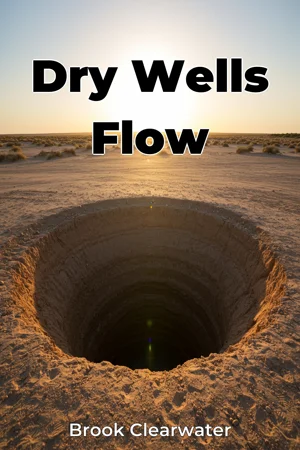
Can humanity solve the escalating global water crisis before it reaches a point of no return? "Dry Wells Flow" explores tangible solutions to water scarcity, focusing on two critical approaches: innovative water procurement through strategic digging techniques and comprehensive conservation strategies. This book is vitally important because access to clean water is not just an environmental concern; it is fundamentally linked to public health, economic stability, and geopolitical security. This book examines the historical context of water management, illustrating how civilizations have risen and fallen based on their ability to access and conserve this precious resource. We delve into the social dimension of water scarcity, highlighting how vulnerable populations are disproportionately affected, leading to displacement, conflict, and economic hardship. The scientific basis of the water cycle, groundwater dynamics, and the impact of climate change on water availability are explained, providing a foundational understanding for the reader. The central argument of "Dry Wells Flow" is that a multi-faceted approach, combining advanced water procurement methods with rigorous conservation practices, is essential for mitigating water scarcity and ensuring sustainable water resources for future generations. This argument is crucial because relying solely on traditional water management techniques is no longer sufficient in the face of growing populations and climate change. The book begins by introducing the global water crisis, outlining the scale of the problem and its far-reaching consequences. It then focuses on innovative digging techniques, exploring methodologies such as advanced geophysical surveys for identifying optimal well locations, the use of directional drilling to access previously unreachable aquifers, and the implementation of managed aquifer recharge systems. Subsequently, the book shifts its focus to water conservation, examining strategies for reducing water consumption in agriculture, industry, and domestic settings. Topics include efficient irrigation technologies, water recycling and reuse systems, and policies aimed at promoting water-wise behavior. The argument culminates with a proposal for integrated water resource management, emphasizing the need for collaboration among governments, communities, and the private sector to implement sustainable water solutions. The book concludes with practical applications and implications, offering case studies of successful water management projects and providing actionable recommendations for individuals, policymakers, and businesses. "Dry Wells Flow" draws upon a wide range of evidence and research, including hydrological data, case studies of successful water management programs, and economic analyses of water conservation technologies. The book also utilizes unique data sources, such as satellite imagery for monitoring groundwater depletion and remote sensing for assessing the effectiveness of irrigation systems. This book connects to multiple disciplines, including earth sciences, economics, and political science. It will examine how geographical factors influence water availability, how economic incentives can drive water conservation, and how political institutions can promote equitable water distribution. These interdisciplinary connections enrich the book's argument by demonstrating the complex nature of the water crisis and the need for integrated solutions. A unique feature of "Dry Wells Flow" is its emphasis on bridging the gap between scientific knowledge and on-the-ground implementation. The book not only explains the technical aspects of water procurement and conservation but also provides practical guidance on how to implement these strategies in different contexts. The tone of the book is informative and engaging, presenting complex scientific information in a clear and accessible manner. Its writing style blends academic rigor with real-world examples and case studies, making it both educational and relevant to a broad audience. The intended audience includes students and researchers in earth sciences, environmental studies, and geography, as well as policymakers, water resource managers, and concerned citizens. The book will be valuable to readers seeking a comprehensive understanding of the global water crisis and practical solutions for addressing it. As a work in the genre of Earth Sciences Geography and Environment, "Dry Wells Flow" adheres to the conventions of scholarly rigor, evidence-based analysis, and practical problem-solving. The scope of the book is global, examining water scarcity challenges and solutions in diverse regions around the world. However, it does not delve into highly technical engineering details, focusing instead on providing a broad overview of the key concepts and strategies. The information in "Dry Wells Flow" can be applied practically by readers in a number of ways. Individuals can implement water conservation measures in their homes and communities. Businesses can adopt water-efficient technologies and practices. Policymakers can use the book's recommendations to develop more effective water management policies. The book addresses ongoing debates in the field, such as the role of desalination in addressing water scarcity and the potential trade-offs between water conservation and economic growth. By presenting different perspectives on these issues, the book aims to foster informed discussion and promote innovative solutions.
Can humanity solve the escalating global water crisis before it reaches a point of no return? "Dry Wells Flow" explores tangible solutions to water scarcity, focusing on two critical approaches: innovative water procurement through strategic digging techniques and comprehensive conservation strategies. This book is vitally important because access to clean water is not just an environmental concern; it is fundamentally linked to public health, economic stability, and geopolitical security. This book examines the historical context of water management, illustrating how civilizations have risen and fallen based on their ability to access and conserve this precious resource. We delve into the social dimension of water scarcity, highlighting how vulnerable populations are disproportionately affected, leading to displacement, conflict, and economic hardship. The scientific basis of the water cycle, groundwater dynamics, and the impact of climate change on water availability are explained, providing a foundational understanding for the reader. The central argument of "Dry Wells Flow" is that a multi-faceted approach, combining advanced water procurement methods with rigorous conservation practices, is essential for mitigating water scarcity and ensuring sustainable water resources for future generations. This argument is crucial because relying solely on traditional water management techniques is no longer sufficient in the face of growing populations and climate change. The book begins by introducing the global water crisis, outlining the scale of the problem and its far-reaching consequences. It then focuses on innovative digging techniques, exploring methodologies such as advanced geophysical surveys for identifying optimal well locations, the use of directional drilling to access previously unreachable aquifers, and the implementation of managed aquifer recharge systems. Subsequently, the book shifts its focus to water conservation, examining strategies for reducing water consumption in agriculture, industry, and domestic settings. Topics include efficient irrigation technologies, water recycling and reuse systems, and policies aimed at promoting water-wise behavior. The argument culminates with a proposal for integrated water resource management, emphasizing the need for collaboration among governments, communities, and the private sector to implement sustainable water solutions. The book concludes with practical applications and implications, offering case studies of successful water management projects and providing actionable recommendations for individuals, policymakers, and businesses. "Dry Wells Flow" draws upon a wide range of evidence and research, including hydrological data, case studies of successful water management programs, and economic analyses of water conservation technologies. The book also utilizes unique data sources, such as satellite imagery for monitoring groundwater depletion and remote sensing for assessing the effectiveness of irrigation systems. This book connects to multiple disciplines, including earth sciences, economics, and political science. It will examine how geographical factors influence water availability, how economic incentives can drive water conservation, and how political institutions can promote equitable water distribution. These interdisciplinary connections enrich the book's argument by demonstrating the complex nature of the water crisis and the need for integrated solutions. A unique feature of "Dry Wells Flow" is its emphasis on bridging the gap between scientific knowledge and on-the-ground implementation. The book not only explains the technical aspects of water procurement and conservation but also provides practical guidance on how to implement these strategies in different contexts. The tone of the book is informative and engaging, presenting complex scientific information in a clear and accessible manner. Its writing style blends academic rigor with real-world examples and case studies, making it both educational and relevant to a broad audience. The intended audience includes students and researchers in earth sciences, environmental studies, and geography, as well as policymakers, water resource managers, and concerned citizens. The book will be valuable to readers seeking a comprehensive understanding of the global water crisis and practical solutions for addressing it. As a work in the genre of Earth Sciences Geography and Environment, "Dry Wells Flow" adheres to the conventions of scholarly rigor, evidence-based analysis, and practical problem-solving. The scope of the book is global, examining water scarcity challenges and solutions in diverse regions around the world. However, it does not delve into highly technical engineering details, focusing instead on providing a broad overview of the key concepts and strategies. The information in "Dry Wells Flow" can be applied practically by readers in a number of ways. Individuals can implement water conservation measures in their homes and communities. Businesses can adopt water-efficient technologies and practices. Policymakers can use the book's recommendations to develop more effective water management policies. The book addresses ongoing debates in the field, such as the role of desalination in addressing water scarcity and the potential trade-offs between water conservation and economic growth. By presenting different perspectives on these issues, the book aims to foster informed discussion and promote innovative solutions.
"Dry Wells Flow" tackles the escalating global water crisis, arguing for a blend of innovative water procurement and robust conservation strategies. It highlights how civilizations historically succeeded or failed based on their water management capabilities. The book emphasizes that access to clean water isn't just an environmental issue, but also crucial for public health and economic stability. It uniquely bridges scientific insights with practical implementation, offering solutions beyond traditional methods. The book explores advanced digging techniques, like using geophysical surveys to pinpoint optimal well locations and directional drilling to tap into previously unreachable aquifers. It then shifts to water conservation, detailing efficient irrigation technologies and water recycling systems. Readers will see how geographical factors impact water availability and how economic incentives can drive water conservation. Starting with the global water crisis and its consequences, the book progresses to explore innovative drilling techniques and conservation strategies. "Dry Wells Flow" culminates with a call for integrated water resource management, promoting collaboration among sectors for sustainable solutions. It offers case studies and actionable recommendations for individuals, policymakers, and businesses alike.
Book Details
ISBN
9788235200167
Publisher
Publifye AS
Your Licenses
You don't own any licenses for this book
Purchase a license below to unlock this book and download the EPUB.
Purchase License
Select a tier to unlock this book
Need bulk licensing?
Contact us for enterprise agreements.