
About This Book
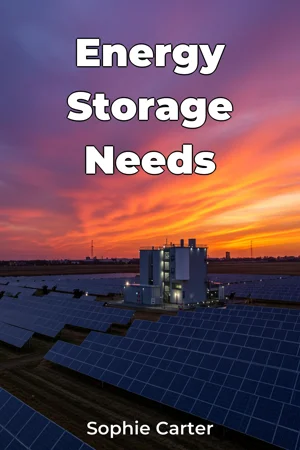
Can widespread adoption of renewable energy truly become a reality without addressing the critical challenges of storing the generated power for consistent use? "Energy Storage Needs" examines the pivotal role of battery systems in enabling the transition to a sustainable energy future reliant on intermittent renewable sources. This book focuses on the imperative need for robust and efficient energy storage solutions, specifically exploring advanced battery technologies, grid integration strategies, and economic considerations essential for harnessing the full potential of solar, wind, and other renewable energy sources. We delve into how batteries bridge the gap between energy supply and demand, mitigating the inherent variability of renewable generation. Without effective storage, periods of high renewable output may result in energy surplus while periods of low output lead to shortages, destabilizing the power grid and hindering widespread adoption. Our central argument posits that strategic investment in and development of advanced battery storage are not merely beneficial but are fundamentally necessary for a successful and reliable renewable energy ecosystem. The book unfolds in a logical progression, beginning with a comprehensive introduction to the challenges of integrating intermittent renewable energy into existing grid infrastructures. We establish the fundamental principles of energy storage, highlighting the limitations of current grid systems and the potential of battery technologies to address these shortcomings. This understanding will be built upon in three major sections. First, we scrutinize the landscape of battery technologies, evaluating established options like lithium-ion alongside emerging alternatives such as flow batteries, solid-state batteries, and metal-air systems. Each technology is assessed based on energy density, power density, cycle life, cost, safety, and environmental impact, offering a comparative analysis to guide informed decision-making. Second, we explore grid integration strategies, examining how battery systems can be deployed at various points in the electricity network, from utility-scale installations to residential energy storage. We analyze the role of battery storage in providing ancillary services such as frequency regulation and voltage support, enhancing grid stability and resilience. Third, the book addresses the economic and policy dimensions of energy storage, creating a dialogue around cost-benefit analysis, incentive programs, and regulatory frameworks that promote battery deployment. Throughout the book, we draw upon a wealth of empirical data, including laboratory testing results, field demonstration projects, and economic modeling studies. Data from government agencies, industry research reports, and academic publications are synthesized to provide an objective and data-driven assessment of the current state and future prospects of battery energy storage. This book bridges the disciplines of materials science, electrical engineering, economics, and public policy, highlighting the interdisciplinary nature of energy storage challenges and opportunities. A unique perspective lies in highlighting the importance of standardization and interoperability. Written in a clear and accessible style, "Energy Storage Needs" is targeted toward a diverse audience, including energy professionals, policymakers, researchers, and students seeking a comprehensive understanding of the role of batteries in the renewable energy transition. This is a valuable resource for anyone seeking to grasp the complexities and opportunities of large-scale energy storage deployment. The scope intentionally focuses on electrochemical energy storage, primarily battery technologies, acknowledging that other storage solutions (e.g., pumped hydro, compressed air) also contribute. The emphasis is on electrical grid applications. While the potential for battery energy storage is considerable, ongoing debates exist regarding the optimal mix of storage technologies, the need for supportive policies, and the long-term sustainability of battery materials. This book brings all of these debates to the forefront. Readers will gain practical insights into how battery systems can be designed, deployed, and managed to maximize their value in a rapidly evolving energy landscape.
Can widespread adoption of renewable energy truly become a reality without addressing the critical challenges of storing the generated power for consistent use? "Energy Storage Needs" examines the pivotal role of battery systems in enabling the transition to a sustainable energy future reliant on intermittent renewable sources. This book focuses on the imperative need for robust and efficient energy storage solutions, specifically exploring advanced battery technologies, grid integration strategies, and economic considerations essential for harnessing the full potential of solar, wind, and other renewable energy sources. We delve into how batteries bridge the gap between energy supply and demand, mitigating the inherent variability of renewable generation. Without effective storage, periods of high renewable output may result in energy surplus while periods of low output lead to shortages, destabilizing the power grid and hindering widespread adoption. Our central argument posits that strategic investment in and development of advanced battery storage are not merely beneficial but are fundamentally necessary for a successful and reliable renewable energy ecosystem. The book unfolds in a logical progression, beginning with a comprehensive introduction to the challenges of integrating intermittent renewable energy into existing grid infrastructures. We establish the fundamental principles of energy storage, highlighting the limitations of current grid systems and the potential of battery technologies to address these shortcomings. This understanding will be built upon in three major sections. First, we scrutinize the landscape of battery technologies, evaluating established options like lithium-ion alongside emerging alternatives such as flow batteries, solid-state batteries, and metal-air systems. Each technology is assessed based on energy density, power density, cycle life, cost, safety, and environmental impact, offering a comparative analysis to guide informed decision-making. Second, we explore grid integration strategies, examining how battery systems can be deployed at various points in the electricity network, from utility-scale installations to residential energy storage. We analyze the role of battery storage in providing ancillary services such as frequency regulation and voltage support, enhancing grid stability and resilience. Third, the book addresses the economic and policy dimensions of energy storage, creating a dialogue around cost-benefit analysis, incentive programs, and regulatory frameworks that promote battery deployment. Throughout the book, we draw upon a wealth of empirical data, including laboratory testing results, field demonstration projects, and economic modeling studies. Data from government agencies, industry research reports, and academic publications are synthesized to provide an objective and data-driven assessment of the current state and future prospects of battery energy storage. This book bridges the disciplines of materials science, electrical engineering, economics, and public policy, highlighting the interdisciplinary nature of energy storage challenges and opportunities. A unique perspective lies in highlighting the importance of standardization and interoperability. Written in a clear and accessible style, "Energy Storage Needs" is targeted toward a diverse audience, including energy professionals, policymakers, researchers, and students seeking a comprehensive understanding of the role of batteries in the renewable energy transition. This is a valuable resource for anyone seeking to grasp the complexities and opportunities of large-scale energy storage deployment. The scope intentionally focuses on electrochemical energy storage, primarily battery technologies, acknowledging that other storage solutions (e.g., pumped hydro, compressed air) also contribute. The emphasis is on electrical grid applications. While the potential for battery energy storage is considerable, ongoing debates exist regarding the optimal mix of storage technologies, the need for supportive policies, and the long-term sustainability of battery materials. This book brings all of these debates to the forefront. Readers will gain practical insights into how battery systems can be designed, deployed, and managed to maximize their value in a rapidly evolving energy landscape.
"Energy Storage Needs" addresses the critical role of battery systems in enabling a sustainable energy future reliant on intermittent renewable sources like solar and wind. It highlights the necessity of robust energy storage solutions for grid integration, emphasizing that without effective storage, renewable energy's variability can destabilize the power grid. The book delves into how advanced battery technologies bridge the gap between energy supply and demand, making renewable energy a reliable option. One intriguing fact is that strategic investment in advanced battery storage is not merely beneficial but fundamentally necessary for a successful renewable energy ecosystem. The book progresses logically, first introducing the challenges of integrating intermittent renewable energy into existing grid infrastructures and establishing energy storage principles. It then scrutinizes various battery technologies, including established lithium-ion and emerging alternatives, based on factors like energy density, cost, and environmental impact. Further, it explores grid integration strategies, such as deploying battery systems at utility-scale and residential levels, including examining the role of battery storage in enhancing grid stability. Finally, the book addresses economic and policy dimensions, discussing cost-benefit analyses and regulatory frameworks that promote battery deployment. This approach provides a comprehensive understanding of the complexities and opportunities in large-scale energy storage deployment.
Book Details
ISBN
9788235200006
Publisher
Publifye AS
Your Licenses
You don't own any licenses for this book
Purchase a license below to unlock this book and download the EPUB.
Purchase License
Select a tier to unlock this book
Need bulk licensing?
Contact us for enterprise agreements.