
About This Book
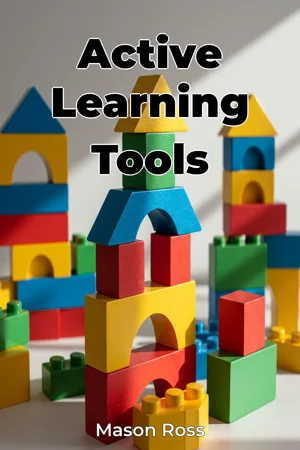
Are you ready to transform passive listeners into engaged, enthusiastic learners? "Active Learning Tools" delves into the dynamic world of active learning, exploring evidence-based strategies designed to revolutionize the educational experience. This book examines not just what active learning is, but how to effectively implement it using proven tools and methodologies, ultimately empowering educators and learners alike. This book focuses on two central concepts: problem-solving and peer teaching, both underpinned by established educational theories. Problem-solving encourages critical thinking and application of knowledge, while peer teaching fosters collaborative learning and deeper understanding through explanation and reciprocal instruction. The significance of these approaches lies in their capacity to move beyond rote memorization, cultivating instead a learning environment where students actively construct knowledge and develop essential skills for success in the 21st century. Historically, education has often been characterized by a lecture-based model where students are primarily passive recipients of information. However, cognitive psychology and educational research have increasingly demonstrated the limitations of this approach. This book builds on the foundation of constructivist learning theory, which posits that learners create their own understanding through experiences and reflection. A basic understanding of educational psychology principles will enhance the reader's appreciation of the book’s content. The central argument is that active learning, specifically through the strategic application of problem-solving and peer teaching, is a more effective and engaging pedagogical approach than traditional, passive methods. This assertion is crucial because it challenges conventional educational practices, offering a framework for educators to create more stimulating and productive learning environments. The book unfolds in a logical progression. It begins by introducing the core principles of active learning and providing a comprehensive overview of relevant educational theories. Next, it thoroughly examines problem-solving as an active learning tool, detailing various problem-solving strategies, techniques for designing effective problem-based activities, and methods for assessing student learning. Subsequently, the book turns to peer teaching, exploring its different forms, providing guidance on structuring peer teaching activities, and addressing potential challenges. The book culminates in a discussion of practical applications, offering case studies and examples of active learning implemented across diverse educational settings and subject areas, showing readers how to integrate these tools into their own teaching practices. The evidence presented throughout the book relies on a synthesis of existing research in educational psychology, cognitive science, and classroom-based studies. It draws upon empirical data, meta-analyses, and qualitative research to demonstrate the effectiveness of active learning strategies. Furthermore, the book includes examples and case studies from diverse educational settings, providing concrete illustrations of how these approaches can be successfully implemented. This book also makes connections to several other fields. First, it relates to cognitive psychology by explaining how active learning strategies align with established principles of memory, attention, and knowledge representation. Second, it connects to sociology by exploring the social dynamics of peer learning and the importance of creating inclusive and collaborative learning environments. Third, it relates to instructional design by providing practical guidance on how to design and implement effective active learning activities. "Active Learning Tools" offers a unique perspective by providing a practical, research-backed guide to implementing two powerful, yet often underutilized, active learning strategies. It moves beyond theoretical discussions, offering concrete tools and techniques that educators can immediately apply in their classrooms. Written in an academic yet accessible style, the book caters to educators, instructional designers, and anyone interested in improving learning outcomes. It is specifically geared toward those seeking a practical, evidence-based guide to implementing active learning strategies in their classrooms or training programs. As an academic work, the book adheres to the conventions of rigorous research and clear, concise writing. The book focuses primarily on the application of problem-solving and peer teaching, rather than providing an exhaustive overview of all active learning methods. While the book draws upon a broad range of research, its primary focus is on practical application. Readers will discover practical strategies for designing effective problem-solving activities, facilitating productive peer teaching sessions, and assessing student learning in active learning environments. The book provides actionable advice and resources that educators can immediately implement in their classrooms, helping to transform passive listeners into active, engaged learners. While there is a general consensus about the benefits of active learning, debates persist about the most effective ways to implement these strategies in different contexts. This book acknowledges these ongoing discussions, providing a balanced presentation of the evidence and offering guidance on how to adapt active learning strategies to meet the specific needs of diverse learners.
Are you ready to transform passive listeners into engaged, enthusiastic learners? "Active Learning Tools" delves into the dynamic world of active learning, exploring evidence-based strategies designed to revolutionize the educational experience. This book examines not just what active learning is, but how to effectively implement it using proven tools and methodologies, ultimately empowering educators and learners alike. This book focuses on two central concepts: problem-solving and peer teaching, both underpinned by established educational theories. Problem-solving encourages critical thinking and application of knowledge, while peer teaching fosters collaborative learning and deeper understanding through explanation and reciprocal instruction. The significance of these approaches lies in their capacity to move beyond rote memorization, cultivating instead a learning environment where students actively construct knowledge and develop essential skills for success in the 21st century. Historically, education has often been characterized by a lecture-based model where students are primarily passive recipients of information. However, cognitive psychology and educational research have increasingly demonstrated the limitations of this approach. This book builds on the foundation of constructivist learning theory, which posits that learners create their own understanding through experiences and reflection. A basic understanding of educational psychology principles will enhance the reader's appreciation of the book’s content. The central argument is that active learning, specifically through the strategic application of problem-solving and peer teaching, is a more effective and engaging pedagogical approach than traditional, passive methods. This assertion is crucial because it challenges conventional educational practices, offering a framework for educators to create more stimulating and productive learning environments. The book unfolds in a logical progression. It begins by introducing the core principles of active learning and providing a comprehensive overview of relevant educational theories. Next, it thoroughly examines problem-solving as an active learning tool, detailing various problem-solving strategies, techniques for designing effective problem-based activities, and methods for assessing student learning. Subsequently, the book turns to peer teaching, exploring its different forms, providing guidance on structuring peer teaching activities, and addressing potential challenges. The book culminates in a discussion of practical applications, offering case studies and examples of active learning implemented across diverse educational settings and subject areas, showing readers how to integrate these tools into their own teaching practices. The evidence presented throughout the book relies on a synthesis of existing research in educational psychology, cognitive science, and classroom-based studies. It draws upon empirical data, meta-analyses, and qualitative research to demonstrate the effectiveness of active learning strategies. Furthermore, the book includes examples and case studies from diverse educational settings, providing concrete illustrations of how these approaches can be successfully implemented. This book also makes connections to several other fields. First, it relates to cognitive psychology by explaining how active learning strategies align with established principles of memory, attention, and knowledge representation. Second, it connects to sociology by exploring the social dynamics of peer learning and the importance of creating inclusive and collaborative learning environments. Third, it relates to instructional design by providing practical guidance on how to design and implement effective active learning activities. "Active Learning Tools" offers a unique perspective by providing a practical, research-backed guide to implementing two powerful, yet often underutilized, active learning strategies. It moves beyond theoretical discussions, offering concrete tools and techniques that educators can immediately apply in their classrooms. Written in an academic yet accessible style, the book caters to educators, instructional designers, and anyone interested in improving learning outcomes. It is specifically geared toward those seeking a practical, evidence-based guide to implementing active learning strategies in their classrooms or training programs. As an academic work, the book adheres to the conventions of rigorous research and clear, concise writing. The book focuses primarily on the application of problem-solving and peer teaching, rather than providing an exhaustive overview of all active learning methods. While the book draws upon a broad range of research, its primary focus is on practical application. Readers will discover practical strategies for designing effective problem-solving activities, facilitating productive peer teaching sessions, and assessing student learning in active learning environments. The book provides actionable advice and resources that educators can immediately implement in their classrooms, helping to transform passive listeners into active, engaged learners. While there is a general consensus about the benefits of active learning, debates persist about the most effective ways to implement these strategies in different contexts. This book acknowledges these ongoing discussions, providing a balanced presentation of the evidence and offering guidance on how to adapt active learning strategies to meet the specific needs of diverse learners.
"Active Learning Tools" explores evidence-based strategies to transform passive learning environments into active, engaging experiences, emphasizing the power of problem-solving and peer teaching. The book highlights how these strategies move beyond rote memorization, fostering critical thinking and collaborative learning, aligning with constructivist learning theory. By strategically applying problem-solving, students actively apply knowledge, while peer teaching encourages deeper understanding through reciprocal instruction. The text progresses logically, starting with core active learning principles and relevant educational theories. It then delves into problem-solving and peer teaching, offering techniques for designing effective activities and assessing student learning. Case studies and examples from diverse educational settings illustrate how to integrate these tools into various teaching practices. This book uniquely provides a practical, research-backed guide to implementing active learning strategies that educators can immediately use. It offers actionable advice and resources to transform classrooms, making it a valuable resource for educators and instructional designers seeking to enhance student engagement and learning outcomes.
Book Details
ISBN
9788233999858
Publisher
Publifye AS
Your Licenses
You don't own any licenses for this book
Purchase a license below to unlock this book and download the EPUB.
Purchase License
Select a tier to unlock this book
Need bulk licensing?
Contact us for enterprise agreements.