
About This Book
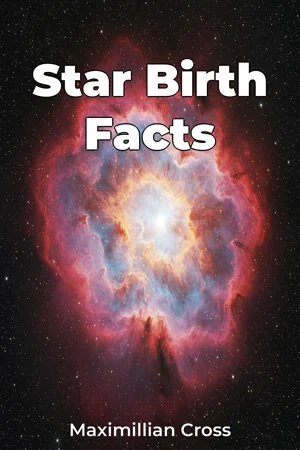
Have you ever wondered how the breathtaking tapestry of stars came into existence? This book, "Star Birth Facts," delves into the captivating processes of stellar formation, bridging astronomical observations with the underlying physics that govern these cosmic events. It offers readers a comprehensive understanding of how collapsing clouds of gas and dust give birth to the radiant stars that illuminate the night sky. We will tackle two key topics. First, we will explore the conditions necessary for star formation, examining the role of molecular clouds, gravity, and the various triggers that initiate collapse. Second, we will investigate the evolutionary stages of a forming star, from protostar to its arrival on the main sequence and beyond. These topics are paramount for discerning the origins of stars and ultimately, understanding the evolution of galaxies and the universe itself. To contextualize the current understanding of star formation, "Star Birth Facts" presents a historical overview of astronomical observations and theoretical models. It traces the evolution of our knowledge, from early speculations to the sophisticated simulations used today. Prior awareness of basic physics concepts, such as gravity and thermodynamics, will enhance the reader's comprehension but is not required. The central argument of this book is that star formation is not a singular event but rather a complex, multifaceted process governed by well-defined physical laws and observable phenomena. Understanding these processes is crucial for unraveling the mysteries of galactic evolution and the distribution of elements in the universe. "Star Birth Facts" is structured to guide the reader through a logical progression of ideas. The book begins by introducing the fundamental concepts of star formation, including the composition and dynamics of molecular clouds. We will then delve into the different stages of stellar evolution, from the initial collapse of a molecular cloud core to the ignition of nuclear fusion in a protostar's core. These stages will highlight the interplay between gravity, pressure, and radiation. The discussion will include specific examples of star-forming regions within our galaxy and beyond, showcasing the diversity of stellar nurseries. Finally, the book culminates by examining the implications of star formation for the evolution of galaxies and the potential for planet formation around young stars. The book draws upon a wealth of evidence from both observational astronomy and theoretical physics. Observational data from ground-based telescopes, space-based observatories like the Hubble Space Telescope and the James Webb Space Telescope, and radio telescopes will be analyzed. Numerical simulations of star formation will also be presented, offering a theoretical framework for interpreting observational data. A unique aspect of the research lies in its compilation of multi-wavelength data, providing a holistic view of star-forming regions. "Star Birth Facts" is highly interdisciplinary. First, it connects to astrophysics, providing insights into the larger context of galaxy formation and evolution. Second, it has significant implications for planetary science, as the formation of stars is intimately linked to the formation of planetary systems. Third, it connects to cosmology, shedding light on the early universe and the first generation of stars. This book presents a balanced perspective, acknowledging both the successes and limitations of current models. It provides a clear and concise explanation of complex concepts, making it accessible to a broad audience. The intended readership includes students, amateur astronomers, and anyone with a curiosity about the cosmos. This book is valuable to readers seeking a deeper understanding of the processes that shape our universe. In keeping with the conventions of science writing the book will be very clear, accurate, and objective. The scope of this book is limited to the formation of individual stars and small star clusters. It does not delve into the formation of supermassive black holes or the dynamics of large galaxy mergers. Understanding star formation is crucial for interpreting astronomical observations and for developing new technologies for space exploration. "Star Birth Facts" serves as a resource for educators, students, and researchers alike. The book addresses some of the existing debates surrounding the role of magnetic fields and turbulence in regulating star formation rates. It presents arguments for and against the influence of these factors, encouraging readers to critically evaluate the evidence.
Have you ever wondered how the breathtaking tapestry of stars came into existence? This book, "Star Birth Facts," delves into the captivating processes of stellar formation, bridging astronomical observations with the underlying physics that govern these cosmic events. It offers readers a comprehensive understanding of how collapsing clouds of gas and dust give birth to the radiant stars that illuminate the night sky. We will tackle two key topics. First, we will explore the conditions necessary for star formation, examining the role of molecular clouds, gravity, and the various triggers that initiate collapse. Second, we will investigate the evolutionary stages of a forming star, from protostar to its arrival on the main sequence and beyond. These topics are paramount for discerning the origins of stars and ultimately, understanding the evolution of galaxies and the universe itself. To contextualize the current understanding of star formation, "Star Birth Facts" presents a historical overview of astronomical observations and theoretical models. It traces the evolution of our knowledge, from early speculations to the sophisticated simulations used today. Prior awareness of basic physics concepts, such as gravity and thermodynamics, will enhance the reader's comprehension but is not required. The central argument of this book is that star formation is not a singular event but rather a complex, multifaceted process governed by well-defined physical laws and observable phenomena. Understanding these processes is crucial for unraveling the mysteries of galactic evolution and the distribution of elements in the universe. "Star Birth Facts" is structured to guide the reader through a logical progression of ideas. The book begins by introducing the fundamental concepts of star formation, including the composition and dynamics of molecular clouds. We will then delve into the different stages of stellar evolution, from the initial collapse of a molecular cloud core to the ignition of nuclear fusion in a protostar's core. These stages will highlight the interplay between gravity, pressure, and radiation. The discussion will include specific examples of star-forming regions within our galaxy and beyond, showcasing the diversity of stellar nurseries. Finally, the book culminates by examining the implications of star formation for the evolution of galaxies and the potential for planet formation around young stars. The book draws upon a wealth of evidence from both observational astronomy and theoretical physics. Observational data from ground-based telescopes, space-based observatories like the Hubble Space Telescope and the James Webb Space Telescope, and radio telescopes will be analyzed. Numerical simulations of star formation will also be presented, offering a theoretical framework for interpreting observational data. A unique aspect of the research lies in its compilation of multi-wavelength data, providing a holistic view of star-forming regions. "Star Birth Facts" is highly interdisciplinary. First, it connects to astrophysics, providing insights into the larger context of galaxy formation and evolution. Second, it has significant implications for planetary science, as the formation of stars is intimately linked to the formation of planetary systems. Third, it connects to cosmology, shedding light on the early universe and the first generation of stars. This book presents a balanced perspective, acknowledging both the successes and limitations of current models. It provides a clear and concise explanation of complex concepts, making it accessible to a broad audience. The intended readership includes students, amateur astronomers, and anyone with a curiosity about the cosmos. This book is valuable to readers seeking a deeper understanding of the processes that shape our universe. In keeping with the conventions of science writing the book will be very clear, accurate, and objective. The scope of this book is limited to the formation of individual stars and small star clusters. It does not delve into the formation of supermassive black holes or the dynamics of large galaxy mergers. Understanding star formation is crucial for interpreting astronomical observations and for developing new technologies for space exploration. "Star Birth Facts" serves as a resource for educators, students, and researchers alike. The book addresses some of the existing debates surrounding the role of magnetic fields and turbulence in regulating star formation rates. It presents arguments for and against the influence of these factors, encouraging readers to critically evaluate the evidence.
"Star Birth Facts" explores the fascinating processes behind star birth, bridging astronomical observations with the fundamental physics at play. It explains how stars emerge from collapsing molecular clouds of gas and dust, illuminating the night sky. The book details the necessary conditions for star formation, emphasizing the roles of gravity and various triggers that initiate collapse. Did you know that star formation is not a singular event, but a complex, multifaceted process governed by well-defined physical laws? Or that understanding star formation is crucial for unraveling mysteries of galactic evolution and the distribution of elements? The book progresses logically through the stages of stellar evolution, from protostar to the main sequence, highlighting the interplay between gravity, pressure, and radiation. It leverages observational data from telescopes and theoretical physics to provide a holistic view. This interdisciplinary approach connects astrophysics with planetary science and cosmology, offering insights into galaxy formation and the early universe. The book presents a balanced perspective on current models, acknowledging both successes and limitations, and makes complex concepts accessible to a broad audience interested in science and physics. It serves as a valuable resource for anyone seeking a deeper understanding of the processes shaping our universe.
Book Details
ISBN
9788233999759
Publisher
Publifye AS
Your Licenses
You don't own any licenses for this book
Purchase a license below to unlock this book and download the EPUB.
Purchase License
Select a tier to unlock this book
Need bulk licensing?
Contact us for enterprise agreements.