
About This Book
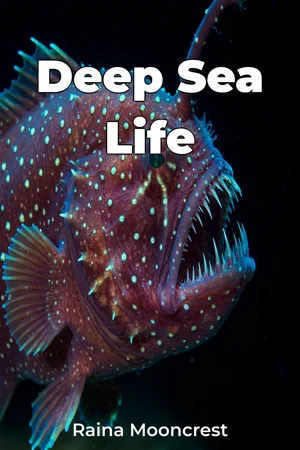
What secrets lie hidden in the crushing depths of our planet's oceans? "Deep Sea Life" ventures into the abyssal zone, a realm of perpetual darkness and immense pressure, to unveil the remarkable biodiversity and ecological processes that thrive there. This book explores the fascinating adaptations of deep-sea organisms, the intricate food webs that sustain them, and the impact of human activities on this fragile environment. The exploration of deep-sea ecosystems is crucial for several reasons. Firstly, these environments represent a significant portion of the Earth's biosphere, yet remain largely unexplored. Secondly, deep-sea organisms possess unique biochemical properties and evolutionary strategies that could have valuable applications in medicine, biotechnology, and other fields. Finally, the deep sea plays a vital role in global biogeochemical cycles, including carbon sequestration, and understanding these processes is essential for predicting and mitigating the effects of climate change. This investigation of deep-sea life builds upon decades of oceanographic research, including pioneering expeditions using submersibles and remotely operated vehicles (ROVs). It also draws upon recent advances in molecular biology and genomics, which have revealed the astonishing diversity of microbial life in the deep sea. The central argument of "Deep Sea Life" is that the deep ocean is not a desolate wasteland, but a vibrant and interconnected ecosystem that is essential for the health of the planet. Furthermore, it argues for increased conservation efforts to protect these fragile environments from the growing threats of deep-sea mining, pollution, and climate change. The book is structured to provide a comprehensive overview of deep-sea biology. It begins with an introduction to the physical and chemical characteristics of the deep ocean, including temperature, pressure, salinity, and oxygen levels. It then delves into the diversity of deep-sea organisms, from microscopic bacteria and archaea to giant squid and anglerfish. Major sections are dedicated to the unique adaptations that enable deep-sea organisms to survive in extreme conditions, such as bioluminescence, pressure-resistant enzymes, and specialized feeding strategies. The book extensively explores deep-sea food webs, focusing on chemosynthetic ecosystems around hydrothermal vents and methane seeps, as well as the role of sinking organic matter in supporting life in the abyssal plains. The final sections address the impact of human activities on deep-sea ecosystems and discuss strategies for conservation and sustainable management. The evidence presented in the book is based on a wide range of sources, including peer-reviewed scientific publications, data from oceanographic expeditions, and observations from submersible dives. It incorporates cutting-edge research on deep-sea genomics, proteomics, and metabolomics to provide a detailed picture of the physiological and biochemical processes that underpin life in the deep ocean. "Deep Sea Life" connects to several other fields, including marine geology, oceanography, climate science, and conservation biology. The book’s discussion of hydrothermal vents and methane seeps relates to geological processes and the formation of mineral deposits. Its analysis of carbon cycling connects to climate science and the global carbon budget. The final chapters on conservation and management draw upon principles of conservation biology and environmental policy. This book adopts a multidisciplinary approach, integrating concepts and techniques from different fields to provide a holistic understanding of deep-sea ecosystems. The writing style is accessible to a broad audience, while maintaining scientific rigor. Complex concepts are explained clearly and concisely, with the aid of diagrams, illustrations, and real-world examples. The target audience includes students, researchers, policymakers, and anyone with an interest in marine biology, oceanography, or environmental science. This book is particularly valuable for those seeking a comprehensive, up-to-date overview of deep-sea biology. It addresses the conventions of the science/nature non-fiction genres by providing factual information, detailed explanations, and evidence-based arguments. The book’s scope is limited to the biological aspects of the deep ocean, with less emphasis on the geological and chemical processes that shape these environments. While it covers a wide range of deep-sea ecosystems, it does not provide an exhaustive account of every species or habitat. The information presented in "Deep Sea Life" has numerous real-world applications. It can inform conservation efforts to protect deep-sea ecosystems from the impacts of deep-sea mining and other human activities. It can also guide the development of sustainable fisheries management practices and promote responsible exploration of deep-sea resources. The book offers insights into the potential of deep-sea organisms for biotechnological applications, such as the discovery of new enzymes and pharmaceuticals. The book addresses ongoing debates in the field, such as the environmental impacts of deep-sea mining, the effectiveness of marine protected areas in the deep ocean, and the role of the deep sea in climate change mitigation. By presenting different perspectives and evaluating the available evidence, it seeks to inform and stimulate discussion on these important issues.
What secrets lie hidden in the crushing depths of our planet's oceans? "Deep Sea Life" ventures into the abyssal zone, a realm of perpetual darkness and immense pressure, to unveil the remarkable biodiversity and ecological processes that thrive there. This book explores the fascinating adaptations of deep-sea organisms, the intricate food webs that sustain them, and the impact of human activities on this fragile environment. The exploration of deep-sea ecosystems is crucial for several reasons. Firstly, these environments represent a significant portion of the Earth's biosphere, yet remain largely unexplored. Secondly, deep-sea organisms possess unique biochemical properties and evolutionary strategies that could have valuable applications in medicine, biotechnology, and other fields. Finally, the deep sea plays a vital role in global biogeochemical cycles, including carbon sequestration, and understanding these processes is essential for predicting and mitigating the effects of climate change. This investigation of deep-sea life builds upon decades of oceanographic research, including pioneering expeditions using submersibles and remotely operated vehicles (ROVs). It also draws upon recent advances in molecular biology and genomics, which have revealed the astonishing diversity of microbial life in the deep sea. The central argument of "Deep Sea Life" is that the deep ocean is not a desolate wasteland, but a vibrant and interconnected ecosystem that is essential for the health of the planet. Furthermore, it argues for increased conservation efforts to protect these fragile environments from the growing threats of deep-sea mining, pollution, and climate change. The book is structured to provide a comprehensive overview of deep-sea biology. It begins with an introduction to the physical and chemical characteristics of the deep ocean, including temperature, pressure, salinity, and oxygen levels. It then delves into the diversity of deep-sea organisms, from microscopic bacteria and archaea to giant squid and anglerfish. Major sections are dedicated to the unique adaptations that enable deep-sea organisms to survive in extreme conditions, such as bioluminescence, pressure-resistant enzymes, and specialized feeding strategies. The book extensively explores deep-sea food webs, focusing on chemosynthetic ecosystems around hydrothermal vents and methane seeps, as well as the role of sinking organic matter in supporting life in the abyssal plains. The final sections address the impact of human activities on deep-sea ecosystems and discuss strategies for conservation and sustainable management. The evidence presented in the book is based on a wide range of sources, including peer-reviewed scientific publications, data from oceanographic expeditions, and observations from submersible dives. It incorporates cutting-edge research on deep-sea genomics, proteomics, and metabolomics to provide a detailed picture of the physiological and biochemical processes that underpin life in the deep ocean. "Deep Sea Life" connects to several other fields, including marine geology, oceanography, climate science, and conservation biology. The book’s discussion of hydrothermal vents and methane seeps relates to geological processes and the formation of mineral deposits. Its analysis of carbon cycling connects to climate science and the global carbon budget. The final chapters on conservation and management draw upon principles of conservation biology and environmental policy. This book adopts a multidisciplinary approach, integrating concepts and techniques from different fields to provide a holistic understanding of deep-sea ecosystems. The writing style is accessible to a broad audience, while maintaining scientific rigor. Complex concepts are explained clearly and concisely, with the aid of diagrams, illustrations, and real-world examples. The target audience includes students, researchers, policymakers, and anyone with an interest in marine biology, oceanography, or environmental science. This book is particularly valuable for those seeking a comprehensive, up-to-date overview of deep-sea biology. It addresses the conventions of the science/nature non-fiction genres by providing factual information, detailed explanations, and evidence-based arguments. The book’s scope is limited to the biological aspects of the deep ocean, with less emphasis on the geological and chemical processes that shape these environments. While it covers a wide range of deep-sea ecosystems, it does not provide an exhaustive account of every species or habitat. The information presented in "Deep Sea Life" has numerous real-world applications. It can inform conservation efforts to protect deep-sea ecosystems from the impacts of deep-sea mining and other human activities. It can also guide the development of sustainable fisheries management practices and promote responsible exploration of deep-sea resources. The book offers insights into the potential of deep-sea organisms for biotechnological applications, such as the discovery of new enzymes and pharmaceuticals. The book addresses ongoing debates in the field, such as the environmental impacts of deep-sea mining, the effectiveness of marine protected areas in the deep ocean, and the role of the deep sea in climate change mitigation. By presenting different perspectives and evaluating the available evidence, it seeks to inform and stimulate discussion on these important issues.
"Deep Sea Life" explores the mysteries of the deep ocean, revealing the extraordinary biodiversity and ecological processes thriving in this extreme environment. It highlights how deep-sea organisms have adapted to perpetual darkness and immense pressure, showcasing unique survival strategies like bioluminescence. The book emphasizes the deep sea's vital role in global biogeochemical cycles, including carbon sequestration, which is crucial for understanding and mitigating climate change. The book progresses from the physical characteristics of the deep ocean to the diversity of its inhabitants, including microbes, giant squid, and anglerfish. It then examines unique adaptations, chemosynthetic ecosystems around hydrothermal vents, and the impact of human activities. This exploration draws upon decades of oceanographic research, integrating molecular biology and genomics to reveal the astonishing diversity of microbial life. Its multidisciplinary approach makes it valuable for students, researchers, and anyone interested in marine biology, oceanography, or conservation, offering an accessible yet rigorous overview.
Book Details
ISBN
9788233999742
Publisher
Publifye AS
Your Licenses
You don't own any licenses for this book
Purchase a license below to unlock this book and download the EPUB.
Purchase License
Select a tier to unlock this book
Need bulk licensing?
Contact us for enterprise agreements.