
About This Book
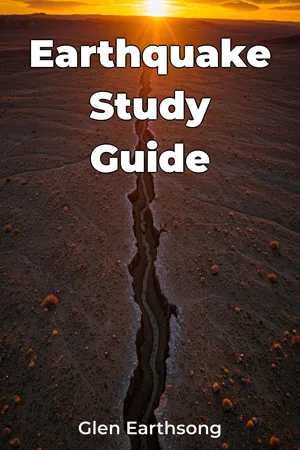
Can understanding earthquakes save lives and protect communities? "Earthquake Study Guide" delves into the intricate world of seismic activity, providing a comprehensive analysis of earthquake patterns through the lens of geological data and cutting-edge tectonic research. This book aims to equip readers with the knowledge to comprehend, predict, and mitigate the devastating effects of these natural disasters. The core topics explored revolve around seismic wave behavior, fault line dynamics, and the geological indicators preceding earthquakes. These topics are essential because understanding the mechanisms behind earthquakes allows for better risk assessment, improved building codes, and the development of more effective early warning systems, ultimately saving lives. To fully appreciate these concepts, the book begins with a historical overview of seismology, tracing its evolution from rudimentary observations to sophisticated modern techniques. The reader will be guided through essential concepts such as plate tectonics, stress accumulation within the Earth's crust, and the different types of seismic waves generated during an earthquake. Prior knowledge of basic Earth science is helpful but not required, as foundational concepts are thoroughly explained. The central argument of "Earthquake Study Guide" is that a holistic understanding of geological data, combined with advanced analytical techniques, significantly enhances our ability to forecast seismic events and minimize their impact. This understanding is crucial for policymakers, urban planners, and communities living in earthquake-prone areas. The book's structure follows a logical progression: First, we introduce the fundamental principles of seismology, including the types of seismic waves (P-waves, S-waves, surface waves) and how they are used to locate earthquakes. Second, we explore fault line behavior, examining different types of faults (normal, reverse, strike-slip) and the stresses that cause them to rupture. Third, the book delves into geological indicators, such as changes in groundwater levels, gas emissions, and animal behavior, that may precede seismic events. The argument culminates in a discussion of earthquake prediction models, including their strengths, limitations, and ethical considerations. Finally, we examine practical applications of this knowledge, such as earthquake-resistant building design and early warning systems. The evidence presented relies heavily on peer-reviewed scientific literature, seismic data from global monitoring networks, and case studies of past earthquakes. Unique data sources include detailed geological surveys, satellite-based measurements of ground deformation, and advanced computational models of earthquake rupture. "Earthquake Study Guide" is intensely interdisciplinary and connects to fields such as civil engineering (earthquake-resistant design), environmental science (assessing the environmental impact of earthquakes), and public policy (disaster preparedness and response). These connections emphasize the multifaceted nature of earthquake studies and highlight the importance of collaboration across disciplines. A unique aspect of the book is its focus on integrating traditional geological methods with modern data analytics, offering a fresh perspective on earthquake prediction. It not only explains the underlying science but also presents practical tools and techniques for assessing seismic risk. The writing style is informative and accessible, aiming to make complex scientific concepts understandable to a broad audience. Technical jargon is clearly defined, and numerous diagrams, maps, and photographs are included to illustrate key concepts. The primary target audience includes students of geology, earth science, and environmental science, as well as professionals in the fields of engineering, urban planning, and emergency management. It will also appeal to anyone interested in learning more about earthquakes and how to protect themselves and their communities. As a work in Earth Sciences Geography and Nature, "Earthquake Study Guide" adheres to genre expectations by providing factual, evidence-based information, clear explanations of scientific principles, and detailed case studies of real-world events. The scope of the book is limited to the scientific understanding of earthquakes and their prediction and mitigation. It does not delve into the social, economic, or political aspects of earthquake disasters, although these are acknowledged as important considerations. The information presented can be practically applied by readers to assess seismic risk in their own communities, advocate for improved building codes, and prepare for potential earthquake events. The field of earthquake prediction is filled with debates and controversies. The book fairly addresses different viewpoints, acknowledging the inherent uncertainties in earthquake forecasting and the ethical challenges of issuing public warnings.
Can understanding earthquakes save lives and protect communities? "Earthquake Study Guide" delves into the intricate world of seismic activity, providing a comprehensive analysis of earthquake patterns through the lens of geological data and cutting-edge tectonic research. This book aims to equip readers with the knowledge to comprehend, predict, and mitigate the devastating effects of these natural disasters. The core topics explored revolve around seismic wave behavior, fault line dynamics, and the geological indicators preceding earthquakes. These topics are essential because understanding the mechanisms behind earthquakes allows for better risk assessment, improved building codes, and the development of more effective early warning systems, ultimately saving lives. To fully appreciate these concepts, the book begins with a historical overview of seismology, tracing its evolution from rudimentary observations to sophisticated modern techniques. The reader will be guided through essential concepts such as plate tectonics, stress accumulation within the Earth's crust, and the different types of seismic waves generated during an earthquake. Prior knowledge of basic Earth science is helpful but not required, as foundational concepts are thoroughly explained. The central argument of "Earthquake Study Guide" is that a holistic understanding of geological data, combined with advanced analytical techniques, significantly enhances our ability to forecast seismic events and minimize their impact. This understanding is crucial for policymakers, urban planners, and communities living in earthquake-prone areas. The book's structure follows a logical progression: First, we introduce the fundamental principles of seismology, including the types of seismic waves (P-waves, S-waves, surface waves) and how they are used to locate earthquakes. Second, we explore fault line behavior, examining different types of faults (normal, reverse, strike-slip) and the stresses that cause them to rupture. Third, the book delves into geological indicators, such as changes in groundwater levels, gas emissions, and animal behavior, that may precede seismic events. The argument culminates in a discussion of earthquake prediction models, including their strengths, limitations, and ethical considerations. Finally, we examine practical applications of this knowledge, such as earthquake-resistant building design and early warning systems. The evidence presented relies heavily on peer-reviewed scientific literature, seismic data from global monitoring networks, and case studies of past earthquakes. Unique data sources include detailed geological surveys, satellite-based measurements of ground deformation, and advanced computational models of earthquake rupture. "Earthquake Study Guide" is intensely interdisciplinary and connects to fields such as civil engineering (earthquake-resistant design), environmental science (assessing the environmental impact of earthquakes), and public policy (disaster preparedness and response). These connections emphasize the multifaceted nature of earthquake studies and highlight the importance of collaboration across disciplines. A unique aspect of the book is its focus on integrating traditional geological methods with modern data analytics, offering a fresh perspective on earthquake prediction. It not only explains the underlying science but also presents practical tools and techniques for assessing seismic risk. The writing style is informative and accessible, aiming to make complex scientific concepts understandable to a broad audience. Technical jargon is clearly defined, and numerous diagrams, maps, and photographs are included to illustrate key concepts. The primary target audience includes students of geology, earth science, and environmental science, as well as professionals in the fields of engineering, urban planning, and emergency management. It will also appeal to anyone interested in learning more about earthquakes and how to protect themselves and their communities. As a work in Earth Sciences Geography and Nature, "Earthquake Study Guide" adheres to genre expectations by providing factual, evidence-based information, clear explanations of scientific principles, and detailed case studies of real-world events. The scope of the book is limited to the scientific understanding of earthquakes and their prediction and mitigation. It does not delve into the social, economic, or political aspects of earthquake disasters, although these are acknowledged as important considerations. The information presented can be practically applied by readers to assess seismic risk in their own communities, advocate for improved building codes, and prepare for potential earthquake events. The field of earthquake prediction is filled with debates and controversies. The book fairly addresses different viewpoints, acknowledging the inherent uncertainties in earthquake forecasting and the ethical challenges of issuing public warnings.
"Earthquake Study Guide" explores the science behind seismic activity, aiming to provide readers with a comprehensive understanding of earthquakes, seismology, and potential disaster preparedness. It examines how geological data and tectonic research can improve our ability to predict and mitigate the devastating effects of these natural disasters. Did you know that understanding seismic wave behavior is crucial for assessing risk and developing effective early warning systems? The book also highlights fault line dynamics, explaining how different types of faults rupture and cause earthquakes. The book begins with a historical overview of seismology, tracing its evolution to modern techniques, and progresses through key concepts like plate tectonics and stress accumulation. It uniquely integrates traditional geological methods with modern data analytics, offering a fresh perspective on earthquake prediction. Each chapter builds upon the previous one, from introducing seismology's fundamental principles to exploring fault line behavior and geological indicators. This approach equips the reader with practical tools and techniques for assessing seismic risk and understanding the potential for earthquake-resistant design, making it a valuable resource.
Book Details
ISBN
9788233999681
Publisher
Publifye AS
Your Licenses
You don't own any licenses for this book
Purchase a license below to unlock this book and download the EPUB.
Purchase License
Select a tier to unlock this book
Need bulk licensing?
Contact us for enterprise agreements.