
About This Book
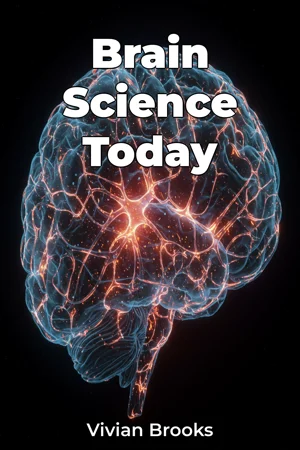
How does the intricate machinery of the brain truly shape our thoughts, emotions, and behaviors? "Brain Science Today" delves into the most recent and compelling discoveries in neuroscience, offering a comprehensive exploration of brain function as revealed through rigorous, peer-reviewed research. This book navigates the complex landscape of the brain, making cutting-edge science accessible to a broad audience interested in psychology, life sciences, and biology. We will primarily focus on three crucial areas: neuroplasticity, cognitive function, and the neural basis of behavior. Neuroplasticity, the brain's remarkable ability to reorganize itself by forming new neural connections throughout life, challenges long-held beliefs about its fixed nature. Understanding neuroplasticity has profound implications for recovery from brain injuries, learning new skills, and adapting to changing environments. Cognitive function, encompassing memory, attention, and decision-making, is examined through the lens of neural circuits and networks. We explore how these complex systems enable us to process information, solve problems, and interact with the world around us. Finally, the book investigates the neural basis of behavior, unraveling the intricate links between brain activity and our actions, emotions, and social interactions. To fully appreciate these modern discoveries, we provide essential historical and scientific context. We trace the evolution of neuroscience from its early philosophical roots to the sophisticated neuroimaging techniques used today. While no prior expertise in neuroscience is required, a basic understanding of biological principles will enhance the reader's comprehension. The central argument "Brain Science Today" puts forth is that advances in neuroscience are not merely academic exercises but have tangible implications for understanding and improving human life. We aim to bridge the gap between laboratory research and real-world applications, demonstrating how insights into brain function can inform interventions for mental health disorders, enhance educational strategies, and optimize cognitive performance. The book is structured to guide the reader through a logical progression of ideas. It begins with an introduction to fundamental concepts in neuroscience, including brain anatomy, neural communication, and research methodologies. It proceeds to develop key themes in dedicated chapters, providing in-depth coverage of neuroplasticity, cognitive function, and the neural basis of behavior. The culmination of the argument is a synthesis of these findings, highlighting their interconnectedness and broader implications. We will also explore practical applications of neuroscience in areas such as mental health treatment, cognitive enhancement, and educational practices. The evidence presented throughout "Brain Science Today" is drawn from peer-reviewed scientific literature, including experimental studies, clinical trials, and meta-analyses. We emphasize the importance of empirical evidence and critical evaluation of research findings. In addition, we incorporate data from advanced neuroimaging techniques, such as fMRI, EEG, and PET scans, to illustrate the dynamic activity of the brain. "Brain Science Today" builds connections to related areas of study. The insights into neuroplasticity have relevance to rehabilitation medicine, physical therapy, and stroke recovery. The discussion of cognitive function is applicable to educational psychology, learning sciences, and human-computer interaction. The exploration of the neural basis of behavior connects to social psychology, behavioral economics, and criminology. These connections enhance the book's argument by demonstrating the widespread relevance of neuroscience to diverse fields. This book distinguishes itself by presenting a current, integrated view of brain function that emphasizes the interplay between different neural systems. We aim to synthesize findings from various sub-disciplines within neuroscience, providing a holistic understanding of the brain. The tone and writing style are professional yet accessible, avoiding technical jargon and explaining complex concepts in clear, concise language. The intended readership includes students, researchers, healthcare professionals, and anyone with an interest in understanding the brain. It will be valuable by offering a scientifically grounded overview of the latest advances in neuroscience. As a work of non-fiction in the field of science, "Brain Science Today" adheres to the conventions of accuracy, objectivity, and evidence-based reasoning. The scope of the book is broad, covering a wide range of topics in neuroscience, but it is intentionally limited to human brain function. We do not delve into the details of animal models or comparative neuroscience but rather focus on research directly relevant to understanding the human brain. The information is presented in a way that will have real-world applications so readers can apply many of the principles to their own lives. For example, learning about neuroplasticity can inspire readers to adopt new habits and challenge themselves intellectually, while understanding cognitive function can inform strategies for improving memory and attention. In discussing the neural basis of behavior, the book addresses ongoing debates about the relative contributions of nature and nurture, the role of free will, and the ethical implications of neuroscience research. While "Brain Science Today" does not offer definitive answers to these questions, it provides a balanced and informed perspective that encourages critical thinking.
How does the intricate machinery of the brain truly shape our thoughts, emotions, and behaviors? "Brain Science Today" delves into the most recent and compelling discoveries in neuroscience, offering a comprehensive exploration of brain function as revealed through rigorous, peer-reviewed research. This book navigates the complex landscape of the brain, making cutting-edge science accessible to a broad audience interested in psychology, life sciences, and biology. We will primarily focus on three crucial areas: neuroplasticity, cognitive function, and the neural basis of behavior. Neuroplasticity, the brain's remarkable ability to reorganize itself by forming new neural connections throughout life, challenges long-held beliefs about its fixed nature. Understanding neuroplasticity has profound implications for recovery from brain injuries, learning new skills, and adapting to changing environments. Cognitive function, encompassing memory, attention, and decision-making, is examined through the lens of neural circuits and networks. We explore how these complex systems enable us to process information, solve problems, and interact with the world around us. Finally, the book investigates the neural basis of behavior, unraveling the intricate links between brain activity and our actions, emotions, and social interactions. To fully appreciate these modern discoveries, we provide essential historical and scientific context. We trace the evolution of neuroscience from its early philosophical roots to the sophisticated neuroimaging techniques used today. While no prior expertise in neuroscience is required, a basic understanding of biological principles will enhance the reader's comprehension. The central argument "Brain Science Today" puts forth is that advances in neuroscience are not merely academic exercises but have tangible implications for understanding and improving human life. We aim to bridge the gap between laboratory research and real-world applications, demonstrating how insights into brain function can inform interventions for mental health disorders, enhance educational strategies, and optimize cognitive performance. The book is structured to guide the reader through a logical progression of ideas. It begins with an introduction to fundamental concepts in neuroscience, including brain anatomy, neural communication, and research methodologies. It proceeds to develop key themes in dedicated chapters, providing in-depth coverage of neuroplasticity, cognitive function, and the neural basis of behavior. The culmination of the argument is a synthesis of these findings, highlighting their interconnectedness and broader implications. We will also explore practical applications of neuroscience in areas such as mental health treatment, cognitive enhancement, and educational practices. The evidence presented throughout "Brain Science Today" is drawn from peer-reviewed scientific literature, including experimental studies, clinical trials, and meta-analyses. We emphasize the importance of empirical evidence and critical evaluation of research findings. In addition, we incorporate data from advanced neuroimaging techniques, such as fMRI, EEG, and PET scans, to illustrate the dynamic activity of the brain. "Brain Science Today" builds connections to related areas of study. The insights into neuroplasticity have relevance to rehabilitation medicine, physical therapy, and stroke recovery. The discussion of cognitive function is applicable to educational psychology, learning sciences, and human-computer interaction. The exploration of the neural basis of behavior connects to social psychology, behavioral economics, and criminology. These connections enhance the book's argument by demonstrating the widespread relevance of neuroscience to diverse fields. This book distinguishes itself by presenting a current, integrated view of brain function that emphasizes the interplay between different neural systems. We aim to synthesize findings from various sub-disciplines within neuroscience, providing a holistic understanding of the brain. The tone and writing style are professional yet accessible, avoiding technical jargon and explaining complex concepts in clear, concise language. The intended readership includes students, researchers, healthcare professionals, and anyone with an interest in understanding the brain. It will be valuable by offering a scientifically grounded overview of the latest advances in neuroscience. As a work of non-fiction in the field of science, "Brain Science Today" adheres to the conventions of accuracy, objectivity, and evidence-based reasoning. The scope of the book is broad, covering a wide range of topics in neuroscience, but it is intentionally limited to human brain function. We do not delve into the details of animal models or comparative neuroscience but rather focus on research directly relevant to understanding the human brain. The information is presented in a way that will have real-world applications so readers can apply many of the principles to their own lives. For example, learning about neuroplasticity can inspire readers to adopt new habits and challenge themselves intellectually, while understanding cognitive function can inform strategies for improving memory and attention. In discussing the neural basis of behavior, the book addresses ongoing debates about the relative contributions of nature and nurture, the role of free will, and the ethical implications of neuroscience research. While "Brain Science Today" does not offer definitive answers to these questions, it provides a balanced and informed perspective that encourages critical thinking.
"Brain Science Today" offers a journey into the fascinating world of neuroscience, exploring how the brain shapes our thoughts, emotions, and actions. It emphasizes recent discoveries concerning brain function, making complex science accessible to those interested in psychology, life sciences, and biology. Neuroplasticity, the brain's ability to reorganize itself by forming new neural connections, is a key focus. For instance, this remarkable ability allows for recovery from brain injuries and facilitates learning new skills. The book also looks at cognitive function, examining how neural circuits impact memory, attention, and decision-making, and the neural basis of behavior. The book progresses logically, starting with fundamental concepts like brain anatomy and neural communication. It then dives into key themes such as neuroplasticity, cognitive function, and the neural basis of behavior in dedicated chapters. A core argument is that neuroscience advances have tangible implications for improving human life, bridging the gap between research and real-world applications. The book distinguishes itself by presenting an integrated view of brain function, highlighting how different neural systems interplay.
Book Details
ISBN
9788233999667
Publisher
Publifye AS
Your Licenses
You don't own any licenses for this book
Purchase a license below to unlock this book and download the EPUB.
Purchase License
Select a tier to unlock this book
Need bulk licensing?
Contact us for enterprise agreements.