
About This Book
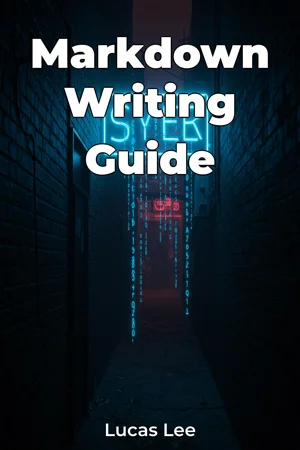
Are you ready to unlock the full potential of streamlined digital writing and documentation? "Markdown Writing Guide" is your comprehensive resource for mastering Markdown, the lightweight markup language that is revolutionizing how we create and manage digital content. This book provides a structured path from Markdown novice to proficient user, enabling you to produce clear, concise, and professional documents with ease. This book focuses on three key areas: first, a thorough grounding in Markdown syntax, including elements such as headings, lists, links, images, and code blocks. Second, we delve into formatting conventions and best practices that elevate your documents from simple text files to polished publications. Third, we explore practical applications of Markdown across various platforms and workflows, demonstrating how it can be integrated into your daily writing routine. These topics are important because efficient digital communication and documentation are paramount in today's fast-paced world. Markdown offers a solution that is both powerful and accessible, allowing you to focus on content rather than complex formatting. "Markdown Writing Guide" assumes no prior knowledge of markup languages. It starts with the fundamentals, building a solid foundation before moving into advanced topics. The book provides a brief history of Markdown's origins and its evolution as a preferred standard for web writing, documentation, and note-taking. The central argument of this book is that Markdown promotes clarity, efficiency, and portability in digital writing. By adopting Markdown, writers can streamline their workflow, reduce formatting overhead, and ensure their documents remain readable across different devices and platforms for years to come. This argument is important because it advocates for a more sustainable and user-friendly approach to digital content creation. The book is structured logically to facilitate effective learning. We begin with an introduction to Markdown's basic syntax and core elements. The subsequent sections delve into more advanced formatting techniques, such as tables, footnotes, and mathematical expressions. These sections demonstrate how to extend Markdown's capabilities while maintaining its simplicity. The book culminates in practical applications demonstrating how Markdown can be used for creating websites, writing technical documentation, authoring books, and collaborating on projects. The "Markdown Writing Guide" presents clear examples and practical exercises. The book draws upon real-world case studies and industry best practices. It includes a dedicated section on Markdown editors and tools, providing recommendations based on functionality, platform compatibility, and user experience. This information is gathered from extensive testing of various Markdown tools and community feedback. While "Markdown Writing Guide" primarily focuses on Markdown itself, it also touches upon related fields such as web development, content management, and technical writing. By understanding the connections between Markdown and these disciplines, readers can better appreciate its versatility and potential. The book also explores the relationship between Markdown and version control systems like Git, highlighting how Markdown files can be effectively managed and collaborated on in a team setting. This book takes a practical, hands-on approach, emphasizing learning by doing. It provides numerous examples and exercises to reinforce key concepts and encourage experimentation. "Markdown Writing Guide" maintains a conversational and approachable tone, making it accessible to readers of all backgrounds and skill levels. The target audience for this book includes students, writers, developers, bloggers, and anyone who wants to improve their digital writing skills. It would be valuable to those seeking a straightforward, efficient method for creating formatted text documents. Common expectations for a computer and technology guide include a clear, concise writing style, practical examples, and up-to-date information, all characteristics of this book. The book's scope is intentionally limited to the Markdown language and its immediate applications. While it touches upon related technologies, it does not delve deeply into web development or programming. This focused approach allows for a more thorough and comprehensive examination of Markdown itself. The knowledge gained can be applied to a wide range of real-world scenarios, from writing blog posts and creating documentation to authoring books and collaborating on software projects. The book provides practical tips and advice on how to integrate Markdown into your existing workflow and leverage its capabilities to improve your productivity. While Markdown is widely adopted, there are ongoing discussions about standardization and extensions to the language. "Markdown Writing Guide" addresses these debates, presenting different perspectives and highlighting the trade-offs involved in various approaches. "Markdown Writing Guide" is your trusted companion in mastering Markdown and unlocking the power of efficient digital writing.
Are you ready to unlock the full potential of streamlined digital writing and documentation? "Markdown Writing Guide" is your comprehensive resource for mastering Markdown, the lightweight markup language that is revolutionizing how we create and manage digital content. This book provides a structured path from Markdown novice to proficient user, enabling you to produce clear, concise, and professional documents with ease. This book focuses on three key areas: first, a thorough grounding in Markdown syntax, including elements such as headings, lists, links, images, and code blocks. Second, we delve into formatting conventions and best practices that elevate your documents from simple text files to polished publications. Third, we explore practical applications of Markdown across various platforms and workflows, demonstrating how it can be integrated into your daily writing routine. These topics are important because efficient digital communication and documentation are paramount in today's fast-paced world. Markdown offers a solution that is both powerful and accessible, allowing you to focus on content rather than complex formatting. "Markdown Writing Guide" assumes no prior knowledge of markup languages. It starts with the fundamentals, building a solid foundation before moving into advanced topics. The book provides a brief history of Markdown's origins and its evolution as a preferred standard for web writing, documentation, and note-taking. The central argument of this book is that Markdown promotes clarity, efficiency, and portability in digital writing. By adopting Markdown, writers can streamline their workflow, reduce formatting overhead, and ensure their documents remain readable across different devices and platforms for years to come. This argument is important because it advocates for a more sustainable and user-friendly approach to digital content creation. The book is structured logically to facilitate effective learning. We begin with an introduction to Markdown's basic syntax and core elements. The subsequent sections delve into more advanced formatting techniques, such as tables, footnotes, and mathematical expressions. These sections demonstrate how to extend Markdown's capabilities while maintaining its simplicity. The book culminates in practical applications demonstrating how Markdown can be used for creating websites, writing technical documentation, authoring books, and collaborating on projects. The "Markdown Writing Guide" presents clear examples and practical exercises. The book draws upon real-world case studies and industry best practices. It includes a dedicated section on Markdown editors and tools, providing recommendations based on functionality, platform compatibility, and user experience. This information is gathered from extensive testing of various Markdown tools and community feedback. While "Markdown Writing Guide" primarily focuses on Markdown itself, it also touches upon related fields such as web development, content management, and technical writing. By understanding the connections between Markdown and these disciplines, readers can better appreciate its versatility and potential. The book also explores the relationship between Markdown and version control systems like Git, highlighting how Markdown files can be effectively managed and collaborated on in a team setting. This book takes a practical, hands-on approach, emphasizing learning by doing. It provides numerous examples and exercises to reinforce key concepts and encourage experimentation. "Markdown Writing Guide" maintains a conversational and approachable tone, making it accessible to readers of all backgrounds and skill levels. The target audience for this book includes students, writers, developers, bloggers, and anyone who wants to improve their digital writing skills. It would be valuable to those seeking a straightforward, efficient method for creating formatted text documents. Common expectations for a computer and technology guide include a clear, concise writing style, practical examples, and up-to-date information, all characteristics of this book. The book's scope is intentionally limited to the Markdown language and its immediate applications. While it touches upon related technologies, it does not delve deeply into web development or programming. This focused approach allows for a more thorough and comprehensive examination of Markdown itself. The knowledge gained can be applied to a wide range of real-world scenarios, from writing blog posts and creating documentation to authoring books and collaborating on software projects. The book provides practical tips and advice on how to integrate Markdown into your existing workflow and leverage its capabilities to improve your productivity. While Markdown is widely adopted, there are ongoing discussions about standardization and extensions to the language. "Markdown Writing Guide" addresses these debates, presenting different perspectives and highlighting the trade-offs involved in various approaches. "Markdown Writing Guide" is your trusted companion in mastering Markdown and unlocking the power of efficient digital writing.
"Markdown Writing Guide" offers a comprehensive journey into the world of Markdown, the streamlined markup language transforming digital content creation. This book simplifies digital writing by focusing on Markdown syntax, formatting best practices, and real-world applications. Learn how Markdown's simplicity allows writers to concentrate on content, not complex formatting, making it ideal for web writing, digital documentation, and technical writing. The guide starts with the basic syntax and progressively introduces advanced formatting techniques like tables and mathematical expressions. Discover how Markdown promotes clarity and portability in digital documents, ensuring readability across devices. You'll also explore the practical integration of Markdown with tools like Git for version control, enhancing collaboration on projects. With its practical, hands-on approach, "Markdown Writing Guide" uses clear examples and exercises to reinforce learning. Whether you're a student, writer, developer, or blogger, this book provides a straightforward path to mastering Markdown and improving your digital writing skills, streamlining content creation across various platforms.
Book Details
ISBN
9788233999520
Publisher
Publifye AS
Your Licenses
You don't own any licenses for this book
Purchase a license below to unlock this book and download the EPUB.
Purchase License
Select a tier to unlock this book
Need bulk licensing?
Contact us for enterprise agreements.