
About This Book
In an age increasingly defined by digital interaction, who is left behind, and what are the societal consequences? *Internet Access Divide* delves into the multifaceted issue of digital inequality, exploring how disparities in internet connectivity impact individuals and communities. This book synthesizes connectivity statistics with socioeconomic research to provide a comprehensive understanding of the digital divide, its causes, and its far-reaching effects. This book addresses three primary topics: the measurement of digital inequality using diverse statistical methods, the socioeconomic factors that contribute to unequal access, and the consequences of this divide on education, employment, and civic engagement. These topics are crucial because access to the internet is no longer a luxury but a necessity for full participation in modern society. The digital divide exacerbates existing inequalities, creating a cycle of disadvantage for those without reliable and affordable connectivity. Readers will gain a greater awareness of the critical role the internet plays in contemporary life, and how the lack of access impacts various demographics. To fully appreciate the complexities of the digital divide, the book provides context rooted in the history of telecommunications infrastructure and the evolution of internet technologies. Readers will learn about the initial hopes for the internet as a democratizing force, as well as the ways in which market forces and policy decisions have shaped current patterns of access and exclusion. The analysis assumes a basic understanding of statistical concepts and familiarity with socioeconomic indicators such as income inequality and educational attainment. *Internet Access Divide* argues that the digital divide is not simply a technological issue but a social justice concern. The book asserts that bridging this divide requires targeted interventions that address the underlying socioeconomic barriers preventing equitable access. This argument is vital because it shifts the focus from simply providing technology to addressing the systemic issues that perpetuate digital inequality. The book is structured as follows: It begins by introducing the concept of the digital divide, defining its various dimensions, and outlining the methodological challenges in measuring it. Subsequent chapters delve into the socioeconomic factors that influence internet access, such as income, education, geographic location, and ethnicity. A significant portion of the book is devoted to analyzing the impacts of the digital divide on educational outcomes, employment opportunities, and civic participation. The final chapters synthesize the research findings, proposing policy recommendations and strategies for bridging the divide. The book relies on a range of evidence, including national and international surveys on internet usage, data from the US Census Bureau and other government agencies, and case studies of communities experiencing significant digital divides. It also incorporates qualitative research, such as interviews and focus groups with individuals and families affected by the lack of internet access. The book uses statistical analysis, regression modeling, and comparative case studies to support its arguments. This book sits at the intersection of sociology, economics, and communication studies. It provides connections to urban planning (understanding infrastructure deployment), education (examining digital literacy programs), and political science (analyzing policy interventions related to net neutrality and universal service). These interdisciplinary connections enrich the analysis by showing how access to the internet shapes various aspects of life. This book offers a unique perspective by integrating quantitative analysis of connectivity data with qualitative insights into the lived experiences of those affected by the digital divide. This methodology provides a comprehensive and nuanced understanding of the issue. The tone is academic but accessible, presenting rigorous research in a way that is informative and useful for a broad audience. The writing style is clear and concise, avoiding jargon and technical terms where possible. The target audience includes students, researchers, policymakers, and community advocates interested in understanding and addressing digital inequality. The book will be useful for courses in sociology, communication studies, public policy, and urban planning. As a work of social science, this book adheres to standards of academic rigor, including transparency in methodology, careful citation of sources, and a balanced presentation of different perspectives. The book focuses primarily on the United States, with some comparisons to other developed countries. It acknowledges that the digital divide takes different forms in different contexts and recognizes the resource constraints that limit the scope of the international comparison. The information in this book can be applied practically by policymakers seeking to design effective interventions to bridge the digital divide, by educators developing digital literacy programs, and by community advocates working to promote equitable access to technology. The book engages with ongoing debates about net neutrality, the role of government in regulating internet access, and the effectiveness of different strategies for promoting digital inclusion. The analysis contributes to a better understanding of these complex issues.
In an age increasingly defined by digital interaction, who is left behind, and what are the societal consequences? *Internet Access Divide* delves into the multifaceted issue of digital inequality, exploring how disparities in internet connectivity impact individuals and communities. This book synthesizes connectivity statistics with socioeconomic research to provide a comprehensive understanding of the digital divide, its causes, and its far-reaching effects. This book addresses three primary topics: the measurement of digital inequality using diverse statistical methods, the socioeconomic factors that contribute to unequal access, and the consequences of this divide on education, employment, and civic engagement. These topics are crucial because access to the internet is no longer a luxury but a necessity for full participation in modern society. The digital divide exacerbates existing inequalities, creating a cycle of disadvantage for those without reliable and affordable connectivity. Readers will gain a greater awareness of the critical role the internet plays in contemporary life, and how the lack of access impacts various demographics. To fully appreciate the complexities of the digital divide, the book provides context rooted in the history of telecommunications infrastructure and the evolution of internet technologies. Readers will learn about the initial hopes for the internet as a democratizing force, as well as the ways in which market forces and policy decisions have shaped current patterns of access and exclusion. The analysis assumes a basic understanding of statistical concepts and familiarity with socioeconomic indicators such as income inequality and educational attainment. *Internet Access Divide* argues that the digital divide is not simply a technological issue but a social justice concern. The book asserts that bridging this divide requires targeted interventions that address the underlying socioeconomic barriers preventing equitable access. This argument is vital because it shifts the focus from simply providing technology to addressing the systemic issues that perpetuate digital inequality. The book is structured as follows: It begins by introducing the concept of the digital divide, defining its various dimensions, and outlining the methodological challenges in measuring it. Subsequent chapters delve into the socioeconomic factors that influence internet access, such as income, education, geographic location, and ethnicity. A significant portion of the book is devoted to analyzing the impacts of the digital divide on educational outcomes, employment opportunities, and civic participation. The final chapters synthesize the research findings, proposing policy recommendations and strategies for bridging the divide. The book relies on a range of evidence, including national and international surveys on internet usage, data from the US Census Bureau and other government agencies, and case studies of communities experiencing significant digital divides. It also incorporates qualitative research, such as interviews and focus groups with individuals and families affected by the lack of internet access. The book uses statistical analysis, regression modeling, and comparative case studies to support its arguments. This book sits at the intersection of sociology, economics, and communication studies. It provides connections to urban planning (understanding infrastructure deployment), education (examining digital literacy programs), and political science (analyzing policy interventions related to net neutrality and universal service). These interdisciplinary connections enrich the analysis by showing how access to the internet shapes various aspects of life. This book offers a unique perspective by integrating quantitative analysis of connectivity data with qualitative insights into the lived experiences of those affected by the digital divide. This methodology provides a comprehensive and nuanced understanding of the issue. The tone is academic but accessible, presenting rigorous research in a way that is informative and useful for a broad audience. The writing style is clear and concise, avoiding jargon and technical terms where possible. The target audience includes students, researchers, policymakers, and community advocates interested in understanding and addressing digital inequality. The book will be useful for courses in sociology, communication studies, public policy, and urban planning. As a work of social science, this book adheres to standards of academic rigor, including transparency in methodology, careful citation of sources, and a balanced presentation of different perspectives. The book focuses primarily on the United States, with some comparisons to other developed countries. It acknowledges that the digital divide takes different forms in different contexts and recognizes the resource constraints that limit the scope of the international comparison. The information in this book can be applied practically by policymakers seeking to design effective interventions to bridge the digital divide, by educators developing digital literacy programs, and by community advocates working to promote equitable access to technology. The book engages with ongoing debates about net neutrality, the role of government in regulating internet access, and the effectiveness of different strategies for promoting digital inclusion. The analysis contributes to a better understanding of these complex issues.
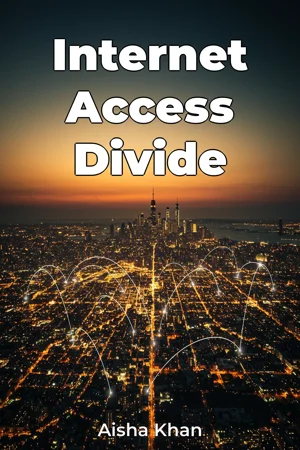
*Internet Access Divide* examines the pervasive issue of digital inequality, highlighting the gap between those with and without reliable internet access. The book explores how this divide significantly impacts education, employment, and civic engagement, revealing that consistent connectivity is now essential for full participation in modern society. Through a blend of connectivity statistics and socioeconomic research, the book argues the digital divide is not merely a technological issue but a matter of social justice. The book investigates the socioeconomic factors contributing to unequal access, such as income, education, and geographic location, and analyzes the consequences of this divide on various demographics. Readers will discover how initial hopes for the internet as a democratizing force have been shaped by market forces and policy decisions that have inadvertently created patterns of access and exclusion. By integrating quantitative analysis with qualitative insights, the book provides a nuanced understanding of the lived experiences of those affected by the digital divide. Starting with an introduction to the concept and its measurement, the book progresses through socioeconomic factors influencing access, impacts on key areas like education and employment, and concludes with policy recommendations to bridge the gap. It offers a valuable resource for students, researchers, policymakers, and community advocates interested in understanding and addressing digital inequality.
Book Details
ISBN
9788233999445
Publisher
Publifye AS
Your Licenses
You don't own any licenses for this book
Purchase a license below to unlock this book and download the EPUB.
Purchase License
Select a tier to unlock this book
Need bulk licensing?
Contact us for enterprise agreements.