
About This Book
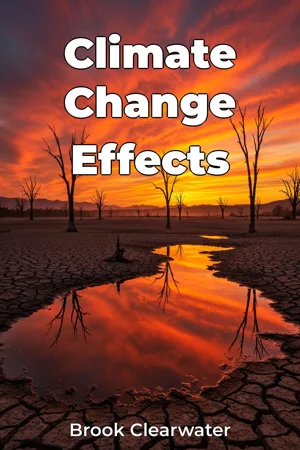
How is climate change reshaping our daily lives, and what adaptations are proving most effective? "Climate Change Effects" provides a comprehensive analysis of the tangible impacts of a shifting global climate, drawing on extensive environmental data and in-depth adaptation studies to present a clear, fact-based understanding of this critical issue. This book tackles two key areas: the demonstrable effects of climate change on our planet and the strategic adaptations being implemented to mitigate its most severe consequences. Understanding these topics is crucial for policymakers, researchers, and engaged citizens seeking informed perspectives on the challenges and potential solutions associated with climate change. Building upon decades of climate research, "Climate Change Effects" examines the escalating frequency and intensity of extreme weather events, the accelerating loss of biodiversity, and the profound alterations in ecosystems worldwide. It further explores the socioeconomic ramifications, including impacts on agriculture, water resources, and human migration patterns. Readers should possess a foundational understanding of basic ecological principles and climate science to fully appreciate the depth of the analysis presented. The central argument posits that while climate change presents significant challenges, proactive and evidence-based adaptation strategies offer viable pathways toward resilience and sustainability. This argument is vital because it shifts the focus from solely documenting problems to actively exploring solutions, fostering a sense of agency and hope in the face of a global crisis. The book is structured to guide the reader through a logical progression of understanding. It begins by introducing the fundamental concepts of climate change science and its observable effects. The subsequent chapters delve into specific areas, such as: (1) the impact of rising temperatures on global water cycles, examining altered precipitation patterns, glacier melt, and sea-level rise; (2) the consequences for terrestrial and marine ecosystems, including shifts in species distribution, coral bleaching, and deforestation; and (3) detailed case studies of adaptation strategies implemented in various regions, analyzing their effectiveness and scalability. The book culminates by synthesizing these findings to propose a framework for integrated climate action. The evidence presented is rigorously grounded in scientific data, incorporating information from global climate models, satellite observations, and long-term environmental monitoring programs. The book also draws upon a diverse range of adaptation studies, evaluating the success of different approaches in real-world settings. "Climate Change Effects" connects to several interdisciplinary fields, including economics (assessing the costs of climate inaction and the benefits of adaptation), sociology (examining the human dimensions of climate change and the vulnerability of different communities), and political science (analyzing climate policy and international cooperation). These connections enrich the book's argument by providing a holistic perspective on the challenges and opportunities presented by climate change. What sets this book apart are its data-driven approach and its focus on practical adaptation strategies. Rather than simply reiterating the well-documented problems of climate change, it provides a nuanced analysis of the environmental changes and a thorough evaluation of solutions. The book adopts a professional and direct style, prioritizing clarity. It is intended for a broad audience, including environmental scientists, policymakers, urban planners, and anyone seeking a deeper understanding of climate change effects. The genre-specific elements of earth science and environmental writing are carefully considered, ensuring the book maintains a high level of scientific accuracy and avoids sensationalism. While the book covers a wide range of climate change impacts and adaptation strategies, it intentionally limits its scope to focus on observed environmental changes. This allows for a more in-depth analysis of the available data and a more targeted evaluation of proposed solutions. The information contained within "Climate Change Effects" has numerous real-world applications. It can inform policy decisions, guide adaptation planning, and empower individuals to make informed choices about their own environmental impact. The book also addresses some of the ongoing debates within the climate science community. By presenting a balanced and evidence-based perspective, "Climate Change Effects" aims to foster a more informed and productive discussion about the challenges and opportunities presented by a changing global climate.
How is climate change reshaping our daily lives, and what adaptations are proving most effective? "Climate Change Effects" provides a comprehensive analysis of the tangible impacts of a shifting global climate, drawing on extensive environmental data and in-depth adaptation studies to present a clear, fact-based understanding of this critical issue. This book tackles two key areas: the demonstrable effects of climate change on our planet and the strategic adaptations being implemented to mitigate its most severe consequences. Understanding these topics is crucial for policymakers, researchers, and engaged citizens seeking informed perspectives on the challenges and potential solutions associated with climate change. Building upon decades of climate research, "Climate Change Effects" examines the escalating frequency and intensity of extreme weather events, the accelerating loss of biodiversity, and the profound alterations in ecosystems worldwide. It further explores the socioeconomic ramifications, including impacts on agriculture, water resources, and human migration patterns. Readers should possess a foundational understanding of basic ecological principles and climate science to fully appreciate the depth of the analysis presented. The central argument posits that while climate change presents significant challenges, proactive and evidence-based adaptation strategies offer viable pathways toward resilience and sustainability. This argument is vital because it shifts the focus from solely documenting problems to actively exploring solutions, fostering a sense of agency and hope in the face of a global crisis. The book is structured to guide the reader through a logical progression of understanding. It begins by introducing the fundamental concepts of climate change science and its observable effects. The subsequent chapters delve into specific areas, such as: (1) the impact of rising temperatures on global water cycles, examining altered precipitation patterns, glacier melt, and sea-level rise; (2) the consequences for terrestrial and marine ecosystems, including shifts in species distribution, coral bleaching, and deforestation; and (3) detailed case studies of adaptation strategies implemented in various regions, analyzing their effectiveness and scalability. The book culminates by synthesizing these findings to propose a framework for integrated climate action. The evidence presented is rigorously grounded in scientific data, incorporating information from global climate models, satellite observations, and long-term environmental monitoring programs. The book also draws upon a diverse range of adaptation studies, evaluating the success of different approaches in real-world settings. "Climate Change Effects" connects to several interdisciplinary fields, including economics (assessing the costs of climate inaction and the benefits of adaptation), sociology (examining the human dimensions of climate change and the vulnerability of different communities), and political science (analyzing climate policy and international cooperation). These connections enrich the book's argument by providing a holistic perspective on the challenges and opportunities presented by climate change. What sets this book apart are its data-driven approach and its focus on practical adaptation strategies. Rather than simply reiterating the well-documented problems of climate change, it provides a nuanced analysis of the environmental changes and a thorough evaluation of solutions. The book adopts a professional and direct style, prioritizing clarity. It is intended for a broad audience, including environmental scientists, policymakers, urban planners, and anyone seeking a deeper understanding of climate change effects. The genre-specific elements of earth science and environmental writing are carefully considered, ensuring the book maintains a high level of scientific accuracy and avoids sensationalism. While the book covers a wide range of climate change impacts and adaptation strategies, it intentionally limits its scope to focus on observed environmental changes. This allows for a more in-depth analysis of the available data and a more targeted evaluation of proposed solutions. The information contained within "Climate Change Effects" has numerous real-world applications. It can inform policy decisions, guide adaptation planning, and empower individuals to make informed choices about their own environmental impact. The book also addresses some of the ongoing debates within the climate science community. By presenting a balanced and evidence-based perspective, "Climate Change Effects" aims to foster a more informed and productive discussion about the challenges and opportunities presented by a changing global climate.
"Climate Change Effects" offers a comprehensive look at how our world is being reshaped by climate change, focusing on tangible impacts and adaptation strategies. Drawing from extensive environmental data, it presents a fact-based analysis of the escalating frequency of extreme weather events, such as intense hurricanes and prolonged droughts, and how these changes affect communities worldwide. The book highlights the critical need for informed perspectives and proactive measures in addressing this global challenge. The book uniquely progresses from establishing fundamental concepts of climate science to examining specific impacts like rising temperatures affecting global water cycles and the consequences for terrestrial and marine ecosystems. It delves into case studies of adaptation strategies, analyzing their effectiveness and scalability. This approach emphasizes viable pathways toward climate resilience and sustainability, moving beyond problem documentation to actively exploring solutions. By synthesizing findings and proposing a framework for integrated climate action, "Climate Change Effects" provides valuable insights for policymakers, researchers, and anyone seeking a deeper understanding of the environmental changes and potential responses to a changing global climate. It emphasizes the importance of climate action and climate resilience in the face of global warming.
Book Details
ISBN
9788233999407
Publisher
Publifye AS
Your Licenses
You don't own any licenses for this book
Purchase a license below to unlock this book and download the EPUB.
Purchase License
Select a tier to unlock this book
Need bulk licensing?
Contact us for enterprise agreements.