
About This Book
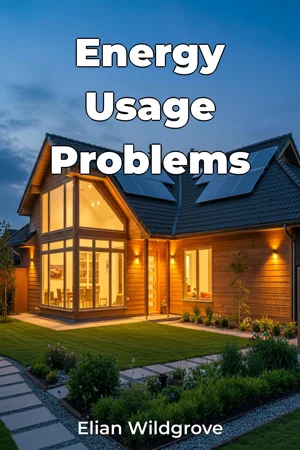
Are our homes silently draining our planet's resources? "Energy Usage Problems" delves into the intricate web of household energy consumption, revealing how our daily habits contribute to broader environmental and technological challenges. This book critically examines residential energy use patterns through a rigorous analysis of utility data, coupled with insights gleaned from comprehensive efficiency studies. It is a vital exploration for anyone seeking to understand and mitigate the environmental impact of their homes. The book centers on three fundamental topics: understanding energy consumption drivers, evaluating the effectiveness of energy efficiency measures, and exploring technological innovations for sustainable living. The significance of these topics lies in their direct relevance to addressing climate change, promoting energy security, and reducing household expenses. As global energy demands surge, understanding how and why we consume energy at home becomes paramount. Historically, residential energy consumption has steadily increased alongside population growth and the proliferation of energy-dependent devices. Social factors, such as lifestyle preferences and household size, also play a significant role. A basic understanding of thermodynamics and electrical principles will be useful, though the book is written to be accessible to a broad audience. The central argument of "Energy Usage Problems" is that a comprehensive understanding of household energy consumption patterns, combined with strategic implementation of efficiency measures and technological advancements, is essential for achieving meaningful reductions in overall energy demand and environmental impact. This argument is crucial because it shifts the focus from broad generalizations to specific, actionable insights that individuals and policymakers can leverage. The book is structured to provide a clear and logical progression of ideas. It begins by introducing fundamental concepts related to energy units, measurement techniques, and data analysis. It then proceeds to explore the major factors influencing household energy consumption such as appliance usage, heating and cooling systems, and insulation effectiveness. The book dedicates individual chapters to analyzing the impact of different efficiency interventions, including energy-efficient appliances, smart home technologies, and building retrofits. Finally, it culminates in a discussion of policy recommendations and practical strategies for promoting sustainable energy practices at the individual and community levels. The evidence presented is based on extensive analysis of real-world utility data, gathered from diverse geographic locations and housing types. Furthermore, the book incorporates findings from numerous peer-reviewed studies and field experiments that evaluate the performance of various energy-saving technologies. Unique data sources include detailed energy audit reports and longitudinal studies tracking changes in energy consumption following the implementation of efficiency upgrades. "Energy Usage Problems" connects to several interdisciplinary fields. Firstly, it draws upon environmental science to assess the ecological consequences of energy consumption. Secondly, it incorporates economic principles to evaluate the cost-effectiveness of different energy-saving strategies. Thirdly, it engages with sociology to understand how social norms and behavioral patterns influence energy use. These interdisciplinary connections enrich the book's argument by providing a more holistic and nuanced perspective. This book offers a unique perspective by integrating quantitative data analysis with qualitative insights from behavioral studies. It moves beyond simply identifying energy inefficiencies to exploring the underlying reasons for these inefficiencies and proposing tailored solutions. The book adopts a fact-based, analytical tone, presenting information in a clear and concise manner. The target audience includes homeowners, renters, policymakers, energy auditors, and students interested in environmental science, energy management, or sustainable living. This book would be valuable to them because it provides practical knowledge and actionable strategies for reducing energy consumption and promoting a more sustainable lifestyle. As a work of non-fiction, "Energy Usage Problems" adheres to the conventions of rigorous research, accurate data presentation, and objective analysis. It avoids sensationalism or overly speculative claims. The scope of the book is limited to residential energy consumption in developed countries, with a focus on single-family homes and apartments. It does not delve into industrial or commercial energy use. The information presented can be applied in numerous ways, including conducting home energy audits, making informed purchasing decisions about appliances, advocating for energy-efficient building codes, and developing community-based energy conservation programs. The book also addresses ongoing debates surrounding the role of government regulation versus individual responsibility in promoting energy efficiency. It acknowledges the complexities and trade-offs involved in balancing economic growth with environmental sustainability.
Are our homes silently draining our planet's resources? "Energy Usage Problems" delves into the intricate web of household energy consumption, revealing how our daily habits contribute to broader environmental and technological challenges. This book critically examines residential energy use patterns through a rigorous analysis of utility data, coupled with insights gleaned from comprehensive efficiency studies. It is a vital exploration for anyone seeking to understand and mitigate the environmental impact of their homes. The book centers on three fundamental topics: understanding energy consumption drivers, evaluating the effectiveness of energy efficiency measures, and exploring technological innovations for sustainable living. The significance of these topics lies in their direct relevance to addressing climate change, promoting energy security, and reducing household expenses. As global energy demands surge, understanding how and why we consume energy at home becomes paramount. Historically, residential energy consumption has steadily increased alongside population growth and the proliferation of energy-dependent devices. Social factors, such as lifestyle preferences and household size, also play a significant role. A basic understanding of thermodynamics and electrical principles will be useful, though the book is written to be accessible to a broad audience. The central argument of "Energy Usage Problems" is that a comprehensive understanding of household energy consumption patterns, combined with strategic implementation of efficiency measures and technological advancements, is essential for achieving meaningful reductions in overall energy demand and environmental impact. This argument is crucial because it shifts the focus from broad generalizations to specific, actionable insights that individuals and policymakers can leverage. The book is structured to provide a clear and logical progression of ideas. It begins by introducing fundamental concepts related to energy units, measurement techniques, and data analysis. It then proceeds to explore the major factors influencing household energy consumption such as appliance usage, heating and cooling systems, and insulation effectiveness. The book dedicates individual chapters to analyzing the impact of different efficiency interventions, including energy-efficient appliances, smart home technologies, and building retrofits. Finally, it culminates in a discussion of policy recommendations and practical strategies for promoting sustainable energy practices at the individual and community levels. The evidence presented is based on extensive analysis of real-world utility data, gathered from diverse geographic locations and housing types. Furthermore, the book incorporates findings from numerous peer-reviewed studies and field experiments that evaluate the performance of various energy-saving technologies. Unique data sources include detailed energy audit reports and longitudinal studies tracking changes in energy consumption following the implementation of efficiency upgrades. "Energy Usage Problems" connects to several interdisciplinary fields. Firstly, it draws upon environmental science to assess the ecological consequences of energy consumption. Secondly, it incorporates economic principles to evaluate the cost-effectiveness of different energy-saving strategies. Thirdly, it engages with sociology to understand how social norms and behavioral patterns influence energy use. These interdisciplinary connections enrich the book's argument by providing a more holistic and nuanced perspective. This book offers a unique perspective by integrating quantitative data analysis with qualitative insights from behavioral studies. It moves beyond simply identifying energy inefficiencies to exploring the underlying reasons for these inefficiencies and proposing tailored solutions. The book adopts a fact-based, analytical tone, presenting information in a clear and concise manner. The target audience includes homeowners, renters, policymakers, energy auditors, and students interested in environmental science, energy management, or sustainable living. This book would be valuable to them because it provides practical knowledge and actionable strategies for reducing energy consumption and promoting a more sustainable lifestyle. As a work of non-fiction, "Energy Usage Problems" adheres to the conventions of rigorous research, accurate data presentation, and objective analysis. It avoids sensationalism or overly speculative claims. The scope of the book is limited to residential energy consumption in developed countries, with a focus on single-family homes and apartments. It does not delve into industrial or commercial energy use. The information presented can be applied in numerous ways, including conducting home energy audits, making informed purchasing decisions about appliances, advocating for energy-efficient building codes, and developing community-based energy conservation programs. The book also addresses ongoing debates surrounding the role of government regulation versus individual responsibility in promoting energy efficiency. It acknowledges the complexities and trade-offs involved in balancing economic growth with environmental sustainability.
"Energy Usage Problems" explores the significant impact of residential energy consumption on our planet. It examines how daily household habits contribute to environmental challenges, highlighting the importance of understanding energy usage and adopting sustainable living practices. The book dives into utility data and efficiency studies, revealing intriguing facts such as how lifestyle preferences significantly influence energy consumption and how implementing smart home technology can substantially reduce energy waste. This book uniquely integrates quantitative data analysis with qualitative insights to propose tailored solutions for energy inefficiencies. It progresses from fundamental concepts like energy units and measurement to exploring factors influencing household consumption, such as appliance usage and insulation. Individual chapters analyze the impact of energy-efficient appliances, building retrofits, and policy recommendations. The book emphasizes the role of both individual actions and policy in promoting energy efficiency for a sustainable future.
Book Details
ISBN
9788233999360
Publisher
Publifye AS
Your Licenses
You don't own any licenses for this book
Purchase a license below to unlock this book and download the EPUB.
Purchase License
Select a tier to unlock this book
Need bulk licensing?
Contact us for enterprise agreements.