
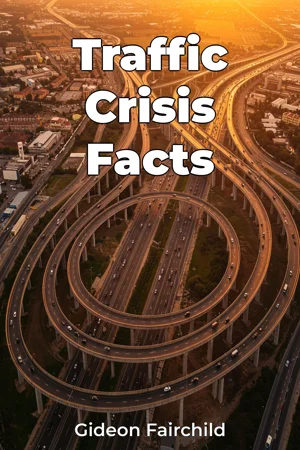
About This Book
Are we grinding to a halt? *Traffic Crisis Facts* delves into the escalating global issue of urban congestion, presenting a comprehensive analysis of its causes, consequences, and potential solutions. This book tackles two critical areas: the multifaceted nature of traffic studies and the far-reaching economic impacts of congestion across diverse urban environments worldwide. Understanding these elements is vital for policymakers, urban planners, and anyone affected by the daily realities of gridlock. This book provides a crucial context by tracing the evolution of urban transportation systems, highlighting the historical factors that have contributed to the current crisis. It acknowledges that readers may benefit from a basic understanding of economic principles, particularly those related to supply and demand, as well as familiarity with fundamental concepts in urban planning and transportation engineering. The central argument of *Traffic Crisis Facts* posits that urban congestion is not merely an inconvenience but a significant economic drain and a threat to sustainable urban development. This argument's importance lies in its potential to shift the perception of traffic from a tolerable nuisance to a critical problem demanding immediate and multifaceted intervention. The book is structured to systematically examine this argument. First, it establishes the scope of the problem, introducing key concepts like vehicle miles traveled (VMT), level of service (LOS), and congestion pricing. Second, the analysis advances, exploring the causes of congestion, differentiating between recurring (daily commute) and non-recurring (accidents, incidents) congestion. This section includes case studies from global cities. Third, the book details the economic impacts of congestion, covering direct costs (wasted fuel, lost productivity), indirect costs (environmental pollution, public health impacts), and social costs (reduced quality of life, inequitable access to opportunities). The book culminates by evaluating a range of potential solutions, from infrastructure investments (road expansions, public transit improvements) to demand management strategies (telecommuting, congestion pricing, parking policies) and technological innovations (intelligent transportation systems, autonomous vehicles). The evidence presented throughout *Traffic Crisis Facts* is drawn from a wide array of sources, including government reports, academic research papers, and industry data. Traffic studies conducted in various cities provide empirical data on travel times, speeds, and delays. Econometric models assess the economic impacts of congestion, quantifying lost productivity, increased fuel consumption, and environmental costs. A unique aspect of our research is the comparative analysis of congestion mitigation strategies across different urban contexts, drawing lessons from successful and unsuccessful implementations. *Traffic Crisis Facts* connects directly to urban planning, environmental science, and public policy. The insights presented inform urban planning strategies that aim to create more sustainable and livable cities. The analysis of environmental impacts contributes to the broader field of environmental science, highlighting the link between transportation and air quality. The policy recommendations provided are relevant to policymakers seeking to address congestion and promote economic development. The book offers a distinct perspective by integrating economic analysis with traffic engineering principles to provide a holistic understanding of urban congestion. It moves beyond simply describing the problem to offer actionable insights for addressing it. Written in a fact-based, neutral style, *Traffic Crisis Facts* is intended for policymakers, urban planners, economists, transportation engineers, and anyone interested in understanding and addressing the challenges of urban congestion. This book would be valuable to professionals seeking data-driven insights to inform policy decisions, academics conducting research on urban transportation, and concerned citizens seeking to understand the issues impacting their communities. The scope of *Traffic Crisis Facts* encompasses urban congestion issues worldwide, with a focus on cities experiencing significant challenges. While the book acknowledges that rural areas also face transportation challenges, its primary focus is on the unique dynamics of urban environments. The concepts and solutions presented in the book can be applied in real-world settings. For example, the analysis of congestion pricing strategies can inform policy decisions regarding the implementation of tolls or fees in congested areas. The evaluation of public transit improvements can guide investments in bus rapid transit, light rail, or subway systems. While there is broad agreement on the negative impacts of urban congestion, controversies exist regarding the most effective strategies for addressing it. The book acknowledges these debates, presenting different perspectives on issues such as the role of road expansions, the acceptability of congestion pricing, and the potential impacts of autonomous vehicles.
Are we grinding to a halt? *Traffic Crisis Facts* delves into the escalating global issue of urban congestion, presenting a comprehensive analysis of its causes, consequences, and potential solutions. This book tackles two critical areas: the multifaceted nature of traffic studies and the far-reaching economic impacts of congestion across diverse urban environments worldwide. Understanding these elements is vital for policymakers, urban planners, and anyone affected by the daily realities of gridlock. This book provides a crucial context by tracing the evolution of urban transportation systems, highlighting the historical factors that have contributed to the current crisis. It acknowledges that readers may benefit from a basic understanding of economic principles, particularly those related to supply and demand, as well as familiarity with fundamental concepts in urban planning and transportation engineering. The central argument of *Traffic Crisis Facts* posits that urban congestion is not merely an inconvenience but a significant economic drain and a threat to sustainable urban development. This argument's importance lies in its potential to shift the perception of traffic from a tolerable nuisance to a critical problem demanding immediate and multifaceted intervention. The book is structured to systematically examine this argument. First, it establishes the scope of the problem, introducing key concepts like vehicle miles traveled (VMT), level of service (LOS), and congestion pricing. Second, the analysis advances, exploring the causes of congestion, differentiating between recurring (daily commute) and non-recurring (accidents, incidents) congestion. This section includes case studies from global cities. Third, the book details the economic impacts of congestion, covering direct costs (wasted fuel, lost productivity), indirect costs (environmental pollution, public health impacts), and social costs (reduced quality of life, inequitable access to opportunities). The book culminates by evaluating a range of potential solutions, from infrastructure investments (road expansions, public transit improvements) to demand management strategies (telecommuting, congestion pricing, parking policies) and technological innovations (intelligent transportation systems, autonomous vehicles). The evidence presented throughout *Traffic Crisis Facts* is drawn from a wide array of sources, including government reports, academic research papers, and industry data. Traffic studies conducted in various cities provide empirical data on travel times, speeds, and delays. Econometric models assess the economic impacts of congestion, quantifying lost productivity, increased fuel consumption, and environmental costs. A unique aspect of our research is the comparative analysis of congestion mitigation strategies across different urban contexts, drawing lessons from successful and unsuccessful implementations. *Traffic Crisis Facts* connects directly to urban planning, environmental science, and public policy. The insights presented inform urban planning strategies that aim to create more sustainable and livable cities. The analysis of environmental impacts contributes to the broader field of environmental science, highlighting the link between transportation and air quality. The policy recommendations provided are relevant to policymakers seeking to address congestion and promote economic development. The book offers a distinct perspective by integrating economic analysis with traffic engineering principles to provide a holistic understanding of urban congestion. It moves beyond simply describing the problem to offer actionable insights for addressing it. Written in a fact-based, neutral style, *Traffic Crisis Facts* is intended for policymakers, urban planners, economists, transportation engineers, and anyone interested in understanding and addressing the challenges of urban congestion. This book would be valuable to professionals seeking data-driven insights to inform policy decisions, academics conducting research on urban transportation, and concerned citizens seeking to understand the issues impacting their communities. The scope of *Traffic Crisis Facts* encompasses urban congestion issues worldwide, with a focus on cities experiencing significant challenges. While the book acknowledges that rural areas also face transportation challenges, its primary focus is on the unique dynamics of urban environments. The concepts and solutions presented in the book can be applied in real-world settings. For example, the analysis of congestion pricing strategies can inform policy decisions regarding the implementation of tolls or fees in congested areas. The evaluation of public transit improvements can guide investments in bus rapid transit, light rail, or subway systems. While there is broad agreement on the negative impacts of urban congestion, controversies exist regarding the most effective strategies for addressing it. The book acknowledges these debates, presenting different perspectives on issues such as the role of road expansions, the acceptability of congestion pricing, and the potential impacts of autonomous vehicles.
"Traffic Crisis Facts" investigates the growing problem of urban congestion, examining its causes, consequences, and potential solutions. The book highlights that traffic is more than an inconvenience; it significantly impacts the economy and hinders sustainable urban development. Did you know that congestion leads to wasted fuel, lost productivity, and increased environmental pollution? The book uses traffic studies and economic models to assess the scope of the problem. The book progresses by first establishing the scope of the problem. Then, it examines causes, such as daily commutes and accidents, using global case studies. Later chapters detail the economic impacts, including direct, indirect, and social costs. Finally, it evaluates potential solutions, such as infrastructure investments, demand management strategies, and technological innovations like intelligent transportation systems and autonomous vehicles. This book is valuable because it integrates economic analysis with traffic engineering principles, offering a holistic understanding. It connects directly to urban planning, environmental science, and public policy, informing strategies for sustainable cities and highlighting transportation's impact on air quality. This approach provides actionable insights for policymakers, urban planners, and anyone interested in understanding and addressing the challenges related to transportation and economics.
Book Details
ISBN
9788233999339
Publisher
Publifye AS
Your Licenses
You don't own any licenses for this book
Purchase a license below to unlock this book and download the EPUB.
Purchase License
Select a tier to unlock this book
Need bulk licensing?
Contact us for enterprise agreements.