
About This Book
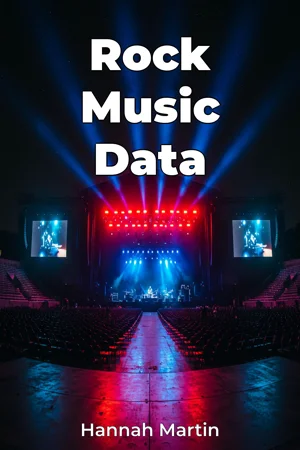
What can cold, hard data tell us about the evolution of rock music that subjective accounts often miss? "Rock Music Data" delves into the numerical heart of rock's trajectory, examining its growth, diversification, and cultural impact through the lens of sales figures, concert attendance records, and chart performance statistics. This book illuminates the story of rock, not just as a musical genre, but as a cultural and economic force. Two key topics drive this exploration: The first is a study of rock's commercial rise and fall. Sales figures provide a concrete measure of public engagement, revealing peak periods of popularity and subsequent declines or shifts in consumption patterns. Concert attendance records, the second major focus, capture the live experience, tracking the changing dynamics of fan engagement, the increasing scale of rock performances, and the evolution of the music festival phenomenon. Chart performance statistics are the third pillar, offering insights into which subgenres dominated the airwaves, which artists achieved mainstream success, and how tastes evolved over time. These objective metrics offer a complementary perspective to traditional historical narratives that often rely on anecdotal evidence. Understanding the story of rock requires some context. We examine the post-World War II economic boom, the rise of teenage culture, and the concurrent technological advancements in recording and broadcasting. The book assumes that the reader has general knowledge of major rock artists and subgenres, but it provides sufficient background information to make the data accessible to a broad audience. The central argument of "Rock Music Data" is that the quantitative analysis of sales, attendance, and chart performance provides a more nuanced and objective understanding of rock music's history than qualitative assessments alone. The book contends that by moving beyond subjective evaluations and focusing on empirical evidence, we can uncover hidden trends, challenge conventional wisdom, and gain a deeper appreciation for the complex factors that shaped rock's evolution. The book begins by introducing the datasets employed, detailing their sources, limitations, and analytical methodologies. It then proceeds to examine the rise of rock and roll in the 1950s and 1960s, using sales figures and chart data to trace the genre's initial explosion and subsequent diversification. The second major section analyzes the arena rock era of the 1970s and 1980s, using concert attendance records to demonstrate the increasing scale and commercialization of rock performances. It also examines the impact of MTV and other visual media on rock's popularity. The final section explores the fragmentation of rock in the 1990s and 2000s, using data to pinpoint the rise of alternative rock, grunge, and other subgenres, and to assess the impact of digital music distribution on sales and chart performance. The book concludes by considering the implications of these trends for the future of rock music and its cultural significance. The evidence presented is drawn primarily from industry sources, including record label sales data, concert promotion companies' attendance records, and music industry publications' chart archives (Billboard, Rolling Stone). Statistical analysis and data visualization techniques are employed to identify trends, patterns, and correlations within the data. The book connects to other fields such as economics (analyzing the music industry's economic impact), sociology (examining the relationship between rock music and social change), and media studies (investigating the role of media in shaping rock's popularity). "Rock Music Data" offers a unique perspective by combining rigorous quantitative analysis with a deep appreciation for the cultural and artistic dimensions of rock music. It is written in a clear, accessible style that avoids technical jargon, making it suitable for both academic and general audiences. The book's target audience includes music historians, music industry professionals, students of popular culture, and anyone with a general interest in rock music. It will appeal to readers who appreciate data-driven analysis and are looking for a fresh perspective on a familiar subject. The scope of the book is limited to the period from the mid-1950s to the present day, focusing primarily on the United States and the United Kingdom. While it acknowledges the global influence of rock music, it does not attempt to provide a comprehensive account of rock's development in all countries. The information presented in the book can be applied practically by music industry professionals to inform marketing strategies, identify emerging trends, and assess the long-term viability of different rock subgenres. It can also be used by academics and researchers to develop new theories about the cultural significance of rock music and its relationship to broader social and economic trends. One ongoing debate within the field concerns the impact of digital music distribution on the economic viability of rock music. "Rock Music Data" addresses this debate by providing detailed data on the decline of physical sales and the rise of streaming, offering insights into the challenges and opportunities facing rock artists and record labels in the digital age.
What can cold, hard data tell us about the evolution of rock music that subjective accounts often miss? "Rock Music Data" delves into the numerical heart of rock's trajectory, examining its growth, diversification, and cultural impact through the lens of sales figures, concert attendance records, and chart performance statistics. This book illuminates the story of rock, not just as a musical genre, but as a cultural and economic force. Two key topics drive this exploration: The first is a study of rock's commercial rise and fall. Sales figures provide a concrete measure of public engagement, revealing peak periods of popularity and subsequent declines or shifts in consumption patterns. Concert attendance records, the second major focus, capture the live experience, tracking the changing dynamics of fan engagement, the increasing scale of rock performances, and the evolution of the music festival phenomenon. Chart performance statistics are the third pillar, offering insights into which subgenres dominated the airwaves, which artists achieved mainstream success, and how tastes evolved over time. These objective metrics offer a complementary perspective to traditional historical narratives that often rely on anecdotal evidence. Understanding the story of rock requires some context. We examine the post-World War II economic boom, the rise of teenage culture, and the concurrent technological advancements in recording and broadcasting. The book assumes that the reader has general knowledge of major rock artists and subgenres, but it provides sufficient background information to make the data accessible to a broad audience. The central argument of "Rock Music Data" is that the quantitative analysis of sales, attendance, and chart performance provides a more nuanced and objective understanding of rock music's history than qualitative assessments alone. The book contends that by moving beyond subjective evaluations and focusing on empirical evidence, we can uncover hidden trends, challenge conventional wisdom, and gain a deeper appreciation for the complex factors that shaped rock's evolution. The book begins by introducing the datasets employed, detailing their sources, limitations, and analytical methodologies. It then proceeds to examine the rise of rock and roll in the 1950s and 1960s, using sales figures and chart data to trace the genre's initial explosion and subsequent diversification. The second major section analyzes the arena rock era of the 1970s and 1980s, using concert attendance records to demonstrate the increasing scale and commercialization of rock performances. It also examines the impact of MTV and other visual media on rock's popularity. The final section explores the fragmentation of rock in the 1990s and 2000s, using data to pinpoint the rise of alternative rock, grunge, and other subgenres, and to assess the impact of digital music distribution on sales and chart performance. The book concludes by considering the implications of these trends for the future of rock music and its cultural significance. The evidence presented is drawn primarily from industry sources, including record label sales data, concert promotion companies' attendance records, and music industry publications' chart archives (Billboard, Rolling Stone). Statistical analysis and data visualization techniques are employed to identify trends, patterns, and correlations within the data. The book connects to other fields such as economics (analyzing the music industry's economic impact), sociology (examining the relationship between rock music and social change), and media studies (investigating the role of media in shaping rock's popularity). "Rock Music Data" offers a unique perspective by combining rigorous quantitative analysis with a deep appreciation for the cultural and artistic dimensions of rock music. It is written in a clear, accessible style that avoids technical jargon, making it suitable for both academic and general audiences. The book's target audience includes music historians, music industry professionals, students of popular culture, and anyone with a general interest in rock music. It will appeal to readers who appreciate data-driven analysis and are looking for a fresh perspective on a familiar subject. The scope of the book is limited to the period from the mid-1950s to the present day, focusing primarily on the United States and the United Kingdom. While it acknowledges the global influence of rock music, it does not attempt to provide a comprehensive account of rock's development in all countries. The information presented in the book can be applied practically by music industry professionals to inform marketing strategies, identify emerging trends, and assess the long-term viability of different rock subgenres. It can also be used by academics and researchers to develop new theories about the cultural significance of rock music and its relationship to broader social and economic trends. One ongoing debate within the field concerns the impact of digital music distribution on the economic viability of rock music. "Rock Music Data" addresses this debate by providing detailed data on the decline of physical sales and the rise of streaming, offering insights into the challenges and opportunities facing rock artists and record labels in the digital age.
"Rock Music Data" explores the evolution of rock music through the objective lens of data analysis, moving beyond subjective opinions to examine sales figures, concert attendance, and chart performance. This approach provides unique insights into the genre's commercial and cultural impact, revealing hidden trends and challenging conventional wisdom about rock's trajectory. For instance, sales data pinpoints peak popularity periods, while attendance records demonstrate the increasing scale of rock performances, highlighting how the music industry grew alongside the genre. The book approaches its subject chronologically, beginning with the rise of rock and roll in the 1950s and 60s, tracing its explosion using sales figures and chart data. It then analyzes the arena rock era of the 70s and 80s, using concert attendance records to demonstrate the increasing commercialization of rock. Finally, the fragmentation of rock in the 90s and 2000s is examined using data to pinpoint the rise of alternative rock, grunge, and the impact of digital music, making it valuable to anyone interested in music history and the music industry.
Book Details
ISBN
9788233999087
Publisher
Publifye AS
Your Licenses
You don't own any licenses for this book
Purchase a license below to unlock this book and download the EPUB.
Purchase License
Select a tier to unlock this book
Need bulk licensing?
Contact us for enterprise agreements.