
About This Book
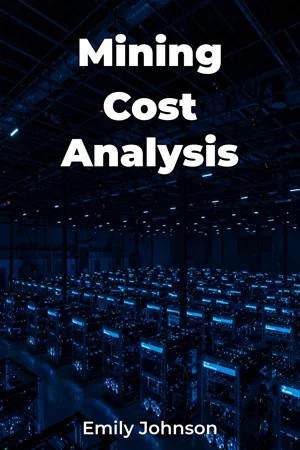
Can crypto mining truly be profitable when all factors are rigorously considered? "Mining Cost Analysis" provides a comprehensive, data-driven exploration of the financial realities behind cryptocurrency mining, moving beyond the hype to deliver a clear understanding of the costs involved. This book will cover equipment depreciation, operational expenditures, and fluctuating energy prices, explaining their critical influence on profitability. These topics are important to readers because the crypto market is volatile and complex; informed decision-making is essential for success and sustainability. Understanding the economics of mining requires grasping the historical development of cryptocurrencies and the technological advancements that have shaped mining operations. Briefly, the book introduces the evolution of blockchain technology and its impact on mining methodologies, setting the stage for a deeper examination of contemporary mining challenges. The central argument of "Mining Cost Analysis" asserts that a holistic, detailed cost analysis is indispensable for any individual or organization engaged in or considering cryptocurrency mining. This argument matters because, without accurate accounting for all expenses, profitability can be easily miscalculated, leading to poor investment decisions and potential financial losses. This book is structured to methodically address the complexities of mining cost analysis. It begins by introducing fundamental concepts, such as hashing algorithms, mining hardware, and energy consumption metrics. Following this introduction, the book develops its core ideas through three major sections. First, it presents a thorough breakdown of capital expenditures, including the costs associated with mining rigs, cooling systems, and infrastructure setup. Second, it examines operational costs, focusing on electricity consumption, maintenance, and pool fees. Third, it analyzes depreciation models for mining equipment, considering factors such as obsolescence and market value fluctuations. The book culminates by providing a practical framework for conducting a comprehensive cost-benefit analysis, offering readers the tools to assess the financial viability of mining operations under various conditions. To support its arguments, "Mining Cost Analysis" relies on a combination of empirical data, industry reports, and case studies. It presents data on electricity prices from different regions, performance benchmarks for various mining hardware configurations, and real-world examples of mining operations of different scales. This approach combines theoretical rigor with practical relevance, ensuring that the book's insights are grounded in reality. The book connects to several other fields, including economics, environmental science, and electrical engineering. The economic perspective enables analysis of market dynamics and price fluctuations affecting mining profitability. The environmental science perspective enables examination of the ecological impact of mining operations, particularly regarding energy consumption and carbon emissions. The electrical engineering perspective provides insight into the technical aspects of mining, such as power supply optimization and hardware efficiency. "Mining Cost Analysis" stands out by providing a uniquely granular level of detail in its cost breakdowns. Unlike other publications that focus primarily on revenue generation or technological aspects of mining, this book provides a dedicated focus on the nuances of cost management. The tone of the book is professional, and the information is presented in an objective and analytical manner. The writing style is clear and concise, making complex financial and technical concepts accessible to a broad audience. The target audience includes cryptocurrency miners, investors, financial analysts, and technology enthusiasts seeking a deep understanding of the economics of crypto mining. It will especially appeal to those who want to make informed decisions based on a rigorous examination of all relevant costs. As a work of non-fiction in the finance and technology genres, "Mining Cost Analysis" adheres to the conventions of accuracy, objectivity, and evidence-based reasoning. It is an analytical work supported by research. The book's scope is limited to the analysis of costs associated with cryptocurrency mining; it does not delve into investment strategies or cryptocurrency trading. While it considers various cryptocurrencies, it primarily focuses on Bitcoin and Ethereum due to their prominence in the mining landscape. The information in "Mining Cost Analysis" can be applied practically by readers to evaluate the financial viability of mining operations, optimize energy consumption, and make informed investment decisions. Miners can use the book's framework to improve their overall profitability. The book addresses ongoing debates regarding the energy consumption and environmental impact of cryptocurrency mining, presenting a balanced view of the issues and considering potential solutions for sustainable mining practices.
Can crypto mining truly be profitable when all factors are rigorously considered? "Mining Cost Analysis" provides a comprehensive, data-driven exploration of the financial realities behind cryptocurrency mining, moving beyond the hype to deliver a clear understanding of the costs involved. This book will cover equipment depreciation, operational expenditures, and fluctuating energy prices, explaining their critical influence on profitability. These topics are important to readers because the crypto market is volatile and complex; informed decision-making is essential for success and sustainability. Understanding the economics of mining requires grasping the historical development of cryptocurrencies and the technological advancements that have shaped mining operations. Briefly, the book introduces the evolution of blockchain technology and its impact on mining methodologies, setting the stage for a deeper examination of contemporary mining challenges. The central argument of "Mining Cost Analysis" asserts that a holistic, detailed cost analysis is indispensable for any individual or organization engaged in or considering cryptocurrency mining. This argument matters because, without accurate accounting for all expenses, profitability can be easily miscalculated, leading to poor investment decisions and potential financial losses. This book is structured to methodically address the complexities of mining cost analysis. It begins by introducing fundamental concepts, such as hashing algorithms, mining hardware, and energy consumption metrics. Following this introduction, the book develops its core ideas through three major sections. First, it presents a thorough breakdown of capital expenditures, including the costs associated with mining rigs, cooling systems, and infrastructure setup. Second, it examines operational costs, focusing on electricity consumption, maintenance, and pool fees. Third, it analyzes depreciation models for mining equipment, considering factors such as obsolescence and market value fluctuations. The book culminates by providing a practical framework for conducting a comprehensive cost-benefit analysis, offering readers the tools to assess the financial viability of mining operations under various conditions. To support its arguments, "Mining Cost Analysis" relies on a combination of empirical data, industry reports, and case studies. It presents data on electricity prices from different regions, performance benchmarks for various mining hardware configurations, and real-world examples of mining operations of different scales. This approach combines theoretical rigor with practical relevance, ensuring that the book's insights are grounded in reality. The book connects to several other fields, including economics, environmental science, and electrical engineering. The economic perspective enables analysis of market dynamics and price fluctuations affecting mining profitability. The environmental science perspective enables examination of the ecological impact of mining operations, particularly regarding energy consumption and carbon emissions. The electrical engineering perspective provides insight into the technical aspects of mining, such as power supply optimization and hardware efficiency. "Mining Cost Analysis" stands out by providing a uniquely granular level of detail in its cost breakdowns. Unlike other publications that focus primarily on revenue generation or technological aspects of mining, this book provides a dedicated focus on the nuances of cost management. The tone of the book is professional, and the information is presented in an objective and analytical manner. The writing style is clear and concise, making complex financial and technical concepts accessible to a broad audience. The target audience includes cryptocurrency miners, investors, financial analysts, and technology enthusiasts seeking a deep understanding of the economics of crypto mining. It will especially appeal to those who want to make informed decisions based on a rigorous examination of all relevant costs. As a work of non-fiction in the finance and technology genres, "Mining Cost Analysis" adheres to the conventions of accuracy, objectivity, and evidence-based reasoning. It is an analytical work supported by research. The book's scope is limited to the analysis of costs associated with cryptocurrency mining; it does not delve into investment strategies or cryptocurrency trading. While it considers various cryptocurrencies, it primarily focuses on Bitcoin and Ethereum due to their prominence in the mining landscape. The information in "Mining Cost Analysis" can be applied practically by readers to evaluate the financial viability of mining operations, optimize energy consumption, and make informed investment decisions. Miners can use the book's framework to improve their overall profitability. The book addresses ongoing debates regarding the energy consumption and environmental impact of cryptocurrency mining, presenting a balanced view of the issues and considering potential solutions for sustainable mining practices.
"Mining Cost Analysis" offers a deep dive into the financial aspects of cryptocurrency mining, moving past the hype to provide a clear understanding of the actual costs involved. It emphasizes that a detailed cost analysis is essential for anyone considering or currently engaged in crypto mining. The book reveals that factors like equipment depreciation and fluctuating energy prices can significantly impact profitability, underscoring the importance of informed decision-making in this volatile market. Did you know that accurately accounting for all expenses can prevent miscalculations that lead to poor investment choices? The book systematically breaks down the complexities of mining cost analysis, beginning with fundamental concepts such as hashing algorithms and mining hardware. It progresses through capital expenditures like mining rigs and cooling systems, operational costs including electricity consumption, and depreciation models for mining equipment. By providing a practical framework for cost-benefit analysis, "Mining Cost Analysis" equips readers with the tools necessary to assess the financial viability of mining operations. The book uniquely focuses on the nuances of cost management, setting it apart from other publications that primarily concentrate on revenue generation or technological aspects.
Book Details
ISBN
9788233998769
Publisher
Publifye AS
Your Licenses
You don't own any licenses for this book
Purchase a license below to unlock this book and download the EPUB.
Purchase License
Select a tier to unlock this book
Need bulk licensing?
Contact us for enterprise agreements.