
About This Book
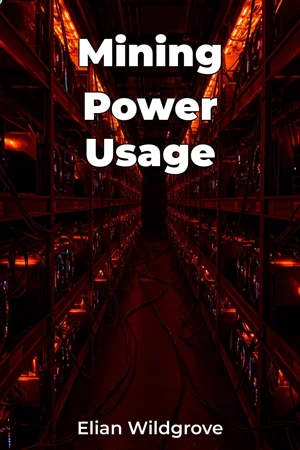
How much hidden power fuels the digital gold rush of cryptocurrency? "Mining Power Usage" delves into the often-overlooked intersection of cryptocurrency mining, environmental sustainability, and technological advancement to answer that very question. This book confronts the escalating concerns surrounding the electricity consumption of crypto mining operations and their far-reaching impacts on our planet. It's vital to examine these impacts as digital currencies become increasingly integrated into the global financial landscape, raising urgent questions about energy demands, carbon footprints, and the long-term viability of blockchain technologies. This book provides essential context by tracing the evolution of cryptocurrency mining, from its early days driven by individual enthusiasts to today’s massive, industrial-scale operations. Understanding the underlying technological principles, such as proof-of-work consensus mechanisms, is crucial to grasping the sheer amount of computational power—and thus, electricity—required to maintain these decentralized networks. The core argument presented in "Mining Power Usage" centers on the urgent need for transparency and accountability in the energy practices of the cryptocurrency industry. It asserts that without a comprehensive understanding of energy consumption patterns and a commitment to sustainable solutions, the environmental costs of cryptocurrency mining could severely undermine its potential benefits. This is not a question of dismissing cryptocurrencies altogether but advocating for a responsible path forward that minimizes environmental harm while fostering technological innovation. The book is structured to provide a thorough exploration of this complex issue. It begins by introducing the fundamental concepts of cryptocurrency mining and its inherent energy demands. Central chapters analyze the environmental impacts of mining operations, focusing on carbon emissions, e-waste generation, and disruptions to local energy grids. It explores geographical variations in energy sourcing and the prevalence of renewable energy use across different mining regions. Different cryptocurrencies (e.g. Bitcoin, Ethereum, Litecoin) are analyzed independently as their mining algorithms and resource consumption differ. The book evaluates the energy efficiency of various mining hardware and algorithms, offering a comparative analysis of different approaches to reducing energy intensity. It culminates in a discussion of potential solutions, including technological advancements in energy-efficient mining, the adoption of renewable energy sources, regulatory frameworks, and alternative consensus mechanisms. The conclusion proposes practical strategies for stakeholders—from miners and developers to policymakers and investors—to promote a more sustainable cryptocurrency ecosystem. The analysis in "Mining Power Usage" rests on a foundation of empirical data, drawn from a variety of sources including energy consumption reports, academic studies, industry publications, and on-site investigations of mining facilities. Methodologies include comparative lifecycle assessments, statistical modeling of energy usage patterns, and economic analyses of the costs and benefits of different mining approaches. The book also makes critical interdisciplinary connections. It bridges environmental science, technology studies, and economics to provide a holistic view of the challenges and opportunities presented by cryptocurrency mining. Furthermore, it touches on policy and regulation, examining the role of governments in shaping a more sustainable cryptocurrency industry. "Mining Power Usage" offers a unique perspective by combining a rigorous technical analysis with a clear focus on practical solutions. It stands apart by providing a balanced and accessible overview of a highly complex and rapidly evolving landscape. The book is written in a professional yet accessible style, making it suitable for a broad audience including environmental scientists, technology enthusiasts, investors, policymakers, and anyone concerned about the sustainability of digital technologies. The book's scope is intentionally broad, encompassing a global perspective on cryptocurrency mining and its environmental impacts. However, it acknowledges the inherent limitations of predicting future technological developments and regulatory changes. The insights presented can be applied by readers to inform investment decisions, advocate for responsible policies, and contribute to a more sustainable future for cryptocurrency. The book addresses ongoing debates about the environmental impacts of crypto mining, including arguments that the industry is already transitioning to renewable energy and that its energy consumption is offset by other benefits. By presenting a balanced and data-driven analysis, "Mining Power Usage" aims to contribute to a constructive dialogue and inform evidence-based solutions.
How much hidden power fuels the digital gold rush of cryptocurrency? "Mining Power Usage" delves into the often-overlooked intersection of cryptocurrency mining, environmental sustainability, and technological advancement to answer that very question. This book confronts the escalating concerns surrounding the electricity consumption of crypto mining operations and their far-reaching impacts on our planet. It's vital to examine these impacts as digital currencies become increasingly integrated into the global financial landscape, raising urgent questions about energy demands, carbon footprints, and the long-term viability of blockchain technologies. This book provides essential context by tracing the evolution of cryptocurrency mining, from its early days driven by individual enthusiasts to today’s massive, industrial-scale operations. Understanding the underlying technological principles, such as proof-of-work consensus mechanisms, is crucial to grasping the sheer amount of computational power—and thus, electricity—required to maintain these decentralized networks. The core argument presented in "Mining Power Usage" centers on the urgent need for transparency and accountability in the energy practices of the cryptocurrency industry. It asserts that without a comprehensive understanding of energy consumption patterns and a commitment to sustainable solutions, the environmental costs of cryptocurrency mining could severely undermine its potential benefits. This is not a question of dismissing cryptocurrencies altogether but advocating for a responsible path forward that minimizes environmental harm while fostering technological innovation. The book is structured to provide a thorough exploration of this complex issue. It begins by introducing the fundamental concepts of cryptocurrency mining and its inherent energy demands. Central chapters analyze the environmental impacts of mining operations, focusing on carbon emissions, e-waste generation, and disruptions to local energy grids. It explores geographical variations in energy sourcing and the prevalence of renewable energy use across different mining regions. Different cryptocurrencies (e.g. Bitcoin, Ethereum, Litecoin) are analyzed independently as their mining algorithms and resource consumption differ. The book evaluates the energy efficiency of various mining hardware and algorithms, offering a comparative analysis of different approaches to reducing energy intensity. It culminates in a discussion of potential solutions, including technological advancements in energy-efficient mining, the adoption of renewable energy sources, regulatory frameworks, and alternative consensus mechanisms. The conclusion proposes practical strategies for stakeholders—from miners and developers to policymakers and investors—to promote a more sustainable cryptocurrency ecosystem. The analysis in "Mining Power Usage" rests on a foundation of empirical data, drawn from a variety of sources including energy consumption reports, academic studies, industry publications, and on-site investigations of mining facilities. Methodologies include comparative lifecycle assessments, statistical modeling of energy usage patterns, and economic analyses of the costs and benefits of different mining approaches. The book also makes critical interdisciplinary connections. It bridges environmental science, technology studies, and economics to provide a holistic view of the challenges and opportunities presented by cryptocurrency mining. Furthermore, it touches on policy and regulation, examining the role of governments in shaping a more sustainable cryptocurrency industry. "Mining Power Usage" offers a unique perspective by combining a rigorous technical analysis with a clear focus on practical solutions. It stands apart by providing a balanced and accessible overview of a highly complex and rapidly evolving landscape. The book is written in a professional yet accessible style, making it suitable for a broad audience including environmental scientists, technology enthusiasts, investors, policymakers, and anyone concerned about the sustainability of digital technologies. The book's scope is intentionally broad, encompassing a global perspective on cryptocurrency mining and its environmental impacts. However, it acknowledges the inherent limitations of predicting future technological developments and regulatory changes. The insights presented can be applied by readers to inform investment decisions, advocate for responsible policies, and contribute to a more sustainable future for cryptocurrency. The book addresses ongoing debates about the environmental impacts of crypto mining, including arguments that the industry is already transitioning to renewable energy and that its energy consumption is offset by other benefits. By presenting a balanced and data-driven analysis, "Mining Power Usage" aims to contribute to a constructive dialogue and inform evidence-based solutions.
"Mining Power Usage" tackles the growing concerns surrounding the significant power consumption of cryptocurrency mining and its environmental impact. As digital currencies become more prevalent, understanding the energy demands, carbon footprint, and long-term sustainability of blockchain technologies is crucial. The book reveals how mining has evolved from individual enthusiasts to large-scale industrial operations and emphasizes the need for transparency regarding energy practices within the cryptocurrency industry. For example, the "proof-of-work" consensus mechanism, vital for maintaining decentralized networks, demands immense computational power and electricity. The book progresses by first introducing cryptocurrency mining fundamentals, then analyzing its environmental impact, including carbon emissions and e-waste. The book delves into how different cryptocurrencies and mining hardware vary in energy efficiency. Ultimately, it proposes solutions, such as renewable energy adoption and regulatory frameworks, for a sustainable crypto ecosystem. This book uniquely combines technical analysis with practical solutions, offering a balanced view suitable for environmental scientists, tech enthusiasts, and policymakers alike.
Book Details
ISBN
9788233998684
Publisher
Publifye AS
Your Licenses
You don't own any licenses for this book
Purchase a license below to unlock this book and download the EPUB.
Purchase License
Select a tier to unlock this book
Need bulk licensing?
Contact us for enterprise agreements.