
About This Book
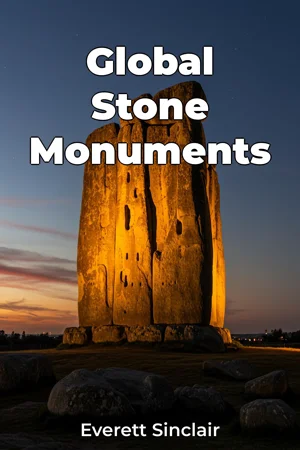
What can megalithic structures tell us about the origins of civilization and the shared ingenuity of humanity? "Global Stone Monuments" embarks on a comprehensive exploration of significant stone monuments across the world, utilizing archaeological discoveries and historical records to reveal insights into the cultures that created them, and focusing on how these monuments reflect architectural innovation, cultural expression, and technological advancement throughout history. This book examines three central themes: the architectural techniques used in constructing these monuments, the cultural and religious significance attributed to them, and the historical context surrounding their creation and use. These topics are vital because they provide a window into the past, revealing complex social structures, belief systems, and technological capabilities of societies spanning diverse geographical locations and time periods. Understanding the construction and purpose of these monuments requires knowledge of ancient building practices, religious traditions, and social hierarchies. The book will act as a bridge across these disciplines, providing the necessary context for readers to appreciate the scale and complexity of these ancient achievements. The central argument of "Global Stone Monuments" is that the study of these structures provides tangible evidence of a shared human impulse to create lasting monuments that reflect cultural values and technological capabilities. Although separated by vast distances and disparate historical trajectories, the creators of these structures were united by a common desire to leave a lasting legacy in stone. The book's structure begins with an introduction to the primary concepts of megalithic architecture, including an overview of different construction techniques and cultural contexts. The subsequent sections develop these ideas through a series of case studies, each focusing on a specific region or type of monument. These sections delve into the specific characteristics, significance, and historical context of each site, using archaeological data and historical accounts to support its claims. It culminates in synthesizing the findings from these case studies, exploring the overarching themes and patterns that emerge from the global survey of stone monuments. It also explores the lasting relevance of these sites and their impact on contemporary understanding of history and culture. The evidence presented is derived from archaeological excavation reports, architectural surveys, historical texts, and comparative analyses of different monument types. It will integrate data from diverse sources to build a comprehensive picture of each monument. "Global Stone Monuments" connects to several other fields of study, including anthropology, art history, and religious studies. By examining these monuments through multiple lenses, the book enhances its understanding of culture, art, and belief systems. The book takes an innovative approach by combining detailed case studies with comparative analysis. This approach allows readers to appreciate the unique characteristics of each monument while also recognizing the common threads that connect them across cultures and time periods. The book’s tone is academic but accessible, aiming to present complex information in a clear and engaging manner. Charts, site plans, and photographs are used to enhance the reader's understanding. The target audience includes students of history, archaeology, and architecture, as well as general readers with an interest in ancient civilizations and cultural heritage. It offers value to readers seeking knowledge about the past. As a work of world history and architectural history, this book adheres to the standards of scholarly research, providing detailed citations and supporting evidence for all claims. The book's scope is broad, encompassing a wide range of stone monuments from different regions and time periods. While striving for comprehensiveness, the book acknowledges that it cannot cover every monument in detail. Intentional limitations are in place to focus on the most significant examples and highlight key themes. The information in "Global Stone Monuments" can be applied to contemporary discussions about cultural preservation, heritage tourism, and the interpretation of historical sites. It encourages readers to consider the lasting legacy of ancient civilizations. While this book synthesizes a range of research, it also addresses some of the debates surrounding the interpretation of stone monuments. It presents different perspectives on controversial topics, such as the purpose of specific monuments and the methods used to construct them, encouraging readers to critically evaluate the available evidence and form their own conclusions.
What can megalithic structures tell us about the origins of civilization and the shared ingenuity of humanity? "Global Stone Monuments" embarks on a comprehensive exploration of significant stone monuments across the world, utilizing archaeological discoveries and historical records to reveal insights into the cultures that created them, and focusing on how these monuments reflect architectural innovation, cultural expression, and technological advancement throughout history. This book examines three central themes: the architectural techniques used in constructing these monuments, the cultural and religious significance attributed to them, and the historical context surrounding their creation and use. These topics are vital because they provide a window into the past, revealing complex social structures, belief systems, and technological capabilities of societies spanning diverse geographical locations and time periods. Understanding the construction and purpose of these monuments requires knowledge of ancient building practices, religious traditions, and social hierarchies. The book will act as a bridge across these disciplines, providing the necessary context for readers to appreciate the scale and complexity of these ancient achievements. The central argument of "Global Stone Monuments" is that the study of these structures provides tangible evidence of a shared human impulse to create lasting monuments that reflect cultural values and technological capabilities. Although separated by vast distances and disparate historical trajectories, the creators of these structures were united by a common desire to leave a lasting legacy in stone. The book's structure begins with an introduction to the primary concepts of megalithic architecture, including an overview of different construction techniques and cultural contexts. The subsequent sections develop these ideas through a series of case studies, each focusing on a specific region or type of monument. These sections delve into the specific characteristics, significance, and historical context of each site, using archaeological data and historical accounts to support its claims. It culminates in synthesizing the findings from these case studies, exploring the overarching themes and patterns that emerge from the global survey of stone monuments. It also explores the lasting relevance of these sites and their impact on contemporary understanding of history and culture. The evidence presented is derived from archaeological excavation reports, architectural surveys, historical texts, and comparative analyses of different monument types. It will integrate data from diverse sources to build a comprehensive picture of each monument. "Global Stone Monuments" connects to several other fields of study, including anthropology, art history, and religious studies. By examining these monuments through multiple lenses, the book enhances its understanding of culture, art, and belief systems. The book takes an innovative approach by combining detailed case studies with comparative analysis. This approach allows readers to appreciate the unique characteristics of each monument while also recognizing the common threads that connect them across cultures and time periods. The book’s tone is academic but accessible, aiming to present complex information in a clear and engaging manner. Charts, site plans, and photographs are used to enhance the reader's understanding. The target audience includes students of history, archaeology, and architecture, as well as general readers with an interest in ancient civilizations and cultural heritage. It offers value to readers seeking knowledge about the past. As a work of world history and architectural history, this book adheres to the standards of scholarly research, providing detailed citations and supporting evidence for all claims. The book's scope is broad, encompassing a wide range of stone monuments from different regions and time periods. While striving for comprehensiveness, the book acknowledges that it cannot cover every monument in detail. Intentional limitations are in place to focus on the most significant examples and highlight key themes. The information in "Global Stone Monuments" can be applied to contemporary discussions about cultural preservation, heritage tourism, and the interpretation of historical sites. It encourages readers to consider the lasting legacy of ancient civilizations. While this book synthesizes a range of research, it also addresses some of the debates surrounding the interpretation of stone monuments. It presents different perspectives on controversial topics, such as the purpose of specific monuments and the methods used to construct them, encouraging readers to critically evaluate the available evidence and form their own conclusions.
"Global Stone Monuments" explores the world's most impressive megalithic structures, revealing insights into the ancient civilizations that built them. It delves into architectural innovation, cultural expression, and technological advancements by examining the construction techniques, cultural significance, and historical context of these enduring monuments. Readers will discover how these structures reflect complex social structures and belief systems across diverse geographical locations and time periods. The book uniquely combines detailed case studies with comparative analysis, highlighting both the unique characteristics of each monument and the common threads connecting them across cultures. For instance, the construction of Stonehenge, like many other megalithic sites, involved advanced engineering skills for its time. Furthermore, the book progresses methodically, starting with an introduction to megalithic architecture and then developing these concepts through regional case studies, culminating in a synthesis of overarching themes. By bridging disciplines such as archaeology, art history, and religious studies, "Global Stone Monuments" enriches our understanding of cultural heritage and architectural history. It demonstrates how the study of these structures provides tangible evidence of humanity's shared impulse to create lasting legacies. The book's approach encourages readers to appreciate the scale and complexity of these ancient achievements and their lasting impact on contemporary understanding.
Book Details
ISBN
9788233998660
Publisher
Publifye AS
Your Licenses
You don't own any licenses for this book
Purchase a license below to unlock this book and download the EPUB.
Purchase License
Select a tier to unlock this book
Need bulk licensing?
Contact us for enterprise agreements.