
About This Book
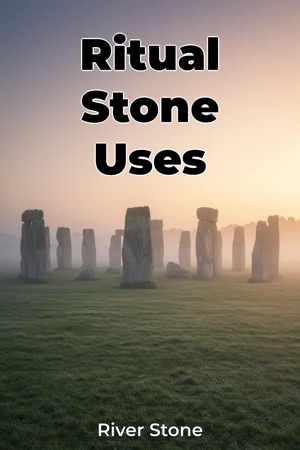
Why have humans across diverse cultures and throughout history consistently imbued stones with ritual significance? "Ritual Stone Uses" delves into this fundamental question, exploring the pervasive role of stone in ceremonial practices worldwide through the lens of anthropological study. This book examines how seemingly inert geological objects become potent symbols and active participants in shaping social structures, belief systems, and individual experiences. The importance of understanding these ritual practices lies in their ability to unlock deeper insights into the human condition, revealing the common threads that connect disparate cultures and illuminate the enduring human need for meaning-making. The book focuses on three key interwoven topics: first, the diverse range of ceremonial applications involving stone, from monumental constructions like Stonehenge to smaller, personally significant objects such as amulets and talismans. Second, the varying interpretations and symbolic meanings ascribed to stone, revealing the cultural specificity within global patterns. Third, the social dynamics surrounding ritual stone use, including the roles of priests, artisans, and community members in creating, maintaining, and interacting with these sacred objects. To fully comprehend the nuances explored, some basic acquaintance with anthropological methods is assumed. The narrative also benefits from some understanding of comparative religion and archaeological interpretation. The central argument presented is that ritual stone use is not merely a primitive practice but rather a sophisticated expression of human creativity and worldview. By analyzing the recurring patterns and unique variations in how different societies utilize stone in their rituals, the book demonstrates that these practices play a critical role in reinforcing social cohesion, mediating between the human and supernatural realms, and preserving cultural memory. "Ritual Stone Uses" begins by establishing a theoretical framework for understanding the anthropological study of material culture and ritual. It introduces key concepts such as symbolism, ritual performance, and social construction. The book proceeds to examine case studies from various regions of the world: megalithic structures in Europe, ancestral stone veneration in Asia, and the ritualistic use of stones in indigenous American cultures. Each chapter is dedicated to a specific type of ritual stone use or a particular geographical region, culminating in a synthesis of cross-cultural themes and a reflection on the ongoing relevance of these practices in the contemporary world. The book draws upon a diverse range of evidence, including archaeological findings, ethnographic accounts, historical texts, and oral traditions. It integrates quantitative data, such as site measurements and artifact analysis, with qualitative data, such as interviews with practitioners and interpretations of symbolic meanings, to provide a holistic understanding of the subject matter. The book offers a fresh analytical approach by combining traditional anthropological methods with cutting-edge techniques in spatial analysis and digital humanities. "Ritual Stone Uses" also connects to multiple academic disciplines, including archaeology by explaining the processes of archaeological excavation, dating, and interpretation; religious studies by examining the role of sacred objects in religious practices and belief systems; and art history by studying the aesthetic qualities of ritual stones and their place within broader artistic traditions. What distinguishes this book is its comparative approach and its emphasis on the dynamic interplay between material objects, human agency, and cultural context. It avoids essentializing stone as inherently sacred, instead focusing on the social and cultural processes that imbue it with meaning and power. The book aims for an accessible academic tone, suitable for both specialists and general readers interested in anthropology, archaeology, or religious studies. The target audience includes students and scholars in anthropology, archaeology, religious studies, and related fields, as well as general readers with an interest in cultural history and comparative religion. The book avoids overly technical jargon and provides clear explanations of key concepts. As a work within the History and Social Science General genres, it provides a systematic treatment of the topic. The book acknowledges the limitations of its scope, which primarily focuses on cultural practices and symbolic meanings rather than geological properties of the stones themselves. The insights presented offer practical applications for understanding contemporary cultural heritage management, tourism, and interfaith dialogue. By fostering a deeper appreciation for the diversity of human beliefs and practices, the book contributes to a more inclusive and respectful world. While the cross-cultural study of ritual is often debated regarding appropriate interpretation and application, this book offers a balanced and thoughtful approach, acknowledging the complexities and potential biases inherent in cross-cultural research.
Why have humans across diverse cultures and throughout history consistently imbued stones with ritual significance? "Ritual Stone Uses" delves into this fundamental question, exploring the pervasive role of stone in ceremonial practices worldwide through the lens of anthropological study. This book examines how seemingly inert geological objects become potent symbols and active participants in shaping social structures, belief systems, and individual experiences. The importance of understanding these ritual practices lies in their ability to unlock deeper insights into the human condition, revealing the common threads that connect disparate cultures and illuminate the enduring human need for meaning-making. The book focuses on three key interwoven topics: first, the diverse range of ceremonial applications involving stone, from monumental constructions like Stonehenge to smaller, personally significant objects such as amulets and talismans. Second, the varying interpretations and symbolic meanings ascribed to stone, revealing the cultural specificity within global patterns. Third, the social dynamics surrounding ritual stone use, including the roles of priests, artisans, and community members in creating, maintaining, and interacting with these sacred objects. To fully comprehend the nuances explored, some basic acquaintance with anthropological methods is assumed. The narrative also benefits from some understanding of comparative religion and archaeological interpretation. The central argument presented is that ritual stone use is not merely a primitive practice but rather a sophisticated expression of human creativity and worldview. By analyzing the recurring patterns and unique variations in how different societies utilize stone in their rituals, the book demonstrates that these practices play a critical role in reinforcing social cohesion, mediating between the human and supernatural realms, and preserving cultural memory. "Ritual Stone Uses" begins by establishing a theoretical framework for understanding the anthropological study of material culture and ritual. It introduces key concepts such as symbolism, ritual performance, and social construction. The book proceeds to examine case studies from various regions of the world: megalithic structures in Europe, ancestral stone veneration in Asia, and the ritualistic use of stones in indigenous American cultures. Each chapter is dedicated to a specific type of ritual stone use or a particular geographical region, culminating in a synthesis of cross-cultural themes and a reflection on the ongoing relevance of these practices in the contemporary world. The book draws upon a diverse range of evidence, including archaeological findings, ethnographic accounts, historical texts, and oral traditions. It integrates quantitative data, such as site measurements and artifact analysis, with qualitative data, such as interviews with practitioners and interpretations of symbolic meanings, to provide a holistic understanding of the subject matter. The book offers a fresh analytical approach by combining traditional anthropological methods with cutting-edge techniques in spatial analysis and digital humanities. "Ritual Stone Uses" also connects to multiple academic disciplines, including archaeology by explaining the processes of archaeological excavation, dating, and interpretation; religious studies by examining the role of sacred objects in religious practices and belief systems; and art history by studying the aesthetic qualities of ritual stones and their place within broader artistic traditions. What distinguishes this book is its comparative approach and its emphasis on the dynamic interplay between material objects, human agency, and cultural context. It avoids essentializing stone as inherently sacred, instead focusing on the social and cultural processes that imbue it with meaning and power. The book aims for an accessible academic tone, suitable for both specialists and general readers interested in anthropology, archaeology, or religious studies. The target audience includes students and scholars in anthropology, archaeology, religious studies, and related fields, as well as general readers with an interest in cultural history and comparative religion. The book avoids overly technical jargon and provides clear explanations of key concepts. As a work within the History and Social Science General genres, it provides a systematic treatment of the topic. The book acknowledges the limitations of its scope, which primarily focuses on cultural practices and symbolic meanings rather than geological properties of the stones themselves. The insights presented offer practical applications for understanding contemporary cultural heritage management, tourism, and interfaith dialogue. By fostering a deeper appreciation for the diversity of human beliefs and practices, the book contributes to a more inclusive and respectful world. While the cross-cultural study of ritual is often debated regarding appropriate interpretation and application, this book offers a balanced and thoughtful approach, acknowledging the complexities and potential biases inherent in cross-cultural research.
"Ritual Stone Uses" explores the fascinating and widespread phenomenon of humans imbuing stones with ritual significance across various cultures and throughout history. It examines how ordinary geological objects transform into powerful symbols deeply embedded in social structures and belief systems. The book highlights the diverse ceremonial applications of stone, ranging from monumental constructions, like Stonehenge, to smaller, personally significant objects and explores the varying interpretations and symbolic meanings ascribed to stone, revealing cultural specificity within global patterns. This anthropological study argues that ritual stone use isn't a primitive practice, but a sophisticated expression of human creativity and worldview. By analyzing recurring patterns and unique variations in how societies use stone in rituals, the book demonstrates these practices play a critical role in reinforcing social cohesion and mediating between the human and supernatural realms. The book progresses from establishing a theoretical framework to examining case studies from regions around the world. Drawing from archaeological findings, ethnographic accounts, and historical texts, the book provides a holistic understanding of ritual stone uses. It offers a fresh analytical approach, combining anthropological methods with techniques in spatial analysis and digital humanities. What sets this book apart is its comparative approach and emphasis on the dynamic interplay between material objects, human agency, and cultural context within religious studies.
Book Details
ISBN
9788233998653
Publisher
Publifye AS
Your Licenses
You don't own any licenses for this book
Purchase a license below to unlock this book and download the EPUB.
Purchase License
Select a tier to unlock this book
Need bulk licensing?
Contact us for enterprise agreements.