
About This Book
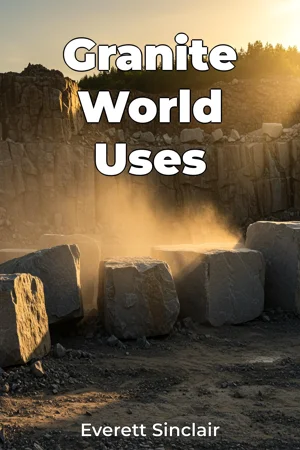
Have you ever paused to consider the silent giant beneath our feet, the bedrock upon which civilizations are built? This book, "Granite World Uses," delves into the multifaceted world of granite, exploring its extraction, properties, and diverse applications across construction and industry. Granite, a ubiquitous yet often overlooked material, plays a crucial role in shaping our built environment and industrial processes. Understanding its geological origins, physical characteristics, and utilization is vital for architects, engineers, earth scientists, and anyone interested in the materials that define our world. We begin by tracing granite's journey from its formation deep within the Earth's crust to its extraction from quarries around the globe. The book examines various quarrying techniques, considering their environmental impact and the technological advancements that have shaped the industry. We then transition to an in-depth analysis of granite's inherent properties. This includes its mineral composition, structural strength, resistance to weathering, and thermal behavior. Understanding these properties is paramount for selecting the appropriate type of granite for specific applications, ensuring both longevity and aesthetic appeal. Our central argument is that granite, far from being a simple building block, is a complex and versatile material whose optimal utilization requires a comprehensive understanding of its geological context, physical characteristics, and sustainable extraction methods. This argument is crucial because it promotes responsible resource management and informs better decision-making in construction and design, fostering sustainable practices. The book's structure unfolds logically, beginning with an introduction to granite's geological origins and global distribution. Major themes explored include: (1) the environmental and economic impacts of granite extraction, comparing extraction methods and their sustainability; (2) an analysis of granite's physical and chemical properties, including how these properties dictate its use in different environments and applications; and (3) a comprehensive overview of granite's diverse applications, from monumental architecture and infrastructure to industrial machinery and decorative arts. The culmination of these themes leads to a discussion of future trends in granite utilization, considering innovations in material science and sustainable construction practices. The arguments presented are supported by extensive research, including geological surveys, engineering reports, case studies of notable granite structures, and data on global granite production and consumption. We draw upon a unique combination of geological data, engineering specifications, and architectural case studies to provide a holistic perspective. This book connects to several other fields. Geology provides the foundational understanding of granite's formation. Architecture and Engineering demonstrate its practical applications. Geography contextualizes the global distribution and trade of granite. These interdisciplinary connections enrich the book's argument, providing a well-rounded perspective. Our approach is to bridge the gap between scientific understanding and practical application, presenting complex information in an accessible and engaging manner. The writing style is informative and technically accurate but avoids unnecessary jargon, making it suitable for a broad audience. The target audience includes architecture students and practicing architects, civil engineers, earth science students and researchers, and anyone involved in the construction or stone industry. This book will be valuable to them by providing a comprehensive guide to granite, from its geological origins to its diverse applications, fostering informed decision-making and sustainable practices. In line with genre expectations for earth science, architecture, and geography, the book features detailed maps, geological charts, technical diagrams, and photographs of granite structures and quarrying operations. While the book offers a comprehensive overview of granite, its scope is limited to commonly used types of granite. It does not delve into extremely rare or specialized forms of granite. The information presented can be directly applied in architectural design, construction planning, materials selection, and geological resource management. Planners can use this knowledge to make informed decisions about material sourcing, while architects can leverage the properties of granite to create durable and aesthetically pleasing buildings. While granite is generally considered a durable and sustainable building material, there are ongoing debates regarding the environmental impact of quarrying operations and the ethical considerations of worker safety. The book addresses these controversies by presenting a balanced perspective, highlighting both the benefits and challenges associated with granite utilization.
Have you ever paused to consider the silent giant beneath our feet, the bedrock upon which civilizations are built? This book, "Granite World Uses," delves into the multifaceted world of granite, exploring its extraction, properties, and diverse applications across construction and industry. Granite, a ubiquitous yet often overlooked material, plays a crucial role in shaping our built environment and industrial processes. Understanding its geological origins, physical characteristics, and utilization is vital for architects, engineers, earth scientists, and anyone interested in the materials that define our world. We begin by tracing granite's journey from its formation deep within the Earth's crust to its extraction from quarries around the globe. The book examines various quarrying techniques, considering their environmental impact and the technological advancements that have shaped the industry. We then transition to an in-depth analysis of granite's inherent properties. This includes its mineral composition, structural strength, resistance to weathering, and thermal behavior. Understanding these properties is paramount for selecting the appropriate type of granite for specific applications, ensuring both longevity and aesthetic appeal. Our central argument is that granite, far from being a simple building block, is a complex and versatile material whose optimal utilization requires a comprehensive understanding of its geological context, physical characteristics, and sustainable extraction methods. This argument is crucial because it promotes responsible resource management and informs better decision-making in construction and design, fostering sustainable practices. The book's structure unfolds logically, beginning with an introduction to granite's geological origins and global distribution. Major themes explored include: (1) the environmental and economic impacts of granite extraction, comparing extraction methods and their sustainability; (2) an analysis of granite's physical and chemical properties, including how these properties dictate its use in different environments and applications; and (3) a comprehensive overview of granite's diverse applications, from monumental architecture and infrastructure to industrial machinery and decorative arts. The culmination of these themes leads to a discussion of future trends in granite utilization, considering innovations in material science and sustainable construction practices. The arguments presented are supported by extensive research, including geological surveys, engineering reports, case studies of notable granite structures, and data on global granite production and consumption. We draw upon a unique combination of geological data, engineering specifications, and architectural case studies to provide a holistic perspective. This book connects to several other fields. Geology provides the foundational understanding of granite's formation. Architecture and Engineering demonstrate its practical applications. Geography contextualizes the global distribution and trade of granite. These interdisciplinary connections enrich the book's argument, providing a well-rounded perspective. Our approach is to bridge the gap between scientific understanding and practical application, presenting complex information in an accessible and engaging manner. The writing style is informative and technically accurate but avoids unnecessary jargon, making it suitable for a broad audience. The target audience includes architecture students and practicing architects, civil engineers, earth science students and researchers, and anyone involved in the construction or stone industry. This book will be valuable to them by providing a comprehensive guide to granite, from its geological origins to its diverse applications, fostering informed decision-making and sustainable practices. In line with genre expectations for earth science, architecture, and geography, the book features detailed maps, geological charts, technical diagrams, and photographs of granite structures and quarrying operations. While the book offers a comprehensive overview of granite, its scope is limited to commonly used types of granite. It does not delve into extremely rare or specialized forms of granite. The information presented can be directly applied in architectural design, construction planning, materials selection, and geological resource management. Planners can use this knowledge to make informed decisions about material sourcing, while architects can leverage the properties of granite to create durable and aesthetically pleasing buildings. While granite is generally considered a durable and sustainable building material, there are ongoing debates regarding the environmental impact of quarrying operations and the ethical considerations of worker safety. The book addresses these controversies by presenting a balanced perspective, highlighting both the benefits and challenges associated with granite utilization.
"Granite World Uses" explores the journey of granite from its geological origins to its widespread applications in construction and architecture. The book examines quarrying techniques, highlighting the environmental and economic impacts of granite extraction, while also delving into granite's unique properties, such as its mineral composition and resistance to weathering. Did you know that granite's durability makes it ideal for monumental architecture, but its versatility also extends to industrial machinery and even decorative arts? The book argues that understanding granite's geological context, physical characteristics, and sustainable extraction methods is crucial for responsible resource management. It progresses logically, starting with granite's formation and global distribution, then moves into an analysis of its properties, and finally presents a comprehensive overview of its diverse uses. This approach bridges the gap between scientific understanding and practical application, making complex information accessible to a broad audience interested in earth science, architecture, and civil engineering. A key focus is on sustainable practices, which are essential considerations for granite's future utilization. By combining geological data, engineering specifications, and architectural case studies, "Granite World Uses" provides a holistic perspective, making it a valuable resource for architects, engineers, and anyone involved in the stone industry.
Book Details
ISBN
9788233998622
Publisher
Publifye AS
Your Licenses
You don't own any licenses for this book
Purchase a license below to unlock this book and download the EPUB.
Purchase License
Select a tier to unlock this book
Need bulk licensing?
Contact us for enterprise agreements.