
About This Book
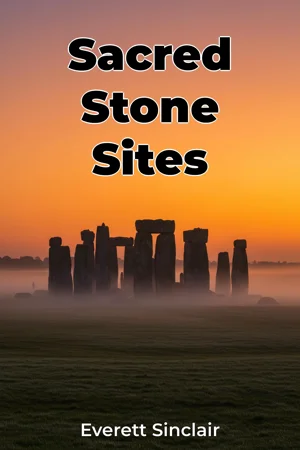
Why do certain stones, erected millennia ago, continue to resonate with spiritual significance across cultures and continents? "Sacred Stone Sites" delves into this enduring mystery by analyzing documented religious and cultural stone monuments worldwide through the lens of archaeological records. This book explores the confluence of religion, architecture, and human belief systems manifest in stone structures. This exploration is crucial because these sites represent tangible connections to our ancestors' spiritual lives, offering insights into past belief systems, social structures, and technological capabilities. Furthermore, understanding the cultural significance embedded in these monuments is essential for their preservation and interpretation in the modern world. The book provides crucial historical, social, and archaeological context. It assumes a basic understanding of world history and archaeological principles, but each site is examined starting with fundamental background information. The central argument of "Sacred Stone Sites" is that the selection, shaping, and placement of monumental stones were deliberate acts deeply intertwined with religious and cultural ideologies. It asserts that these sites are not merely remnants of the past but active repositories of meaning that continue to shape cultural identity and spiritual practice. This argument challenges purely functional interpretations of ancient architecture, urging a more holistic understanding that integrates archaeological data with religious and cultural studies. The book begins with an introduction defining "sacred stone sites" and establishing a framework for analyzing their archaeological records. It then develops its argument through three major sections. The first examines megalithic structures such as Stonehenge and Carnac, focusing on their astronomical alignments and potential ritual purposes. The second section analyzes pyramid complexes from Egypt to Mesoamerica, investigating the symbolism of their form and their roles in royal and religious power. Finally, the book explores standing stones and rock-cut temples in Asia and Africa, emphasizing their connection to local deities and ancestral veneration. The book culminates by synthesizing these diverse case studies, demonstrating the universality of certain symbolic patterns and highlighting the unique cultural expressions found at each site. The concluding chapter explores practical implications for heritage management and the ethical considerations involved in studying and preserving sacred sites. Evidence presented includes detailed archaeological surveys, excavation reports, analyses of stone structures, and comparative studies of religious iconography. The book draws upon diverse data sources, including radiocarbon dating, archaeoastronomy, and ethnographic accounts. "Sacred Stone Sites" connects to other fields such as anthropology, art history, and religious studies. Anthropology provides insights into the social and cultural contexts of monument construction; art history helps decipher the symbolic language embedded in the structures; and religious studies offers frameworks for interpreting the spiritual beliefs associated with these sites. These interdisciplinary connections enrich the analysis, providing a more nuanced understanding of the monuments' significance. The book offers a unique perspective by integrating archaeological data with religious and cultural analysis, moving beyond purely descriptive accounts to explore the deeper meanings encoded in stone. It adopts a respectful and sensitive approach to studying sacred sites, acknowledging their ongoing spiritual significance for contemporary communities. Written in a clear and accessible style suitable for both academics and general readers interested in archaeology, religion, and architecture, the book aims to inform and inspire a deeper appreciation for the cultural heritage embodied in sacred stone sites. The target audience includes students, researchers, and anyone with an interest in ancient civilizations, religious history, or archaeological discoveries. As a work of non-fiction, "Sacred Stone Sites" adheres to the genre's conventions of accuracy, objectivity, and evidence-based analysis. It is intended to contribute to the existing body of knowledge on ancient religious architecture. The scope of this book is broad, encompassing a global selection of sacred stone sites, but it is limited by the availability of archaeological data and documentation. It primarily focuses on sites with substantial archaeological records, acknowledging that many other sites lack sufficient documentation for detailed analysis. The information presented can be applied practically by readers interested in heritage tourism, cultural preservation, or the study of comparative religion. It provides a framework for understanding the cultural significance of archaeological sites and promotes responsible engagement with cultural heritage. While presenting various interpretations of the archaeological records, "Sacred Stone Sites" also acknowledges ongoing debates surrounding the dating, purpose, and interpretation of these monuments, encouraging readers to engage critically with the evidence.
Why do certain stones, erected millennia ago, continue to resonate with spiritual significance across cultures and continents? "Sacred Stone Sites" delves into this enduring mystery by analyzing documented religious and cultural stone monuments worldwide through the lens of archaeological records. This book explores the confluence of religion, architecture, and human belief systems manifest in stone structures. This exploration is crucial because these sites represent tangible connections to our ancestors' spiritual lives, offering insights into past belief systems, social structures, and technological capabilities. Furthermore, understanding the cultural significance embedded in these monuments is essential for their preservation and interpretation in the modern world. The book provides crucial historical, social, and archaeological context. It assumes a basic understanding of world history and archaeological principles, but each site is examined starting with fundamental background information. The central argument of "Sacred Stone Sites" is that the selection, shaping, and placement of monumental stones were deliberate acts deeply intertwined with religious and cultural ideologies. It asserts that these sites are not merely remnants of the past but active repositories of meaning that continue to shape cultural identity and spiritual practice. This argument challenges purely functional interpretations of ancient architecture, urging a more holistic understanding that integrates archaeological data with religious and cultural studies. The book begins with an introduction defining "sacred stone sites" and establishing a framework for analyzing their archaeological records. It then develops its argument through three major sections. The first examines megalithic structures such as Stonehenge and Carnac, focusing on their astronomical alignments and potential ritual purposes. The second section analyzes pyramid complexes from Egypt to Mesoamerica, investigating the symbolism of their form and their roles in royal and religious power. Finally, the book explores standing stones and rock-cut temples in Asia and Africa, emphasizing their connection to local deities and ancestral veneration. The book culminates by synthesizing these diverse case studies, demonstrating the universality of certain symbolic patterns and highlighting the unique cultural expressions found at each site. The concluding chapter explores practical implications for heritage management and the ethical considerations involved in studying and preserving sacred sites. Evidence presented includes detailed archaeological surveys, excavation reports, analyses of stone structures, and comparative studies of religious iconography. The book draws upon diverse data sources, including radiocarbon dating, archaeoastronomy, and ethnographic accounts. "Sacred Stone Sites" connects to other fields such as anthropology, art history, and religious studies. Anthropology provides insights into the social and cultural contexts of monument construction; art history helps decipher the symbolic language embedded in the structures; and religious studies offers frameworks for interpreting the spiritual beliefs associated with these sites. These interdisciplinary connections enrich the analysis, providing a more nuanced understanding of the monuments' significance. The book offers a unique perspective by integrating archaeological data with religious and cultural analysis, moving beyond purely descriptive accounts to explore the deeper meanings encoded in stone. It adopts a respectful and sensitive approach to studying sacred sites, acknowledging their ongoing spiritual significance for contemporary communities. Written in a clear and accessible style suitable for both academics and general readers interested in archaeology, religion, and architecture, the book aims to inform and inspire a deeper appreciation for the cultural heritage embodied in sacred stone sites. The target audience includes students, researchers, and anyone with an interest in ancient civilizations, religious history, or archaeological discoveries. As a work of non-fiction, "Sacred Stone Sites" adheres to the genre's conventions of accuracy, objectivity, and evidence-based analysis. It is intended to contribute to the existing body of knowledge on ancient religious architecture. The scope of this book is broad, encompassing a global selection of sacred stone sites, but it is limited by the availability of archaeological data and documentation. It primarily focuses on sites with substantial archaeological records, acknowledging that many other sites lack sufficient documentation for detailed analysis. The information presented can be applied practically by readers interested in heritage tourism, cultural preservation, or the study of comparative religion. It provides a framework for understanding the cultural significance of archaeological sites and promotes responsible engagement with cultural heritage. While presenting various interpretations of the archaeological records, "Sacred Stone Sites" also acknowledges ongoing debates surrounding the dating, purpose, and interpretation of these monuments, encouraging readers to engage critically with the evidence.
"Sacred Stone Sites" explores the profound connection between religion, architecture, and human belief systems as manifested in ancient stone monuments worldwide. By delving into archaeological records, the book uncovers how the selection, shaping, and placement of monumental stones were deliberate acts deeply intertwined with religious and cultural ideologies. These sites are not merely remnants but active repositories of meaning, shaping cultural identity and spiritual practice; for example, megalithic structures like Stonehenge reveal astronomical alignments potentially used for ancient rituals. The book uniquely integrates archaeological data with religious and cultural analysis, moving beyond descriptive accounts to explore the deeper meanings encoded in the stone. It begins by defining sacred stone sites and establishing an analytical framework. The book then progresses through megalithic structures, pyramid complexes, and standing stones, highlighting the universality of symbolic patterns and unique cultural expressions. This approach offers readers a deeper appreciation for the cultural heritage embodied in these monuments. Concluding with practical implications for heritage management, "Sacred Stone Sites" emphasizes ethical considerations in studying and preserving these locations. The book's accessible style appeals to academics and general readers, providing a valuable resource for anyone interested in ancient civilizations, religious history, or archaeological discoveries.
Book Details
ISBN
9788233998530
Publisher
Publifye AS
Your Licenses
You don't own any licenses for this book
Purchase a license below to unlock this book and download the EPUB.
Purchase License
Select a tier to unlock this book
Need bulk licensing?
Contact us for enterprise agreements.