
About This Book
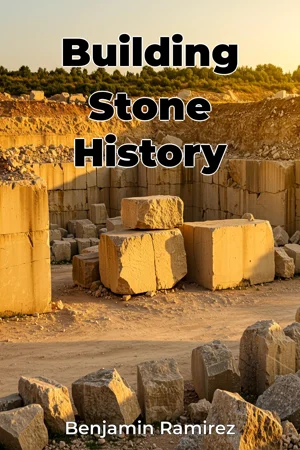
How did ancient builders manage to move multi-ton stones without modern machinery, and what can their techniques reveal about the societies that erected these monuments? "Building Stone History" explores the evolution of quarrying methods and the diverse applications of architectural stone from antiquity to the early modern period, drawing upon a wealth of archaeological evidence and historical records. This book delves into the practical knowledge and technological innovations that underpinned stone construction, revealing how these processes shaped not only the built environment but also the social and economic structures of the past. A central theme of the book is the interplay between geological resources, technological capabilities, and architectural ambitions. It argues that the availability of specific types of stone, coupled with the ingenuity of quarrymen and builders, profoundly influenced the design and longevity of historical structures. Chapters are dedicated to examining the extraction techniques used in various ancient civilizations, from the Egyptians and Greeks to the Romans and medieval Europeans, detailing the tools, strategies, and labor organization involved in each case. Quarrying is presented not merely as a technical process but as a complex social undertaking, involving specialized knowledge, skilled craftsmanship, and often substantial capital investment. The book is structured to provide a comprehensive overview of building stone history. It begins by introducing the fundamental geological properties of different types of stone, such as granite, limestone, and marble, and explaining how these properties determined their suitability for various architectural applications. It then moves chronologically through different historical periods, examining specific quarry sites, building projects, and the evolving technologies used to extract and transport stone. Particular attention is paid to the Roman Empire’s extensive use of travertine and other materials, the development of sophisticated quarrying techniques in medieval Europe, and the impact of stone construction on the growth of urban centers. The final sections integrate the historical analysis with present-day material considerations, investigating the degradation of stone structures over time. Evidence presented throughout the book includes detailed analyses of archaeological sites, historical accounts from ancient writers and medieval builders, and geological surveys of quarry locations. Unique data sources, such as surviving quarry tools and architectural drawings, are examined to reconstruct past practices and understand the challenges faced by ancient builders. The book also incorporates interdisciplinary perspectives from geology, engineering, and art history to provide a holistic understanding of building stone history. This book is aimed at architects, historians, archaeologists, and anyone interested in the history of construction and the built environment. It offers a detailed and accessible account of how stone has been quarried, shaped, and used throughout history, providing new insights into the technological innovations and cultural values that have shaped our world. By understanding the past, we can gain a deeper appreciation for the enduring legacy of stone architecture and its relevance to contemporary challenges in building design and conservation. The content aligns with the conventions of architectural history, emphasizing fact-based analysis and rigorous scholarship. While primarily focused on the extraction and application of stone in architecture, the book also touches on related fields such as mining and sculpture, acknowledging the broader cultural significance of stone as a material. It further acknowledges some limitations by focusing primarily on stone used for structural purposes, rather than ornamental elements.
How did ancient builders manage to move multi-ton stones without modern machinery, and what can their techniques reveal about the societies that erected these monuments? "Building Stone History" explores the evolution of quarrying methods and the diverse applications of architectural stone from antiquity to the early modern period, drawing upon a wealth of archaeological evidence and historical records. This book delves into the practical knowledge and technological innovations that underpinned stone construction, revealing how these processes shaped not only the built environment but also the social and economic structures of the past. A central theme of the book is the interplay between geological resources, technological capabilities, and architectural ambitions. It argues that the availability of specific types of stone, coupled with the ingenuity of quarrymen and builders, profoundly influenced the design and longevity of historical structures. Chapters are dedicated to examining the extraction techniques used in various ancient civilizations, from the Egyptians and Greeks to the Romans and medieval Europeans, detailing the tools, strategies, and labor organization involved in each case. Quarrying is presented not merely as a technical process but as a complex social undertaking, involving specialized knowledge, skilled craftsmanship, and often substantial capital investment. The book is structured to provide a comprehensive overview of building stone history. It begins by introducing the fundamental geological properties of different types of stone, such as granite, limestone, and marble, and explaining how these properties determined their suitability for various architectural applications. It then moves chronologically through different historical periods, examining specific quarry sites, building projects, and the evolving technologies used to extract and transport stone. Particular attention is paid to the Roman Empire’s extensive use of travertine and other materials, the development of sophisticated quarrying techniques in medieval Europe, and the impact of stone construction on the growth of urban centers. The final sections integrate the historical analysis with present-day material considerations, investigating the degradation of stone structures over time. Evidence presented throughout the book includes detailed analyses of archaeological sites, historical accounts from ancient writers and medieval builders, and geological surveys of quarry locations. Unique data sources, such as surviving quarry tools and architectural drawings, are examined to reconstruct past practices and understand the challenges faced by ancient builders. The book also incorporates interdisciplinary perspectives from geology, engineering, and art history to provide a holistic understanding of building stone history. This book is aimed at architects, historians, archaeologists, and anyone interested in the history of construction and the built environment. It offers a detailed and accessible account of how stone has been quarried, shaped, and used throughout history, providing new insights into the technological innovations and cultural values that have shaped our world. By understanding the past, we can gain a deeper appreciation for the enduring legacy of stone architecture and its relevance to contemporary challenges in building design and conservation. The content aligns with the conventions of architectural history, emphasizing fact-based analysis and rigorous scholarship. While primarily focused on the extraction and application of stone in architecture, the book also touches on related fields such as mining and sculpture, acknowledging the broader cultural significance of stone as a material. It further acknowledges some limitations by focusing primarily on stone used for structural purposes, rather than ornamental elements.
"Building Stone History" explores the fascinating story of architectural stone, from ancient extraction methods to its enduring impact on historical buildings. Journey through time to discover how civilizations mastered quarrying techniques, enabling them to construct iconic structures that still stand today. The book reveals that the availability of specific stone types and the ingenuity of builders profoundly influenced the design and longevity of these structures, shaping both the built environment and the social structures of the past. The book delves into the practical knowledge and technological innovations that underpinned ancient construction, from the Egyptians and Greeks to the Romans and medieval Europeans. Discover how ancient builders moved multi-ton stones without modern machinery, using ingenious methods that involved specialized knowledge, skilled craftsmanship, and substantial capital investment. It also examines how the Roman Empire’s extensive use of travertine and other materials impacted the growth of urban centers. Structured chronologically, the book begins by introducing the geological properties of different types of stone and then progresses through historical periods, examining specific quarry sites and building projects. By integrating archaeological evidence, historical records, and interdisciplinary perspectives, "Building Stone History" offers a comprehensive and accessible account of how stone has been quarried, shaped, and used throughout history.
Book Details
ISBN
9788233998523
Publisher
Publifye AS
Your Licenses
You don't own any licenses for this book
Purchase a license below to unlock this book and download the EPUB.
Purchase License
Select a tier to unlock this book
Need bulk licensing?
Contact us for enterprise agreements.